

























Picture a marketing budget meeting around 2012. “Brand” and “performance” sit on opposite sides of the table. Only one side has a spreadsheet, and that side keeps winning. That’s because the performance team speaks in numbers the board already understands: clicks, conversions, return on spend. Whereas the brand team speaks about awareness, affinity, preference – benefits that won’t show up this quarter, or the next.
The budget approves certainty. It always does.
Fast forward to today, and the split never healed. It calcified into org structures, agency briefs, and quarterly targets. What we’ve been facing is a generation of marketers optimizing for what’s measurable at the expense of what’s durable.
The strongest companies never chose a side. They first ensured their brand’s name stuck in people’s heads and added performance on top, making both work hand-in-hand.
Here’s where the thinking went wrong, and what it actually takes to get it right again.
We all know that a memorable brand doesn’t happen by accident. It’s built on great marketing, which includes measurement, momentum, and a clear-eyed understanding of what’s actually driving results.
So yes, it’s obvious that better measurement leads directly to better marketing. But measurement only tells the full story when it accounts for brand equity. In other words, this equation is outdated:
And the more tangible measurement is this:
Ignore brand, and you’re misreading your own scorecard.
This is why the brand-versus-performance debate is a distraction.
Brand doesn’t compete with performance because brand powers performance.
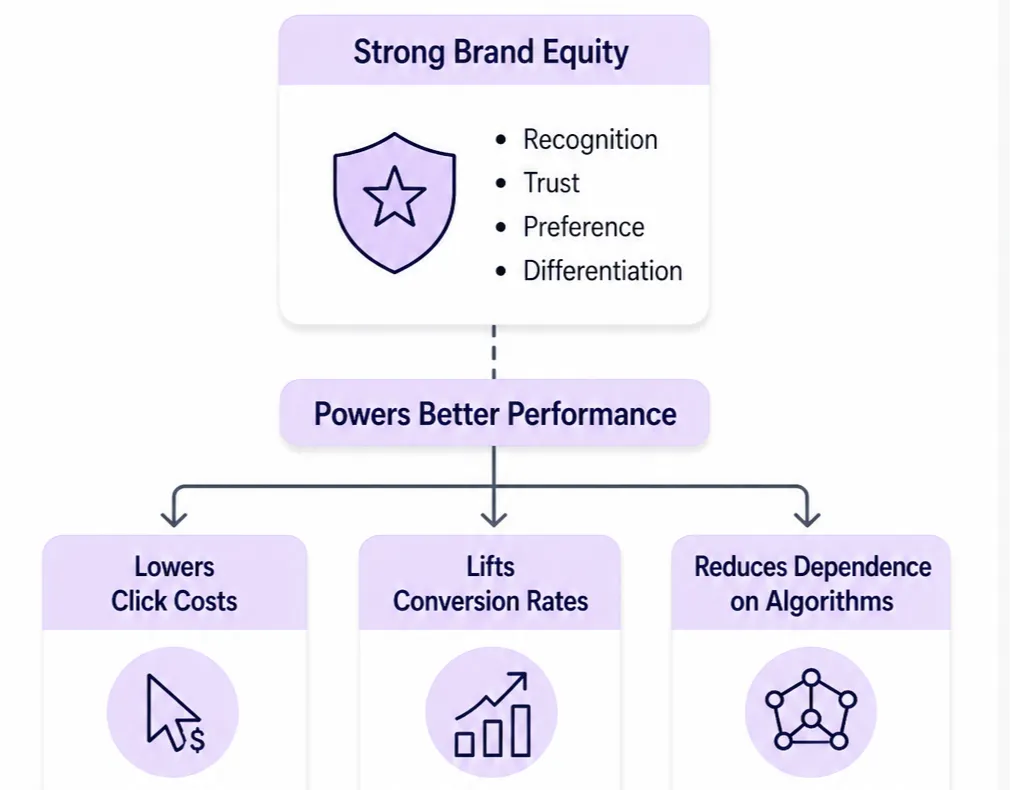
Strong brand equity lowers click costs, lifts conversion rates, and reduces dependence on platform algorithms. It creates the memory, meaning, and preference that make every performance tactic lead to better results.
It’s true that performance converts existing demand into revenue. But it’s the brand that builds the demand in the first place. Without it, performance campaigns eventually run dry, capturing intent that was never replenished.
Customers experience brand and performance as one seamless interaction. The smartest marketers do the same: measure everything, build brand relentlessly, and watch efficiency follow.
But let’s take a small trip down memory lane to understand why companies became convinced they had to choose either brand or performance.
For most of the 20th century, the brand was the undisputed king of marketing. From the Mad Men era (1950s–1970s) and well into the 2000s, companies controlled the narrative entirely: logos, slogans, and TV spots defined perception, with little room for consumer feedback.
Check one of the most iconic TV commercials from Levi’s:
Brand meant trust, recognition, and emotional resonance. That was its whole job.
Performance marketing existed (direct mail, coupons, catalog retail), but it was slow, expensive to measure, and frankly unglamorous. Attribution was rudimentary at best: a coupon code here, a campaign URL there. The logic was simple, and everyone accepted it: the brand baked the cake, and performance sliced and served it.
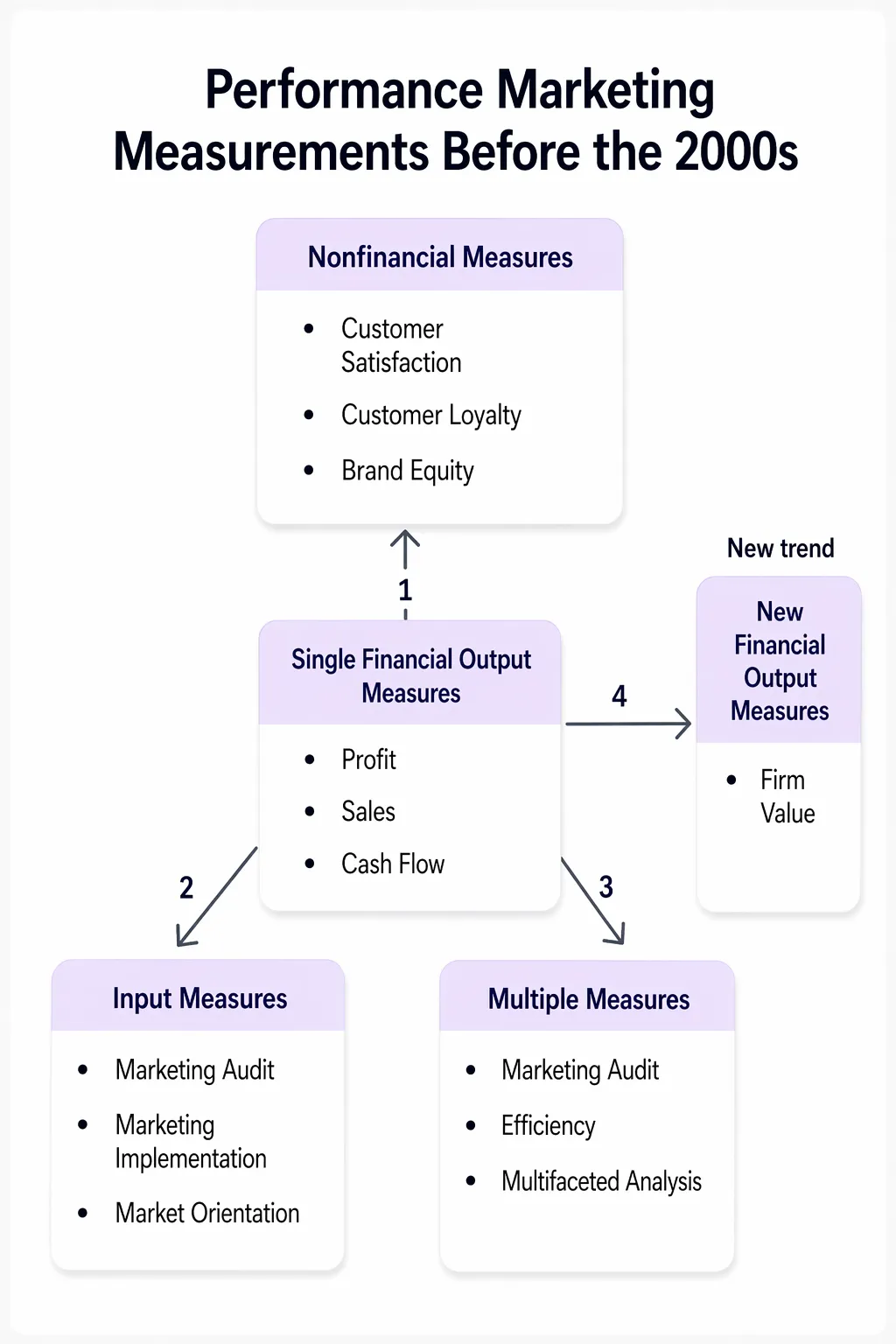
But beneath that functional coexistence ran a persistent tension. Sometimes, brand building could have taken years to show up in market share or profit, while CFOs wanted near-term, visible returns.
Without solid attribution, marketing budgets were justified by rules of thumb: “always spend X% of revenue for this tactic” rather than actual performance data. Marketers spoke about equity and share of voice, while finance spoke about P&L and cash yield. Neither fully trusted nor understood the other’s language.
Marketers’ struggle to show their worth in boardroom-ready terms was a recurring joke theme in the corporate world. That insecurity set the stage for everything that came next.
The 2010s rewired what “brand” meant. Logos and TV spots were out, and in came the brand that was the sum of every digital touchpoint: a living promise shaped by social media, reviews, and real-time consumer dialogue. These were the times of Share a Coke and #IceBucketChallenge.
Word-of-mouth outperformed classic advertising, and marketers preached the idea that “value is the new black”. A single viral misstep could reshape perception overnight. Check this example from Dove that was interpreted as racism:
Brand was now an experience system, and marketers had to orchestrate it across paid, owned, and earned media simultaneously.
Then performance marketing arrived with its precise data, and everything changed.
“$1 in, $4 out.” CFOs loved it. Internal teams learned to speak finance language to protect budgets. Brand became the first line item cut because performance felt safe, measurable, and defensible.
The D2C wave accelerated this shift dramatically, with brands born on Facebook having no patience for long-term brand building. These brands felt ready to conquer the world. But the excitement vanished within months when new benchmarks started driving decision-making.
Suddenly, ROAS, CAC, and CTR dashboards were running the strategy.
This wasn’t just a D2C problem. Legacy brands and FMCGs dipping into digital fell into the same trap of chasing short-term metrics without a strategic foundation. Founders started measuring themselves against unrelated businesses, chasing ROAS targets that were never contextually relevant.
But nobody was tracking the real cost: eroding brand equity, rising customer acquisition costs, and accelerating churn. Performance metrics looked great, but the business underneath was quietly weakening.
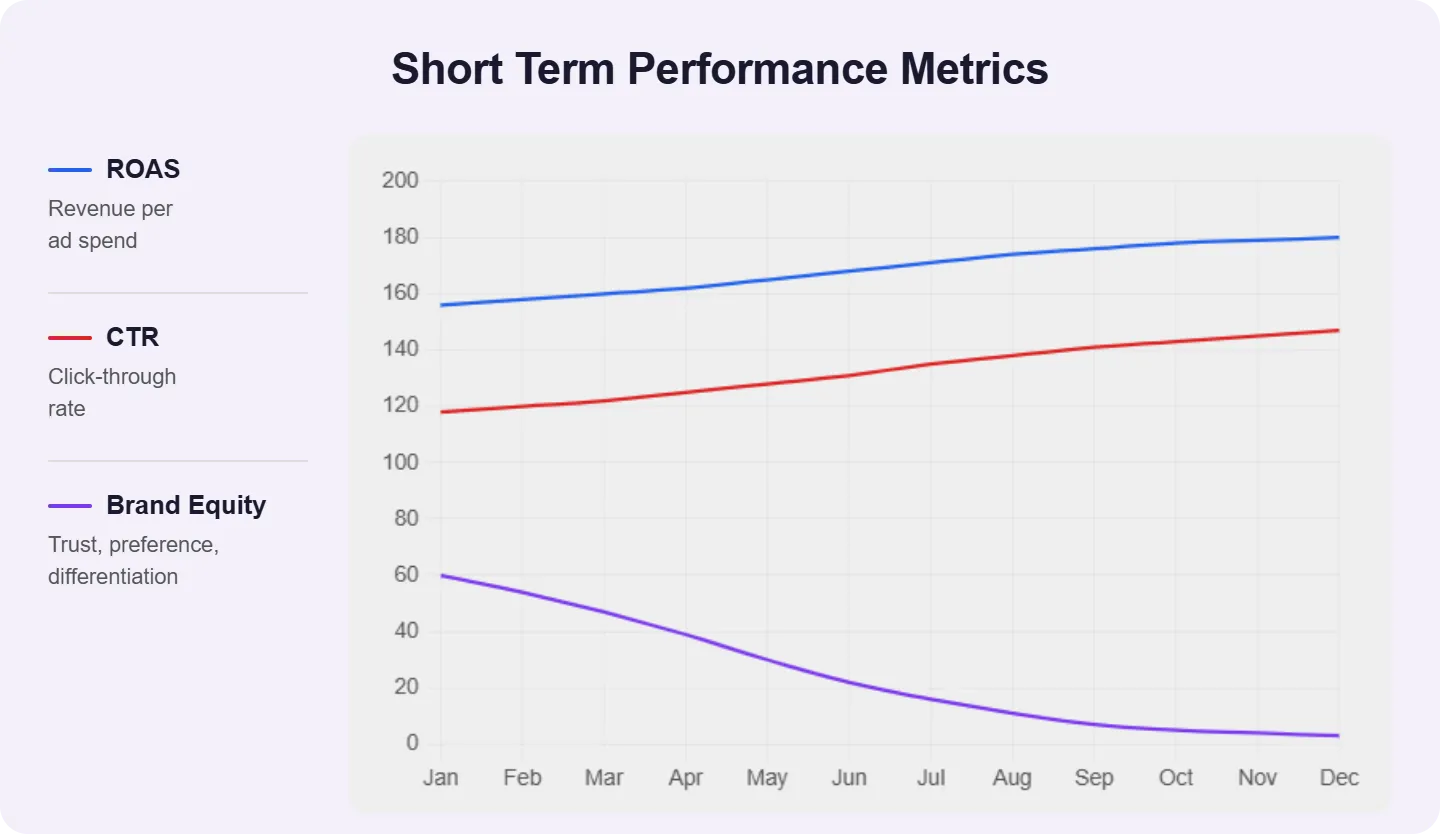
What followed was a sea of sameness where many brands got lost. Messaging became generic, and the brands that once had a distinct voice started sounding like everyone else’s.
When every competitor runs the same playbook (same platforms, same formats, same optimization logic), returns commoditize and costs climb. ROAS inflates on paper while real efficiency quietly erodes. And no amount of creative testing fixes a structural problem.
Here’s the core issue: performance marketing can only harvest demand that already exists, but it cannot manufacture desire. When brand building stops, the pool of motivated buyers shrinks, and you’re left paying more to reach a smaller, harder-to-convert audience.
Rising CAC is the clearest symptom. Yet, it rarely signals a bad ad, but rather a deeper misalignment: a value proposition that’s drifted, an audience that’s been over-fished, or a funnel that was never properly built.
Broken attribution only adds more fuel: last-touch models over-credit ads, masking leaks elsewhere in the system. Teams chase optimization that doesn’t address the real problem.
Scaling spend into a misaligned funnel doesn’t reduce CAC; you’ll simply scale the noise. Meanwhile, retention weakens and growth stalls.
What nobody tracked through all of this: brand equity was quietly depleting the entire time.
McKinsey’s research confirms what the numbers eventually reveal: the top priority for sustainable business growth isn’t a better funnel, but it’s actually brand differentiation.
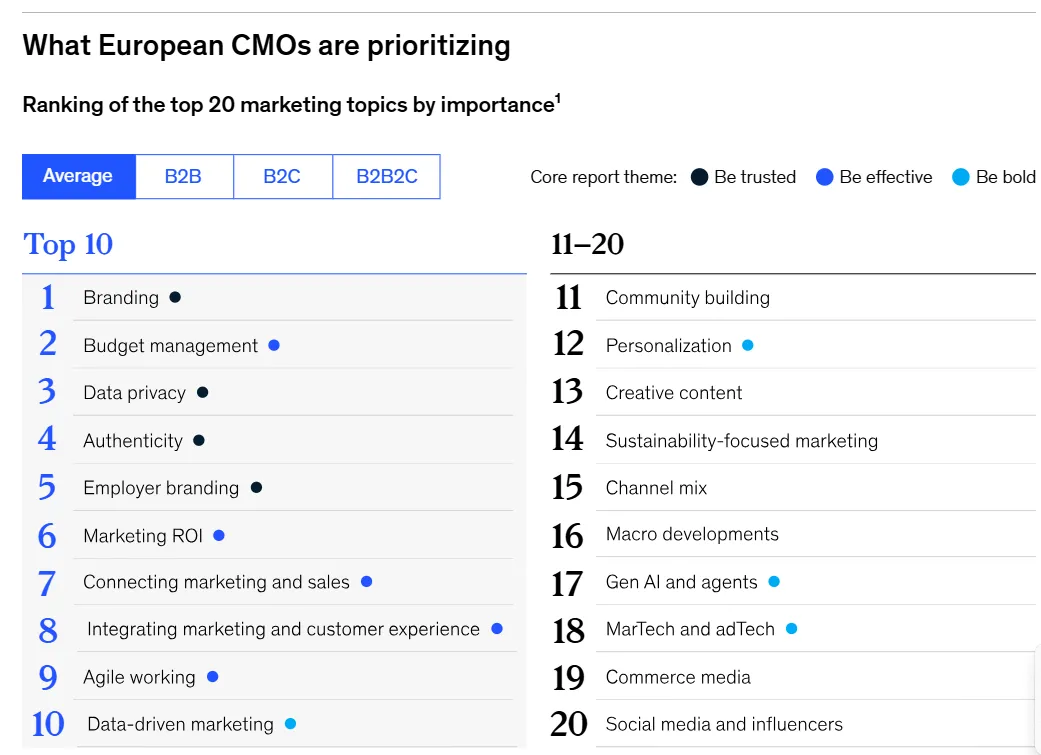
And the stakes of getting this wrong are now structurally significant. In saturated markets, consumers see fewer than 5% of brands as truly unique, while the rest feel interchangeable, competing on price by default.
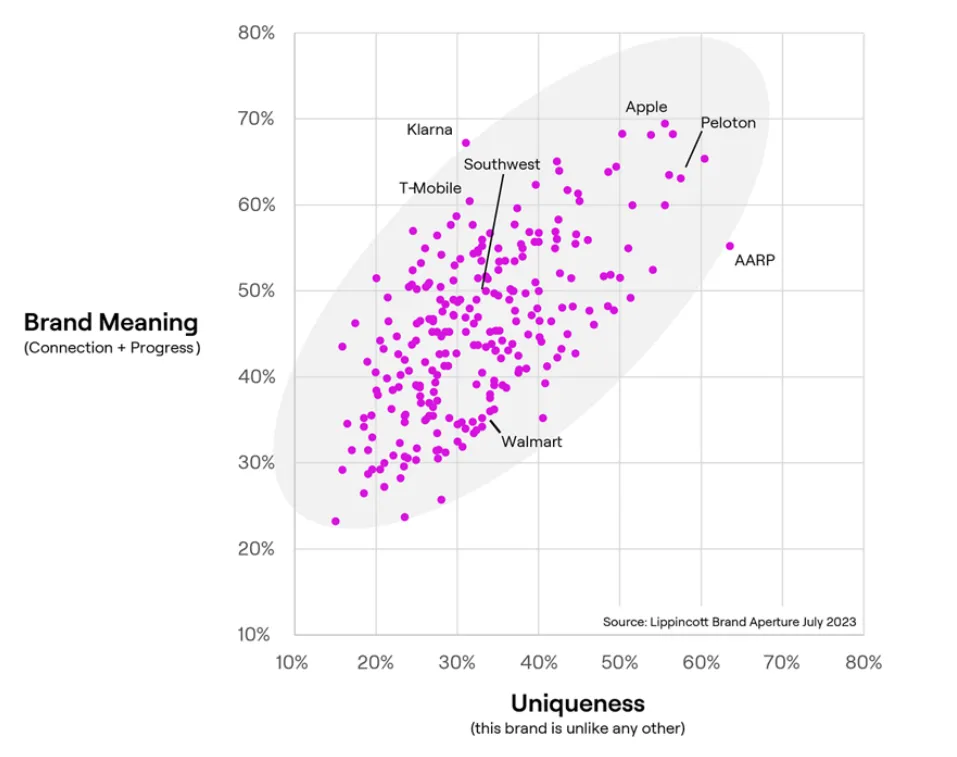
Differentiated brands escape that trap entirely.
Research from User Testing shows consumers willingly pay up to 25% more for brands they recognize and trust. These brands also attract more loyal customers and retain them at nearly double the rate of undifferentiated competitors.
So even if competitors can copy your ads or features, they cannot easily replicate a coherent brand story, culture, or customer experience. And that’s the genuine moat.
Performance marketing without brand investment is more like a liquidation strategy in disguise.
Brand and performance operate on different clocks, but they don’t belong to different teams. A brand builds the memory structures and preferences that make people choose you before they even start searching. Performance captures that intent the moment it surfaces.
| Business Goal | Performance Metrics | Branding Metrics |
|---|---|---|
| Customer acquisition | CAC, ROAS, CPL | Traffic, organic search, brand mentions |
| Revenue growth | Conversion Rate, AOV, NRR | Market share, purchase intent, brand consistency |
| Retention & loyalty | Repeat purchase rate, email open rate, revenue churn rate | NPS, customer sentiment |
| Long-term value | LTV, retargeting efficiency, LTV:CAC | Brand recall, price premium tolerance, SOV (Share of Voice) |
If used together, their effects intensify. But in isolation, they both underperform.
The intensifying effect is real and measurable. Strong brands require less persuasion per touchpoint: higher click-through rates, better conversion, and lower cost per acquisition for the same spend. They generate organic referrals and word-of-mouth that paid channels simply can’t replicate.
Google data shows branded search ads generate roughly twice the click-through rate of non-branded terms. McKinsey finds that well-established brands can reduce customer acquisition costs by as much as 20%.
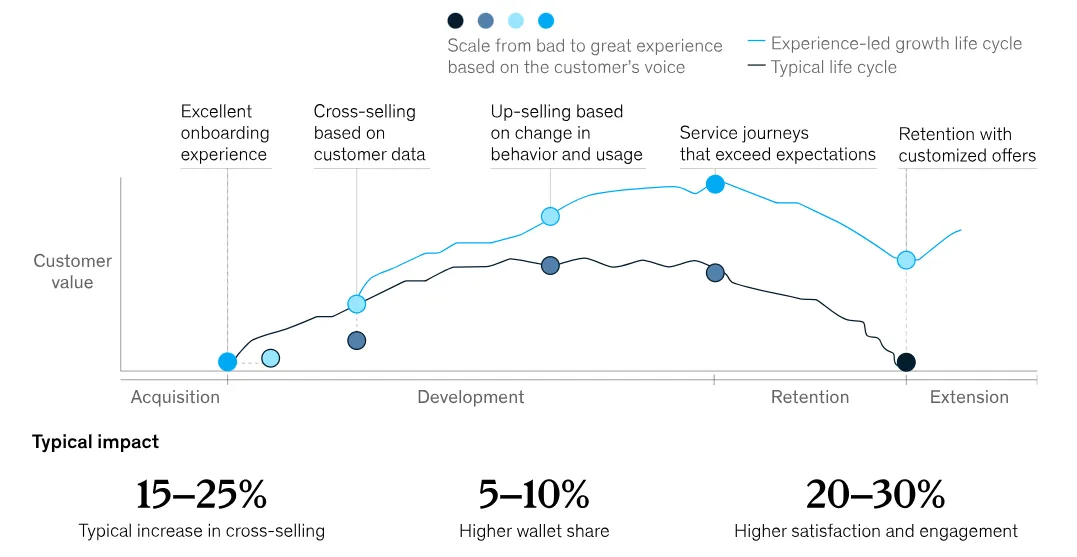
On the retention side, brand equity directly extends customer lifetime. Emotional connection reduces price sensitivity, increases repeat purchase rates, and lifts average order value without changing the product. The result is a fundamentally better LTV:CAC ratio, which is exactly what investors and CFOs track.
So why did the false choice persist?
The answer is measurement asymmetry.
Companies handed that measurement responsibility to agencies and dashboards, and naturally got optimized for whatever those teams and tools could show quickly.
So, the problem was never brand versus performance. It was letting short-term reporting define long-term strategy.
The brand vs. performance split was always a management failure, and the best companies never let it happen.
And data isn’t necessarily bad; how you use that data is what matters.
Brand score predicts price elasticity, shapes the repeat purchase rate, and bends your CAC trajectory over time.
For instance, you could segment customers by brand score quartiles, run regression analysis, and track cohort data against subsequent purchase behavior. These correlations are consistent and quantifiable. Higher brand equity components, like loyalty and perceived quality, reliably drive retention, extend customer lifespan, and increase purchase frequency. That has a clear, positive impact on customer lifetime value.
In essence, you should stop treating brand and performance as a budget negotiation.
The winning formula is structural: split your reporting so boards see both short-term performance outcomes and long-term brand indicators, each tied explicitly to financial models. Get rid of vague awareness scores.
Harvard Business Review makes the case plainly: brand-building and performance marketing work best in parallel.
So push for brand investment from Day 1, not as a rescue line item when performance efficiency starts eroding. By then, you’re already behind. Redefine agency accountability beyond clicks and conversions to include memory structures, category salience, and earned preference.
The future belongs to brand-led performance: where story, positioning, and differentiation fuel every paid touchpoint. Because performance without brand is farming depleted soil: you can still harvest, but every season costs more and yields less.