






















An estimated 60% of digital marketing spend is wasted. And when it’s the marketing spend of an enterprise, that 60% could literally mean millions. But what if those million didn’t go to waste and, better yet, multiplied numerous times over?
Well, that’s what the right creative agency partner for an enterprise can deliver.
But here’s the challenge: most digital marketing agencies out there aren’t well-suited for large organizations.
That’s not to say they’re no good. However, their expertise, scope, and capacity may be limiting for a demanding large organization.
You need an agency partner that’s enterprise-ready in terms of strategic depth, scale of deliverables, scope of services, and ROI benchmarks. In this article, you’ll learn exactly what that looks like and how you can vet agencies to find the right partner.
P.S. Want to cut to the chase? Discover the best digital marketing agencies for large companies.
Large enterprises operate in a fundamentally different environment than small companies or start-ups. And from our experience supporting global brands, that makes their partnerships with a creative or marketing firm much more layered.
Here’s how the requirements from enterprise clients are different:
Side note: We see this every time we collaborate with large clients: creative ideas only succeed when they integrate seamlessly across channels, teams, and internal processes.
A good example is our work for Marvel, where we cast creators, styled looks, and produced content that elevated their fashion-driven presence while staying fully aligned with a massive, existing brand ecosystem.

Pro tip: We always advise our enterprise partners to prioritize scalable creative systems because volume without structure quickly collapses.
Because of these four dimensions, a typical small or boutique creative agency (or a freelance business) is simply incompatible with large enterprises.
Trust us: if you’re a Chief Marketing Officer (CMO) at a large company, you’ll need a full-service agency or specialist agency partners that offer large-scale project management, multi-channel execution, localization capabilities, and compliance management.
For a large enterprise to entrust its marketing, branding, and creative work to an agency, that partner must offer more than just design or occasional social media posts.
An enterprise-ready creative agency combines strategic depth, broad capabilities, and standardized processes to meet the scale, complexity, and expectations found in a typical high-performing agency and client relationship.
First, it helps to think of such an agency as a full-service marketing firm, one that can handle everything from branding and web design to paid media, analytics, and performance marketing.
Pro tip: From our experience, enterprises rarely want fragmented partners; they want integrated teams that move in sync.
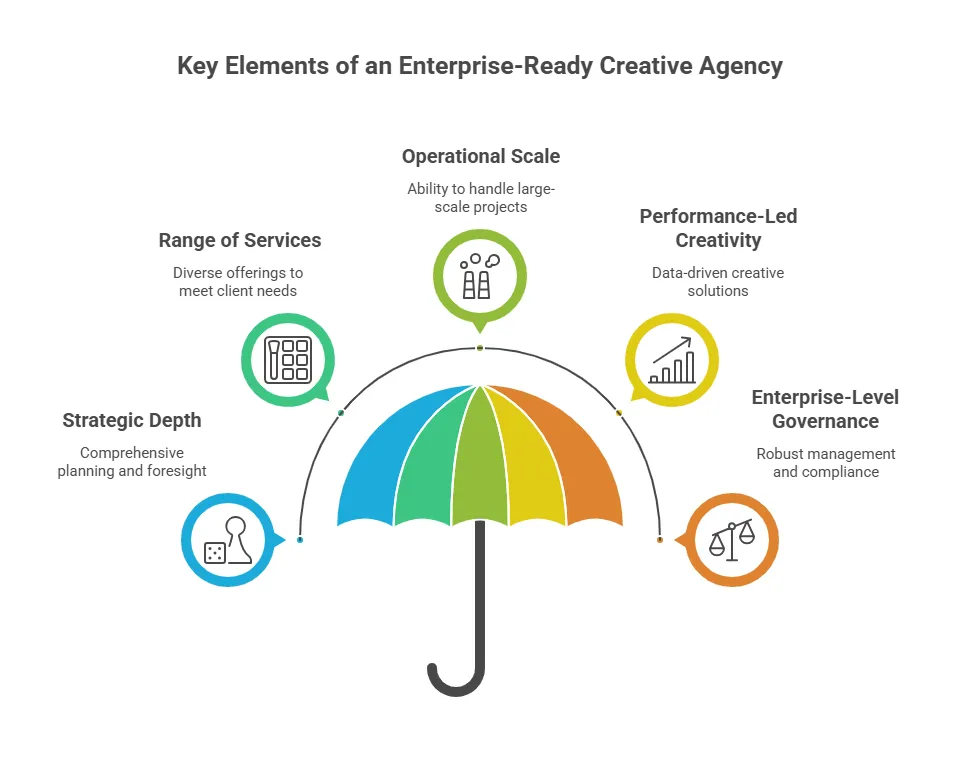
With that in mind, here’s what defines agency readiness at enterprise scale:
When a large enterprise works with a creative agency, what differentiates a vendor from a true “agency partner” is strategic depth. It’s not just about ‘delivering the work’ but to think holistically about brand, business objectives, target audience, and long-term growth.
We’ve seen firsthand that this strategic layer is what creates lasting partnerships.
An enterprise-ready creative agency (or marketing firm) brings this mindset to every campaign, project, or content initiative.
An agency with strategic depth will:
Yes, we include these and much more.
A recent example is our partnership with Energy Bird General, where we combined influencer outreach with targeted Amazon display ads.
Our category-level Amazon ads alone generated 49 orders and a 13X ROAS in just two days.
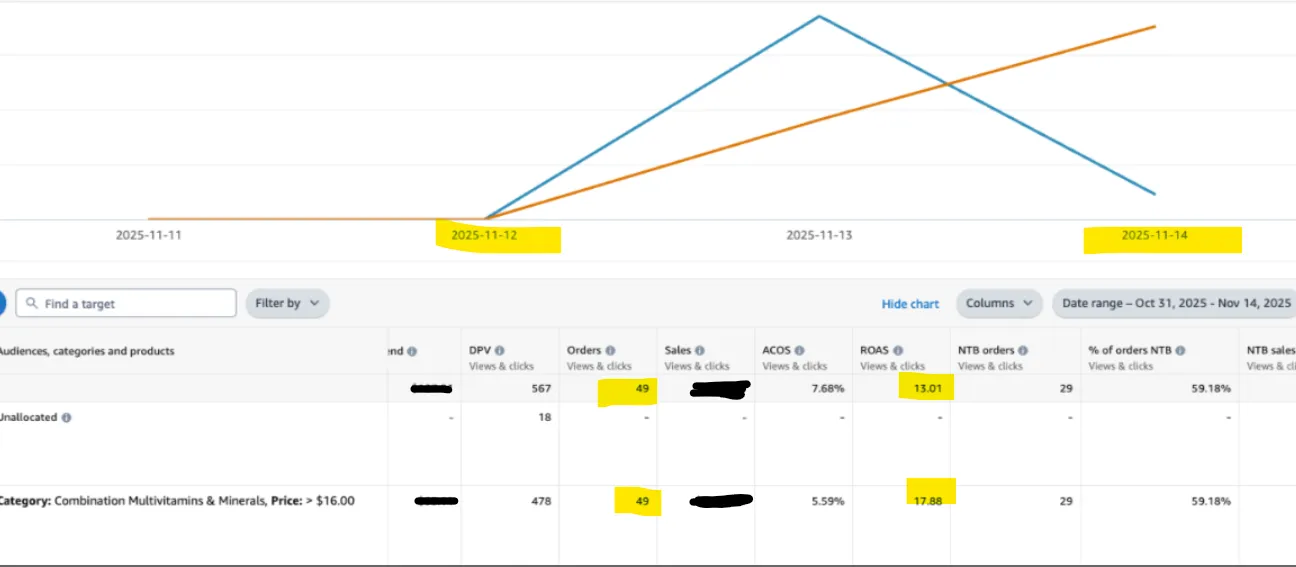
That’s proof of how integrated creative and media execution can scale quickly when aligned with an enterprise-ready strategy.
And that last point brings us to the second important factor that makes an agency partner truly enterprise compatible.
We know that large enterprises typically need help with large-scale campaigns, which, in turn, require multi-disciplinary teams.
And we also know how hard it is for an enterprise client to work with multiple agencies (for example, one for SEO and another for social media).
To meet enterprise needs, a compatible agency partner would offer a wide range of services, including web design, landing page optimization, content creation, social media content, video production, paid advertising campaigns, content strategy, SEO, AEO, and more.
You need that broad capability to keep your brand identity and voice consistent across channels.
Pro tip: A broad range of services doesn’t always have to mean a ‘generalist’ marketing agency. We advise you to look for partners that specialize in different areas of marketing with dedicated units or sub-agencies.
Here’s our best advice so far:
An enterprise-level creative agency must operate with the same consistency, speed, and structure as an internal department. This level of operational scale is what separates true enterprise partners from smaller studios or a collection of freelancers.
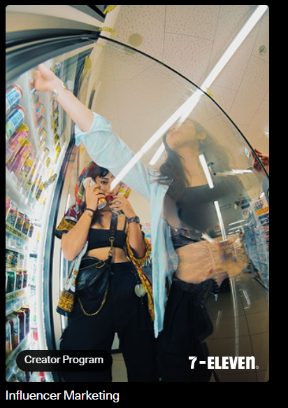
That’s how we at Fieldtrip managed to lead a nation-wide influencer program for 7-Eleven. And yes, it performed very well, driving more awareness and foot traffic to this multinational retail corporation.
Remember: Scale doesn’t necessarily mean headcount.
In fact, scale is represented by systems, workflows, governance, and resource models that help an agency to deliver a higher volume of deliverables efficiently.
Here’s how we judge operational maturity best:
It shows up in tools. That means structured project management platforms, branded client portal systems, and content-approval workflows that ensure accountability and version control.
Along with scale, creative agencies for large enterprises should also have the capacity to adjust resources when more work is required.
For instance, we know that many enterprise campaigns may peak around product launches, buying cycles, or seasonal pushes.
Scaled agencies maintain flexible staffing models, usually by combining internal teams with vetted outsourcing creative services or whitelabel partnerships. This is how you avoid bottlenecks during crucial periods.
Enterprise marketing increasingly demands data-driven results. We all know that creativity has its place, but if it’s not delivering results, it’s not useful.
The right agency integrates analytics, reporting, and optimization into the creative process.
We, for example, track key performance indicators using analytics and reporting tools (e.g., Google Analytics, ad-platform dashboards, campaign analytics). We always monitor performance and adjust strategy, content creation, or paid media based on data.
And we’re not alone:
79% of marketers believe analytics are the key to success.
That’s why great agencies treat marketing as a lever for business growth. They turn to data for decision making, testing, and reporting.
Here’s an example from one of our own clients’ reports:
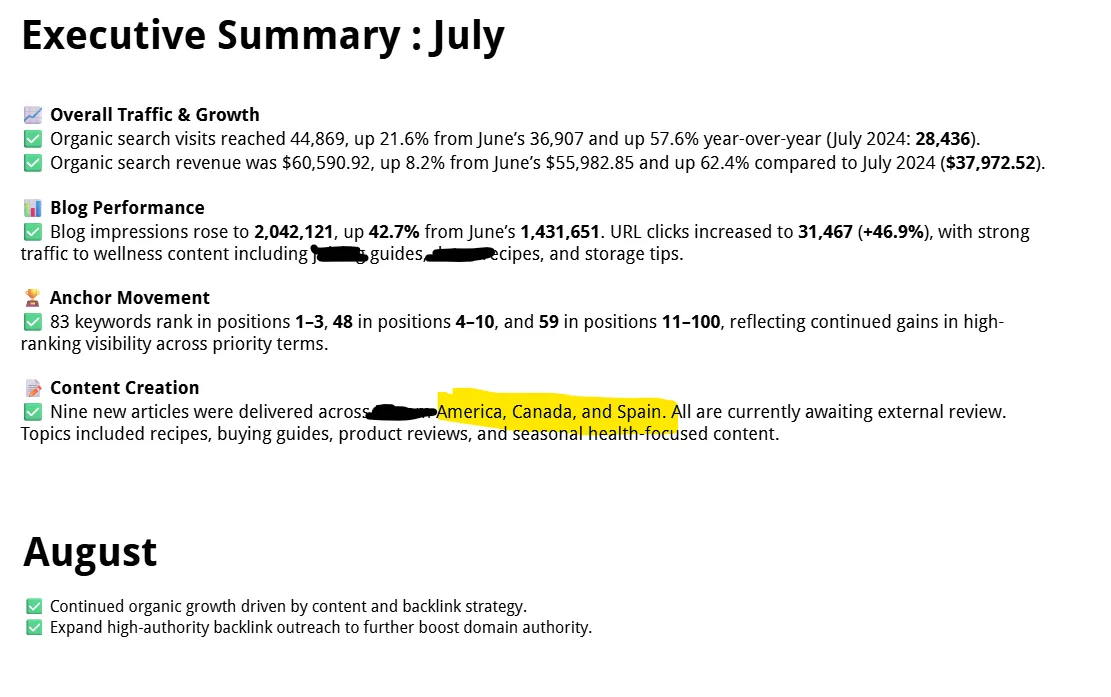
As you can see, for SEO, we track organic search visits with YoY and MoM growth. And yes, we produce separate content for three different markets.
Enterprise-ready agencies act as a single point of coordination across creative, technical, and marketing disciplines. We like to do this, too, to reduce silos, avoid miscommunication, and ensure brand consistency.
Also, the large enterprises we work with expect:
Instead of vanity metrics, the agency you pick must map analytics and reporting to your business outcomes: lead generation, sales-funnel efficiency, paid-media ROI, campaign-strategy performance, and conversion lift.
Pro tip: We advise you to say a hard no to execution vendors and rather pick a strategic partner instead.
We also know first-hand how important governance is.
This must include secure data handling, non-disclosure agreements, role-based permissions, and documented approval logs.
We appreciate that that’s particularly important for our enterprise clients in regulated industries that must have everything well-documented for potential audits.
Your choice for an agency partner to oversee marketing and advertising should be research and evidence-driven. We don’t need to tell you this, but obviously, ending up with the wrong agency partner can be costly.
Below are the five enterprise-level evaluation criteria:
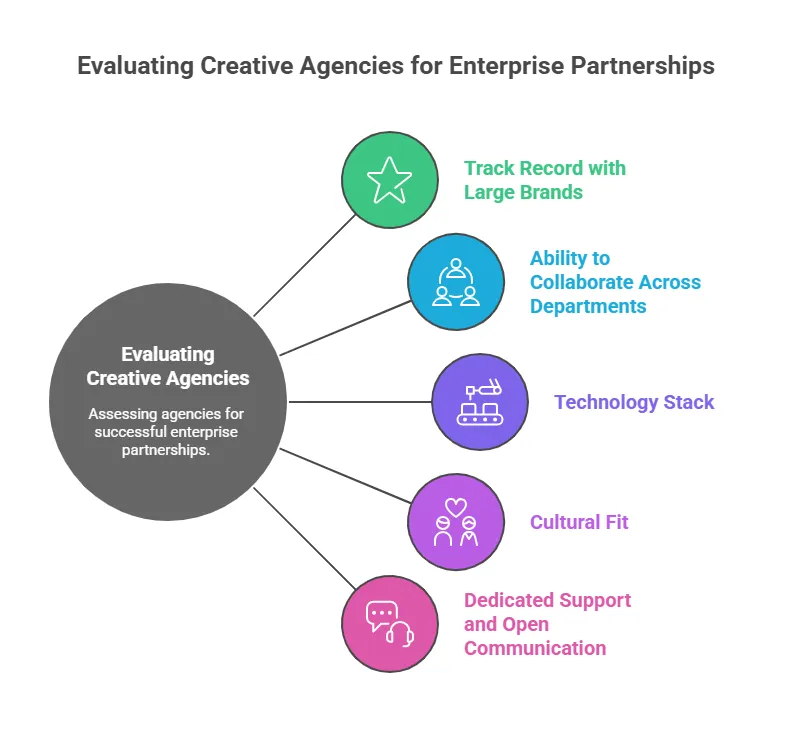
The first thing we advise you to check is whether the agency has worked with enterprise-grade clients and what the experience was like for those clients.
A good sign is ongoing partnerships.
But we also encourage you to look at case studies and testimonials from clients with a similar scale and complexity level as yours.
Another strong sign is recognition on third-party directories like Clutch, which verifies client reviews, project size, and industry verticals.
Look for evidence that the agency can support regulated industries or highly visible global brands, where consistency and compliance matter most.
For example, we ran influencer market research for YouTube.
We spotted trends, audience fit, and creator opportunities that helped shape the YouTube Shorts launch. Work like this takes real platform fluency and sharp segmentation, which are exactly the traits you want in an enterprise-ready agency.

Enterprises rely on collaboration between marketing, product, legal, analytics, and compliance teams. We advise you to pick an agency that can genuinely navigate this ecosystem smoothly and maintain clear communication workflows.
The signals of strong cross-department collaboration we always check for are:
The humans working for your creative agency are super important, but so is the tech stack that they use.
The right use of automation and AI is incredibly important because it streamlines work and boosts productivity. And from our experience, it boosts profits considerably.
In fact, research shows marketing automation returns $5.44 for every dollar spent.
You want an agency partner that has invested in a strong suite of tools to empower its teams.
Here are the key components of an enterprise-ready tech stack:
At Fiedtrip, technology blends seamlessly with human expertise. We’ve invested in some of the best platforms in the industry to streamline crucial tasks like keyword research, content optimization, creative design, performance analysis, and project management.
Culture determines whether a partnership feels frictionless or painful. We know that large enterprises need agencies that understand scale, structure, and expectations, without losing creative energy.
Key cultural indicators include:
Here’s why culture fit is important, according to Lorraine Stewart, Founder of ROJEK Consulting:
“When different organizations are ‘a good cultural fit’ they align on important things. They appreciate and share the core values that influence each other’s actions, attitudes and results. This orientation to client-agency life not only improves the outcome in the courtship process, but more importantly informs the way client-agency teams can work better together.” (Lorraine Stewart, Founder of ROJEK Consulting, Cultural Fit: Clients & Ad Agencies)
Our enterprise clients require structured communication and consistent agency access, especially during high-stakes campaigns or cross-region launches. We always try to give them that.
But if you’re looking elsewhere, take our advice:
It’s best if you have a dedicated account person who manages communication, timelines, and stakeholder alignment.
From the get-go, there should be clear escalation paths and defined communication SLAs. You shouldn’t have to scramble to get hold of an agency representative.
Transparent documentation, including NDAs, invoicing workflows, and compliance protocols, is also incredibly important.
Ideally, the agency should use communication tools your teams are familiar with.
For example, at Fieldtrip, every enterprise client has direct access to project managers and creative strategists. We use Slack for client communications, oversight, and approvals, which is one of the most popular platforms for work communication worldwide.
Large enterprises require creative agency partnerships that match their scale, speed, governance expectations, and campaign rhythm. The right engagement model determines how well the agency integrates with internal teams, supports multi-channel marketing, and delivers high-volume creative work without bottlenecks.
Below are the models most commonly used by large brands.
Enterprises typically choose between two structures: retainer plans (ongoing capacity and strategic support) or project-based partnerships (defined deliverables, shorter horizons).
We think retainers are ideal for ongoing creative work like social media campaigns, content creation, and performance marketing support.
Advantages:
We like these best for fixed-scope initiatives such as a brand identity refresh, new web design build, video campaigns, and regional launches.
Advantages:
Both models can work, but retainers generally become more effective as enterprises scale their digital presence and increase demand for campaign strategy and creative work across media channels.
We know many global enterprises now prefer pod models, with cross-functional teams within the agency acting as an extension of the internal marketing department.
For instance, a pod may have a dedicated team for paid social media that creates and runs campaigns on platforms like Facebook, Instagram, and TikTok.
Advantages:
In our experience, this model is especially effective for brands with global content production needs or continual paid media iteration across media channels.
A hybrid model combines an in-house marketing department with an agency to fill the gaps or tap certain expertise. We recommend this model to enterprises that already have a sizable marketing team. That way, your internal teams work with agency specialists on specific projects, campaigns, and strategies.
How hybrid setups work:
Large enterprises with international operations can create a centralized creative production hub to maintain consistency across regions while managing high-volume content output. That means partnering with an agency that oversees virtually every covered region and collaborates with local teams in those regions.
These hubs, managed by a full-service agency or specialist agency, can include:
You obviously need an agency with some presence in those geographies for this centralized approach to work. But most of the work and communication is handled remotely.
Even well-presented creative agencies can fall short of enterprise expectations. Agencies tend to oversell what they can do, so it’s important to look out for any warning signs before you sign that contract.
Fieldtrip understands the ethos of an enterprise partnership. We have successfully merged the concept of a specialist agency with that of one that can offer the breadth of services big organizations typically require.
What does that really mean? Fieldtrip is not your average marketing agency, but an ecosystem of multiple specialist agencies.
inBeat handles creator marketing. 9AM is all about media buying and measurement. And BlueThings is for SEO and AEO.
We take a modular approach with small nimble teams that achieve big things.
We already shared some case studies, but you can explore more of our work to see how we’ve been the agency of choice for enterprise clients like Abbott, Nestle, Meta, and YouTube.
With data-driven, strategic partnerships, we deliver results that take business forward.
The elements that are the core tenets of a creative enterprise partnership (strategic depth, a wide range of services, streamlined governance, and operational scale) they’re all there. And we have experience working with global brands that employ thousands of people and spend millions on ads and organic brand growth.
Our technology stack is enterprise-friendly. Plus, our teams are highly communicative and professional.
But most importantly, we’re in it for the long haul.
That’s what many enterprises want at the end of the day: a sustainable, profitable partnership that makes marketing a lever of growth.
Get in touch today, and let’s scale your creative strategy together!
A creative agency for large enterprises supports you across strategy, creative work, campaign execution, analytics, and brand governance. Unlike a vendor, a partner integrates into the company’s long-term marketing strategy, helping shape brand identity, content strategy, and multi-channel marketing campaigns.
For most enterprises, the most effective model is hybrid: a combination of in-house talent and an external full-service marketing agency.
In-house teams usually excel in brand stewardship, fast-turn internal communication, and strategy. Agencies excel in scaling multi-channel creative work, providing specialized skills, and executing performance creative and digital marketing campaigns.
Enterprises should track KPIs that connect creative work and digital marketing investments to measurable outcomes.
Key performance indicators we advise you to track include:
Fieldtrip is made up of several different agencies with specialized focus in areas within marketing and advertising, including paid media, user-generated content/ influencer marketing, video production, SEO, podcast production/promotion, and performance analytics.
Through its ecosystem of enterprise specialist agencies, Fieldtrip has served clients in various verticals, including the likes of Marvel, New Balance, Meta, 7-Eleven, Meta, Nestle, and Hurom.