






















Programmatic display advertising is turning into the ‘autonomous media operating system’ for the world's largest brands. For Fortune 500 companies, the challenge has shifted from simply achieving reach to maintaining signal integrity across a fragmented global landscape.
But at this scale, there’s a unique paradox of size. The more you spend, the more you are exposed to inefficiencies like ad fraud and diminishing returns.
To dominate the market today, scaling doesn’t only mean a larger budget. In fact, it requires a system that marries automation with manual oversight, strategy with creative assets, and budgeting with measurement.
And that’s exactly what we’ll explore in this guide.
P.S. Struggling to scale programmatic campaigns without losing efficiency or control? Fieldtrip helps Fortune 500 brands plan, execute, and optimize cross-channel media systems that actually perform. Book a strategy call now.
At the enterprise level, scale means building a system that can expand reach, optimize campaign performance, and increase revenue without sacrificing brand safety, cost per acquisition (CPA), or long-term brand equity.
Most enterprise marketing teams initially equate scale with more ad spend. But in practice, real scale happens when a company can efficiently distribute digital ads across thousands of publishers, multiple ad exchanges, and global ad marketplaces while maintaining consistent campaign goals and predictable performance metrics.
About 90% of digital display ad transactions in the U.S. now run through programmatic channels.
This highlights how central programmatic buying has become for large companies managing multiple campaigns across several products or services.
For a global enterprise, a single campaign can involve:
From what we have seen while working with enterprise marketing teams, managing this level of complexity requires a structured system. Without one, campaign efficiency often declines as scale increases.
Programmatic media buying has come a long way. It’s much more expensive and complex today.
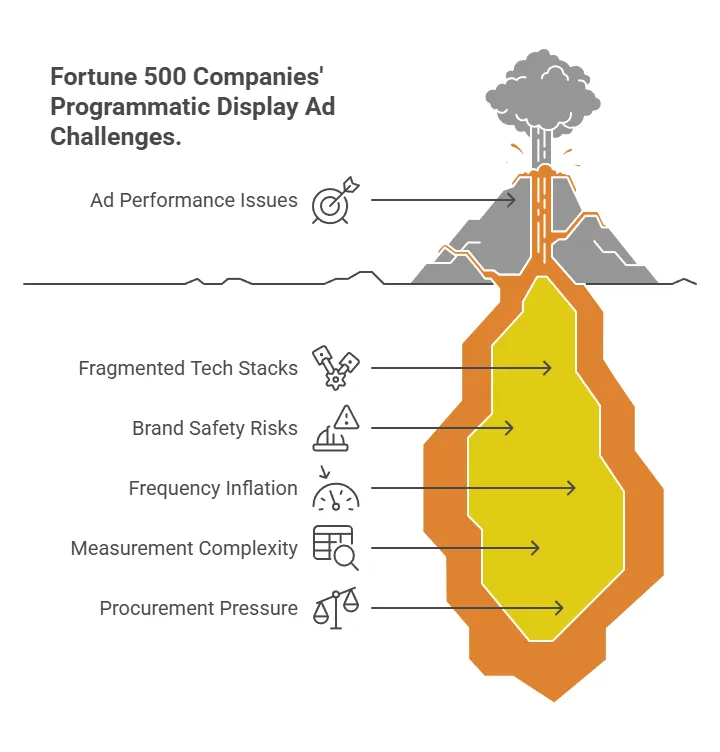
When a Fortune 500 advertiser launches large-scale display ads, those campaigns run across dozens of DSPs, ad exchanges, publishers, and display advertising networks simultaneously. At that scale, the biggest risk isn’t reach–it’s inefficiency.
Some of the common structural challenges we see enterprises face in this ad domain are:
Programmatic display advertising can play a strategic role across the entire campaign lifecycle. Like most display ads, it’s mostly used at the awareness stage, but when done right, it can influence multiple stages of the funnel.
For instance, it can move prospects along the funnel to drive retargeting and acquisition.
At the top of the funnel, programmatic display ads help you expand product visibility and establish visual authority across premium publisher inventory, retail media environments like Amazon Ads, and large display advertising networks.
These digital ads use advanced audience targeting based on 1st-party data and behavioral signals. When paired with high-impact creative formats, such as rich media or native ads, these campaigns can help drive conversions as well.
Programmatic displays can increase conversion rate by 10-30% when paired with audience data.
Further down the funnel, enterprises rely on automation, AI-powered bidding systems, and machine learning to drive campaign optimization and measurable campaign performance.
Algorithms adjust bids across ad exchanges, optimize placements within ad marketplaces, and dynamically personalize creatives based on user data and audience data. These optimizations are then evaluated against KPIs like CPA, engagement rates, and full-funnel reporting.
In our experience, programmatic display ads can connect results to real business outcomes such as revenue growth, particularly in competitive categories like health and wellness.
Programmatic display campaigns, particularly at enterprise scale, require strong infrastructure. That includes a wide range of platforms, tools, and frameworks that optimize spend every step of the way.
Otherwise, scaling up would simply look like increasing spend, which may not always deliver the ROI your brand seeks.
Here are our recommendations, rooted in industry experience working with large brands and their programmatic media buys:
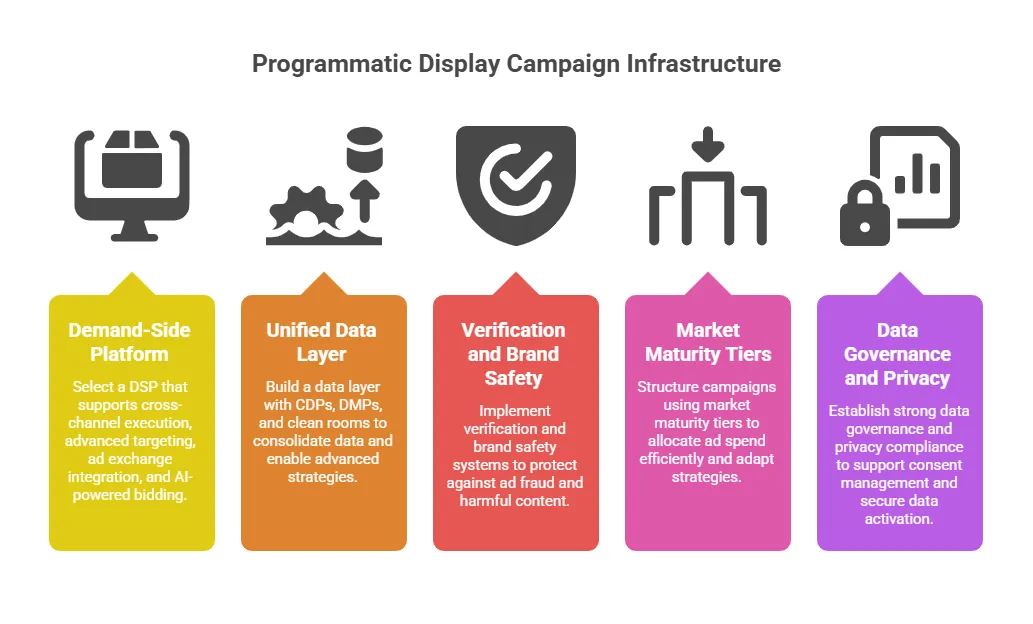
At the center of every enterprise programmatic advertising stack is a Demand-Side Platform (DSP). These platforms allow brands to automate ad buying, bid in real-time environments, and distribute digital ads across large pools of ad inventory.
As an enterprise, you should go for DSPs that support:
You also need to think about reach. For instance, a CPG brand may want to target millions of impressions, which means choosing a large DSP. Amazon DSP, for instance, reaches over 300 million users with its vast network.
Programmatic display ads at enterprise scale can result in data silos. To deal with that issue pre-emptively, it’s best to invest in a dedicated data platform that consolidates first-party, second-party, and platform-specific data while also removing duplications.
This is where data management platforms (DMPs), Customer Data Platforms (CDPs), and privacy-safe clean rooms come in. DMPs focus on anonymous third-party data, whereas CDPs are more for developing first-party data for long-term use. We like the latter because it’s more powerful and privacy-compliant.
This data infrastructure enables more advanced strategies, like retargeting users who previously engaged with banner ads. For B2B campaigns, data from these platforms can also inform account-based marketing (ABM) targeting.
Brands that effectively activate first-party data in advertising can improve campaign ROI by up to 2.9x compared to third-party targeting signals.
Ad fraud is a serious problem in programmatic advertising. Automated clicks from bots create invalid traffic and waste ad spend, as there are no real users taking those actions. And generative AI is exacerbating this issue.
Similarly, there’s the issue of ads appearing on objectionable websites and apps, which can damage reputation.
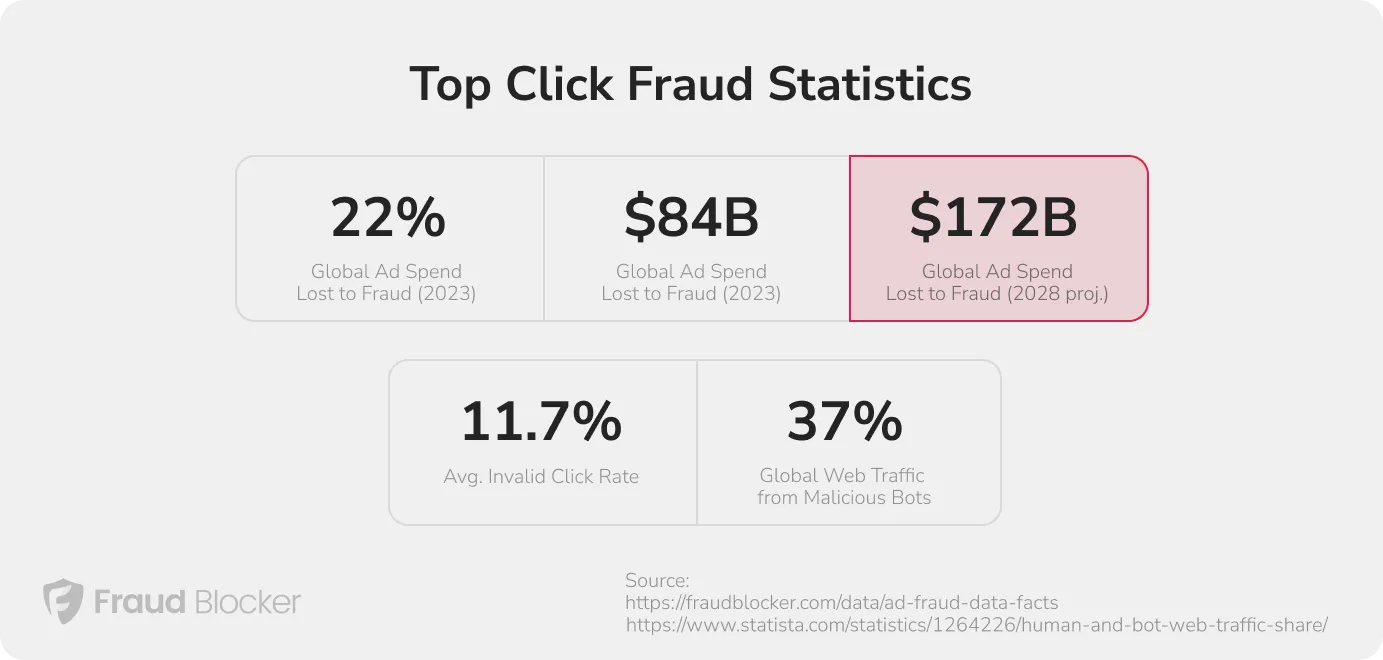
That’s why most Fortune 500 campaigns also need third-party verification systems and brand safety tools to protect against harmful content and ad fraud. These tools analyze ad inventory, detect suspicious traffic, and help enforce brand safety standards across ad exchanges and display ad networks.
Notable tools for fraud detection include DoubleVerify and TrafficGuard.
Many enterprise teams make the mistake of deploying the same programmatic display strategy across every geography. This is where campaigns often start losing efficiency.
Markets vary widely in digital maturity and media infrastructure. A smarter approach is to categorize markets and adjust execution accordingly.
Most enterprise campaign management teams define three tiers:
This tiered approach helps you allocate ad spend efficiently and adapt campaign execution strategies based on local market trends (and the importance of that market for overall revenue).
As enterprises scale programmatic display ads, data governance becomes critical. Regulations such as the General Data Protection Regulation, or GDPR, require companies to control how user data is collected, processed, and activated across media buying platforms.
This means enterprise infrastructure must support consent management, secure activation of first-party data, and clear measurement transparency across vendors.
In other words, privacy and data security compliance should be built into the entire tech stack supporting programmatic ad buys. And for that, companies should have a governance architecture that outlines applicable regulations and how to comply with them within ad campaigns.
Fortune 500 companies typically have seven-figure ad spend budgets, and they don’t spend it all in one place. This means there are different media buying models that can support programmatic display campaigns.
Let’s discuss the different models and compare them:
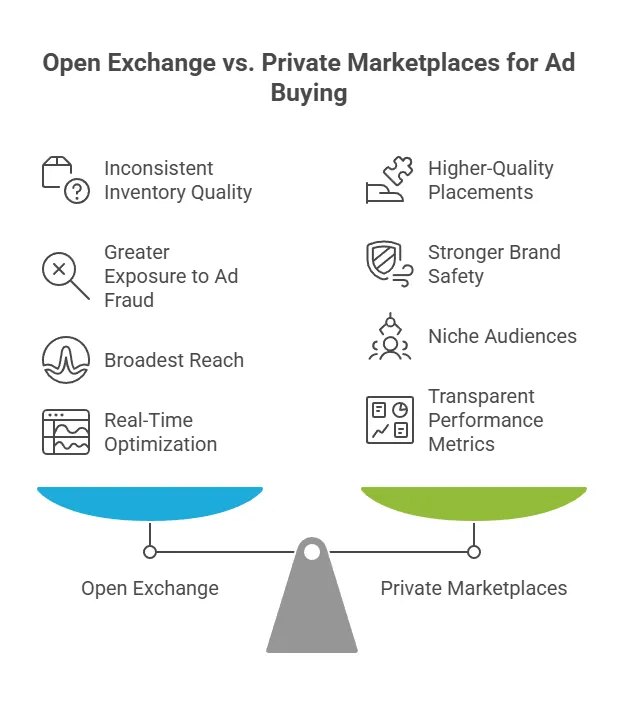
The open exchange is the largest environment for real-time bidding. It allows DSPs to purchase ad inventory from thousands of publishers through automated auction systems. This approach provides the broadest reach and enables automation and real-time optimization across billions of ad impressions.
However, open-marketplace buying also introduces risks, including inconsistent inventory quality and greater exposure to ad fraud. Because of this, many enterprise advertisers combine open exchange buying with private marketplaces.
A private marketplace (PMP) allows brands to access curated ad inventory from premium publishers through invitation-only ad exchanges. These deals typically offer stronger brand safety protections, higher-quality placements, niche audiences, and more transparent performance metrics.
For campaigns that require guaranteed reach or strict campaign goals, enterprises can opt for preferred deals or programmatic guaranteed transactions.
These arrangements allow an advertiser to get first dibs before entering the open auction environment. Unlike open real-time bidding, these deals provide fixed pricing and predictable access to premium placements.
In our opinion, this approach works best when you want to ensure visibility for high-impact creative formats tied to major product launches.
Programmatic guaranteed deals also help stabilize campaign performance by ensuring consistent delivery of ad impressions without heavy reliance on fluctuating open exchange supply.
Another programmatic transaction option is direct integration with major publishers or retail media platforms.
For example, Amazon Ads enable brands to run programmatic display ads directly within retail environments while leveraging audience data and shopping signals to improve targeting.
These integrations operate through Amazon DSP, which connects advertiser demand with both Amazon-owned properties and third-party SSP partners.
Direct integrations can provide better audience signals and access to premium ad delivery within a specific environment (such as Amazon).
In practice, these partnerships also help enterprises diversify their media buying strategy beyond traditional display ad networks.
Enterprise advertisers must maintain strict operational discipline to ensure campaign performance improves as campaigns grow.
In our experience working with large programmatic campaigns, scale exposes weaknesses in both creative systems and optimization workflows. Many teams increase media budgets quickly but overlook the systems required to sustain performance.
Here are a few practices we recommend.
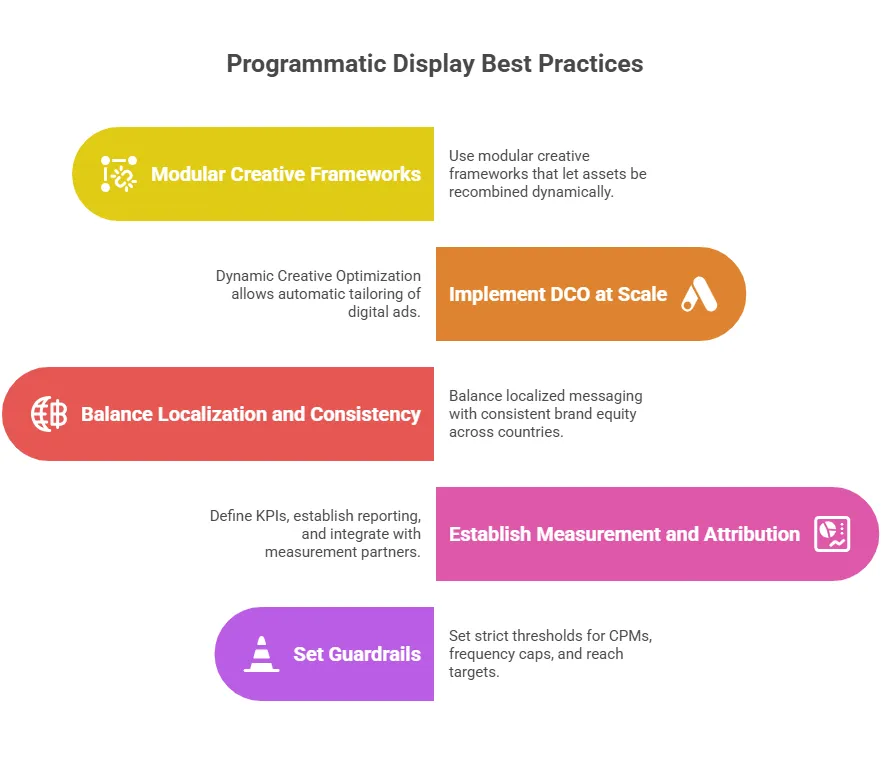
Creative scalability is essential when running global programmatic display ads. You should deploy modular creative frameworks that let assets such as headlines, product imagery, and calls-to-action be recombined dynamically across multiple ad sizes, formats, and languages.
This approach will let you maintain consistent visual authority while adapting display ads for different publishers and audience contexts.
Dynamic Creative Optimization (DCO) allows programmatic advertising platforms to automatically tailor digital ads based on user data, audience signals, and contextual inputs. In practice, DCO systems analyze real-time performance data and assemble dynamic ads from pre-approved assets.
This can help you scale campaigns quickly and optimize them in real-time. Enterprise DSP environments, such as Amazon DSP, can adjust product images, messaging, and offers dynamically for different prospects. These optimizations improve engagement, support real-time optimization, and deliver stronger performance metrics.
One report on mobile app installs via ads found that DCO led to 33% more installs.
Fortune 500 campaigns usually run simultaneously across dozens of countries. This requires a balance between localized messaging and consistent brand equity.
Local teams may need to adapt banner ads, native ads, and rich media placements to reflect regional language, cultural cues, or seasonal promotions.
At the same time, you may also need to enforce global brand guidelines to ensure creative execution remains consistent across display advertising networks and ad marketplaces.
This governance ensures that localized display advertising initiatives still reinforce the brand’s overall identity and positioning.
This is a big one. Enterprises that successfully scale programmatic display ads build measurement frameworks before launching large campaigns. For that, you need to define KPIs, establish full-funnel reporting, and integrate with measurement and attribution partners that can analyze campaign performance across channels.
With real-time measurement dashboards that track performance metrics and engagement indicators while campaigns are live, you can see how programmatic spend is performing.
These insights allow you to adjust bidding strategies and budget allocations and improve overall advertising results without waiting for weekly or monthly reports.
Without guardrails, large-scale programmatic advertising can quickly become inefficient. You need to set strict thresholds for CPMs, frequency caps, and reach targets to prevent overspending or audience fatigue.
This is one of the areas where many enterprise campaigns run into trouble. When campaigns scale across multiple DSPs and display networks, the same audiences often see the same ads repeatedly.
We have observed that excessive frequency reduces engagement and increases wasted impressions. Over time, this drives acquisition costs higher and weakens overall campaign performance.
Frequency controls are particularly important when campaigns run across multiple display networks. These limits ensure that programmatic spend supports meaningful reach instead of repeated exposure to the same audience.
Programmatic display campaigns for Fortune 500 companies require expertise and resources. Having a partner to strategize, execute, and measure these campaigns across different DSPs or ad servers can be quite beneficial.
But for most enterprises, a hybrid approach is the best option, at least for the ones with a sizeable in-house team (centralized or decentralized).
Here’s a comparison of the three routes your company can take:
Read Next: Best Full-Service Marketing Agencies for Fortune 500 Companies
Programmatic ad spending is set to hit $800 billion by 2028. This shows that companies are increasing their allocation to this type of advertising.
But as we pointed out throughout the conversation, increasing spending only goes so far. Real outcomes come from a solid strategy, reliable tech stack, constant analysis, and avoiding mistakes, such as:
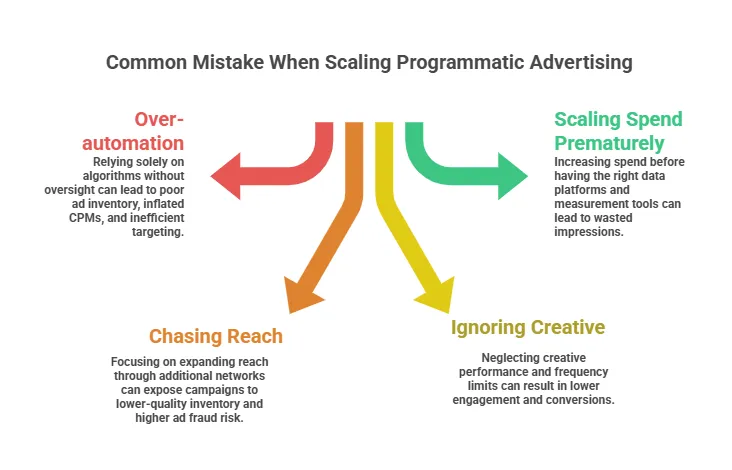
To successfully launch and scale programmatic display advertising, you need to build a durable operational system that connects media buying, data governance, audience targeting, and campaign management into a single framework.
When this system works correctly, you can expand ad impressions across global ad marketplaces, maintain strict brand safety, and generate measurable advertising results tied to real business outcomes, like expansion or revenue growth.
Fieldtrip can curate such a system for your organization.
With our expertise in strategy, media buying, and measurement, we can scale (while also optimizing) six or seven-figure programmatic campaigns in a controlled, data-driven manner with transparency and accountability through reporting.
Want help building a scalable programmatic engine? Contact us to start the conversation.
Programmatic display advertising is the automated buying and placement of digital display ads using software and real-time bidding systems. Advertisers use demand-side platforms (DSPs) to target audiences based on data such as demographics, behavior, and context across websites, apps, and connected TV inventory in milliseconds.
Yes, programmatic display advertising is profitable when campaigns optimize targeting, bidding strategy, and creative performance. Many enterprises achieve a healthy return on ad spend (ROAS) when using audience segmentation, frequency control, and conversion tracking.
Large enterprises typically budget $50,000 to $500,000 per month for programmatic display advertising. Budget size depends on audience scale, geographic targeting, and campaign objectives.
Fieldtrip offers programmatic advertising expertise by managing automated media buying, audience targeting, and campaign optimization across major ad exchanges. We can operate demand-side platforms, analyze performance data, and optimize bids, creatives, and placements to increase reach, conversions, and return on ad spend.
The best platforms for enterprise-grade programmatic advertising include Google Display & Video 360, The Trade Desk, Amazon DSP, and Adobe Advertising Cloud. These platforms support large-scale media buying, advanced audience targeting, cross-channel inventory, and detailed analytics for enterprises managing millions of impressions and complex campaigns.