



















Programmatic media buying used to feel simple: you set the rules and let automation place spend where it performs best. Today, that simplicity has faded.
You now work inside a system shaped by privacy limits, identity gaps, AI-driven decisions, and channels that behave nothing alike. Each shift affects how your team plans, tests, and protects the budget across markets.
So, in this article, you’ll see how that shift happened and what the current space demands. You’ll compare old assumptions with the pressures you face today.
But first, you need a clear starting point.
Pro tip: Programmatic is harder now, but not when you have the right partner. Fieldtrip can help. We build, test, and scale campaigns with precision. Contact us today to strengthen your programmatic performance.
Programmatic media buying is automated buying that uses data and algorithms to place spend across digital environments in real time. You set the inputs, and systems built on DSPs, SSPs, ad exchange logic, and real-time bidding handle the decisions.
This is an automated selection powered by algorithms that choose the next best impression as soon as the signal appears.
This model has become very widespread. Statista reports that global programmatic advertising spend reached about $595 billion in 2024, with projections approaching $800 billion by 2028.
Side note: To help you get started, we reviewed 15 leading programmatic partners who approach scale and structure to benchmark your own system.
Also, you can watch this video for a clear, practical explanation of how programmatic media buying actually works at scale:
This leads us to the next point.
Programmatic buying began long before automation shaped your budget decisions. The first step came in 1994 with a clickable banner placed on a single website. It was simple, fixed, and served the same message to every visitor:

Two years later, early ad servers created a way to deliver banners at scale, but the logic behind them stayed static. Large brands could buy reach, yet every placement behaved the same, and every impression carried the same value.
And as early ad networks grew, control stayed limited.
You bought broad inventory lists, accepted wide targeting ranges, and relied on manual updates to shift spend. The system worked for basic digital advertising, but it didn’t give you the signal depth or flexibility your current programs require.
Next, let’s look at how the model expanded.
Programmatic buying didn’t jump to its current scale all at once. It grew through clear phases where each shapes how you plan, test, and protect spend. And to see how those shifts changed your current workflow, here are the stages that set the foundation you use today.
In this period, Google AdWords, early ad servers, and the first programmatic platforms created simple automation. Buying was still broad, but auctions began to replace fixed placements. By 2007–2009, the first real-time auctions appeared, which gave people early signs of what later became full programmatic ad buying.
Automation accelerated once DSPs and supply-side platforms matured. And because these tools could route spend through structured auctions, programmatic moved from an experiment to a standard buying method. The shift improved scale, but it also introduced the first signs of workflow fragmentation as each tool carried different logic and controls.
This phase brought mobile growth, richer units, and video at scale. The rise of digital display banners, native advertising, and early video formats forced your teams to manage more assets and more conversion paths. At the same time, early privacy regulations began limiting identity signals, which pushed you to rethink how you matched creative, audience, and placement.
Identity loss, the rise of first-party data, and changes to third-party cookies reshaped how you evaluate audiences. Channels like connected TV, programmatic audio advertising, and digital out-of-home advertising added new surfaces for spend.
Programmatic media buying stays strong.
Current data from eMarketer reports that programmatic accounts for about 96.8% of incremental worldwide display dollars in 2025, and it will stay above 96% into 2026. This pressure forces you to align automation, measurement, and creative supply more tightly than before.
Now, let’s shift to how today’s system actually works.
Programmatic buying runs on a clear chain. That's when:
Each step carries its own signals, limits, and cost impact. And because every part of the chain reacts in milliseconds, your DSP becomes the central system that interprets audience rules, pricing, placement quality, and risk controls in real time.
From there, the decision cycle follows a repeatable pattern.
If it wins, the ad is served. The cycle then shifts into campaign optimization, where feedback loops refine bids, shift budgets, and update pacing. This loop repeats across millions of touchpoints, and it continues as long as the inventory and budget allow.
This model gives you predictable scale, faster testing, and clearer alignment between spend and outcome. And because the system can read consumer signals and update bids as soon as conditions shift, you gain tighter control over performance.
It also supports safeguards like brand safety checks and fraud detection, which would be impossible to manage manually at your volume. The structure doesn’t remove the need for judgment, but it reduces the operational load that used to drain your team’s time.
Now, let’s move to how this structure changed once formats expanded.
Programmatic buying changed once user behavior moved beyond static placements. As screens multiplied and attention spread across formats, the buying model had to match that shift. And because this change reshaped how you plan, test, and supply creative, it affects almost every workflow you manage today.
At the same time, richer units introduced interactive elements, swipes, and motion. These formats pushed teams to rethink asset production, approval flows, and measurement setups.
They also changed how you read and interpret results, because each format carries different intent signals and different exposure depth. For this reason, the mix you choose now shapes how your ad campaign behaves across each surface.
Check out this table for a simple view of how each format evolved:
| Format | What Evolved | Why It Matters for Large Brands |
|---|---|---|
| Display | Static → dynamic | Scale + efficiency |
| Video | Pre-roll → CTV | Storytelling power |
| Mobile | Basic → location-aware | On-the-go reach |
| Audio | Radio → programmatic audio | High engagement |
| Native | Static → contextual | Blends with content |
With this out of the way, let’s move to how today’s system adapts to these formats.
Privacy changes pushed programmatic buying into a new phase. The tools you rely on still work, but the signals behind them look different from what they did even a few years ago. And to understand where pressure shows up in your workflow, here are the shifts that now shape daily decisions.
Fieldtrip supports this shift by planning media with creative and strategy in one track.
This structure helps you adjust audience rules, creative supply, and pacing models as signals change. And because our teams work side-by-side, you get faster updates and stronger alignment between planning and execution.
Next, let’s see how AI and automation now shape large-scale buying.
AI changed programmatic buying from a rules-based system into one that learns and adjusts as conditions shift. The core engine now uses artificial intelligence and machine learning models to predict value, select placements, and update bids as soon as new signals appear.
This removes guesswork and reduces the manual tuning that once slowed large programs. These models analyze supply quality, audience fit, page context, time-of-day patterns, and prior outcomes. And because they operate across millions of impressions, the system becomes more accurate over time.
The same thinking drives dynamic creative optimization.
This means that assets change to match user behavior, context, or intent without adding work for your team.
For large brands, the gains show up in better pacing, clearer decision logic, and stronger return on ad spend. AI also reduces noise by filtering low-quality supply paths and routing spend toward inventory that aligns with your rules.
And since it can track shifts in the ad tech ecosystem, it reacts faster than manual updates ever could. Moving on, let’s look at the channels now shaping enterprise budgets.
Programmatic buying no longer sits inside a narrow set of placements. It now extends across screens, environments, and content types, each with its own signals and measurement rules.
And because spend follows where attention goes, you’re seeing more weight shift into channels that can be bought through programmatic pipes. In fact, recent industry reports show rising investment in CTV, audio, DOOH, and retail media across agencies and large brands.
Here are the channels now shaping how your budgets move:
Connected TV or CTV gives you long-form attention with programmatic flexibility. It behaves more like premium video than display, but it still routes through modern buying systems.
And to give you context on scale, Statista reports that global CTV spend exceeded $29 billion in 2024, with forecasts of more than $38 billion by 2027.
The growth forces you to:
CTV also carries stronger identity signals than open web programmatic display, which changes how you size audiences and build reach curves.
Streaming platforms, podcasts, and digital audio environments now function like high-engagement surfaces in your plan. Audio slots usually carry lower clutter and support sequential messaging.
They also give you new targetable signals, such as time-of-day patterns or content categories. These details help you build cross-channel sequencing without adding heavy production cycles.
Programmatic DOOH brings location, context, and moment-based triggers into your plan. Screens update by geography, proximity, or event-based rules. And since DOOH CPMs stay more stable than other channels, many teams use it for reach extension without overloading frequency.
As a quick benchmark, programmatic DOOH spend is projected to reach around $1.4 billion worldwide between 2024 and 2026, with annual growth in the 16-23% range.
Game environments offer high attention and low-scroll conditions. They also give you new signals tied to format, device, and event triggers.
These placements behave differently from video or display because exposure time and on-screen context vary widely. For teams managing global reach, in-game typically becomes a low-waste extension of the video plan.
Fieldtrip supports this shift by operating across paid social, search, programmatic, OOH, influencer media, and CTV. Our integrated structure helps you align creative supply with channel rules and adapt pacing as new surfaces mature.
Up next, let’s discuss how your strategy should evolve across these channels.
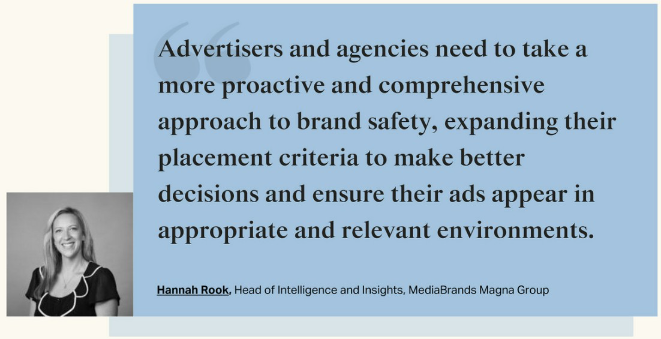
Programmatic buying keeps expanding across channels, devices, and identity rules. This shift creates new pressure on your data systems, creative supply, measurement logic, and internal workflows. And to keep those pieces aligned, here are the areas that now matter most for long-term performance.
Identity loss makes your owned data the anchor of your audience strategy. Clean, structured inputs help your demand-side platforms build accurate models, reduce wasted impressions, and stabilize reach curves across markets. Stronger first-party inputs also help you avoid over-reliance on modeled segments inside walled gardens.
And to reinforce how widespread this shift has become, WARC's 2024 report shows that more than 75% of programmatic decision makers now invest in first-party strategies. Meanwhile, 57% see those systems as the most reliable path after cookie deprecation.
These numbers show one point: your audience accuracy now depends more on what you control than what platforms supply.
Format expansion demands faster asset supply, more variation, and clearer signal matching. And creative now plays a direct role in pacing, quality scores, and the consistency of your outcomes.
Fieldtrip supports this with systems that generate steady creative volume, adapt assets for each placement, and connect production directly with media and strategy. This setup gives you the supply you need without slowing testing cycles or overloading internal teams.
Fragmented reporting leads to uneven decisions. A unified view helps you compare exposure depth across screens, tie upper-funnel signals to performance, and understand how environments overlap. Cross-channel models also help you reduce double-counting, surface incremental lift, and map creative exposure against final conversions.
Crowded exchanges create waste, inflated CPMs, and gaps in visibility. Clean supply paths help you understand where your budget travels and where quality breaks down. And since SSP quality now influences bidding outcomes, the relationship carries more value than before.
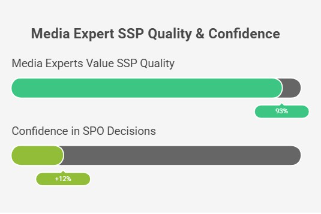
As a reference point, Integral Ad Science reports that 93% of media experts say SSP quality matters in their evaluations, and adding viewability, fraud, and safety metrics increased confidence in SPO decisions by 12 percentage points.
These signals show why you need stricter controls, cleaner routing, and clearer rules inside your advertising system.
AI improves pacing, protects against cost spikes, and reads live data-driven intelligence across each environment. Manual adjustments are still needed, but automation now handles the bulk of bid shaping, frequency control, and creative matching. This frees your team to focus on strategy, constraints, and exceptions rather than routine operational tasks.
CTV, programmatic TV ads, DOOH, audio, and in-game environments now shape reach curves and channel mix. Early testing helps you understand cost patterns, signal depth, creative requirements, and how each placement influences final outcomes.
Because formats mature at different speeds, you gain an advantage by learning how they behave before budgets scale.
Fieldtrip helps you run programmatic programs without the disconnect that happens when strategy, creative, media, and measurement sit in separate tracks.
Everything operates inside one connected system, which means your signals, assets, and pacing logic stay aligned from planning to reporting. And because our teams work in small autonomous units, adjustments happen quickly when budgets shift, formats change, or new surface areas open up.
Our approach to creative production also supports the demands of programmatic buying.
We build systems that supply steady asset volume, adapt messages to each placement, and validate performance through real-world testing before larger rollouts. This helps you keep up with the pace of format changes across display, video, CTV, social, and OOH.
Fieldtrip’s structure gives you a partner who operates with the same speed and clarity you need for complex, multi-market programs. Brands like Dashing Diva have seen real gains from this approach.
They cut CAC by 24%, increased the number of channels from 3 to 7, and doubled their ad spend through high-performing creative. Results like this show how strong creative systems can reinforce the speed and testing rhythm your programmatic work depends on.
The ad below, for example, has a 2.35 ROAS and 6.60% CVR:

Programmatic buying has moved far past static banners. It now runs on automation, real-time signals, and formats that behave differently across screens. This shift demands stronger data foundations, flexible creative systems, and teams that can adjust quickly as conditions change.
The brands that win treat these parts as one connected operation rather than separate tasks. And Fieldtrip can help you do the same.
If you want support building a programmatic system that matches the pace and scale of your markets, reach out to our team.
The evolution of programmatic advertising is the shift from fixed banner buying to automated systems that use live signals, multiple formats, and AI-driven decision logic. This change expanded your control, improved targeting accuracy, and reduced the manual work that once slowed large programs.
Google Ads is considered programmatic when you use its automated bidding systems and inventory bought through auction-based pipes. Some parts of the platform run on direct buying, but the broader system relies on programmatic logic.
The difference between digital marketing and programmatic advertising is that digital marketing covers every online channel. Meanwhile, programmatic refers to the automated buying method behind many of those placements. Programmatic focuses on how impressions are purchased and optimized rather than the full marketing mix.
The opposite of programmatic advertising is manual media buying through fixed orders and direct negotiations. This older model lacks automation, relies on preset placements, and requires more hands-on work to adjust pacing or shift budgets.