





















Brand building keeps getting harder as crowded markets, AI-shaped feeds, and shifting signals push your team to make faster calls with less clarity. And as demand for new creatives rises, you feel the strain on alignment across regions, channels, and partners.
So you need structures that cut delays, tighten decisions, and keep your brand positioning steady even as your production pace accelerates.
To help you out, we'll give you practical frameworks with free templates you can use to guide conversations, reduce rework, and keep momentum.
You’ll see where each model fits and how to choose the one that helps your team move with more confidence.
A brand strategy is the system you use to guide how your brand story works, scales, and stays steady under pressure. It gives you a clear structure for decisions when your team is moving fast, especially as more channels, partners, and formats pull your work in different directions.
The strategy covers three parts:
Also, let's keep in mind that trust drives action.
In fact, 81% of people say it’s a deciding factor when purchasing. That means that you need to create a brand that people will trust and will want to buy from.
And here’s something else that you should think about before creating a brand:
“A great brand is a story that’s never completely told.” - Scott Bedbury, American branding consultant
“Okay, but does this still matter in 2026?”… yes, yes it does. Let’s see why.
Brand strategy frameworks matter more in 2026 because they give you a stable way to direct decisions while everything around you speeds up. And as your team moves through more channels with tighter cycles, you need clarity that reduces delays and misalignment from the start.
Here are the shifts shaping that pressure today:
So, we believe that brand strategy frameworks can help you cut through the noise, protect your brand perception, and help you direct creative choices with less friction.
Fieldtrip is one of the best full-service marketing agencies that's trusted by Fortune 500 companies. And based on our experience so far, we see this shift across every industry as teams refresh systems more frequently to keep pace. That pace demands a clear structure you can return to when everything else moves too fast.
Alright, let’s break down the core parts next.
The 4 C’s of brand strategy are Company, Category, Consumer, and Culture. They give you a fast way to see whether your direction holds up under real conditions. And as you deal with faster cycles and more teams touching your work, you need a structure that helps you move from high-level intent to choices your partners can execute.
These four inputs shape the core types of strategy you use every day. So here are the parts that matter most for guiding your brand message, your marketing strategy, and the systems behind your brand architecture.
Modern positioning works when it gives your team a shared filter for decisions. So instead of long narratives, you focus on tools people can use in meetings and briefs. These are the three templates that perform well for us (click the links to download them):
These formats give you speed and reduce rework when channels change.
Architecture shapes how your portfolio works together across regions, product lines, and channels. Below is a simple view you can use to direct conversations:
At Fieldtrip, we believe that fast-growing companies tend to drift.
We see this in content-heavy organizations where creators, paid channels, and regional teams unintentionally build new sub-identities. But creating a clear architecture stops that drift and protects long-term brand equity.
Expression covers tone, narrative, and how your visual identity moves across surfaces. In 2026, this expands as AI-generated assets and modular systems multiply.
So your team needs rules that hold the core while giving space for adaptive storytelling. Small shifts in color, format, or pacing can break alignment quickly, which is why a tight brand identity system matters.
This is where your strategy meets execution. You can use growth tools like distinctive memory structures that can help your team create repeatable cues.
Demand–capture maps clarify where your marketing efforts should land first. And Fieldtrip’s creative testing loop ties performance signals back into strategy so each cycle gets sharper.
With this foundation in place, let’s move on to the frameworks you’ll use in 2026.
You need practical tools that help you direct creative choices fast, keep teams aligned, and protect your brand framework as production speeds up. So here are the models that work under real pressure and help you move with more confidence.
The adaptive model helps you keep your direction steady while adjusting proof points by market, audience, or channel.
And as formats shift faster in 2026, you need positioning that holds its shape even when each region or team faces different pressures.
The core message stays consistent, but you adjust evidence and examples based on local signals and constraints. And the parts that make the model work are a simple three-part template:
This helps your team write a clear positioning statement without stretching it across every use case. Our team has seen leaders use this structure to reduce internal debates and shorten decision cycles across teams.
It’s exactly what we did for Soylent, helping them distribute their product lines based on specific influencer interests (outdoors, hiking, gaming, etc.).
We worked with 10 creators that brought Soylent over 5 million impressions total with content pieces like these:

Modern creative work depends on fast feedback. So, integrating first-party data into your creative campaigns gives you a path to take audience signals and feed them into your choices without slowing your sprint.
The cycle is simple:
Collect → Learn → Create → Measure
And because your team is flooded with dashboards, the power comes from using only the signals that shift creative direction. That’s why we've seen many leaders pair this loop with a related topic like content marketing, since both depend on clear input paths.
At Fieldtrip, we use social as a live sensor layer where we test early versions and learning from real responses before scaling. This gives you usable insight instead of noise and helps you adjust work at the pace your channels demand.
A modular system gives your team room to scale creative output without drifting from your brand core. It works by breaking your visual elements into flexible parts so each market or channel can adjust without rewriting the system. This includes color sets, type rules, layout patterns, and motion cues.
And this matters because leaders report that consistency supports revenue. According to a report by Lucidpress, 68% note that brand consistency has contributed from 10% to more than 20% of their revenue growth.
That aligns with what we see when systems break. Small changes stack up, such as a shift in brand color, a new template, a creator edit, or a partner asset. So a modular system helps you prevent small inconsistencies from compounding into confusion across your brand touchpoints.
This framework helps you tie your message to real cultural cues instead of generic narratives that fade in crowded feeds. So the goal is to connect what you say to what people value right now.
Our client Hurom does exactly this, focusing on people’s pain points. For example, Hurom knows that many people want to eat healthily but don’t have room in their kitchens for different appliances.
They also capitalize on different trends, like gut health for overall physical and mental health:
These kinds of strategies are proven to pay off.
Research from 2024–2025 showed that when a brand’s cultural involvement aligns with personal values, people feel stronger benefits and become more willing to pay more for the product. That’s the effect you’re working toward.
Tone matters here because style alone doesn’t help if your consumer-facing language feels out of sync with the moment or the audience you’re trying to reach. The model is straightforward:
So, listen to signals from your target consumers, filter out what doesn’t match your direction, and adapt your message so it lands cleanly across your channels. We encourage you to treat this as a living system rather than a one-time exercise.
This model helps you manage reach and relevance at the same time. You set a primary audience for your core message and define a secondary group for scale. Then, outline an edge audience that pushes your brand storytelling into new spaces without drifting from your base.
And niche communities can do heavy lifting here. Brands running niche-specific campaigns see up to 3x higher ROI than broad, mass-market approaches.
That’s why we usually advise leaders to map audiences through a targeting strategy that separates who needs to convert from who helps spread your message.
From our experience at Fieldtrip, the structure gives you speed when building briefs and protects your direction when new requests show up mid-cycle.
With rising media costs, attention becomes something you allocate rather than something you assume you’ll get. So you work through three steps:
The hook gets the first pause, the hold keeps people long enough to process the idea, and the transfer moves them to the next step in the customer journey. Each stage shapes how you sequence creative across channels.
For example, short-form hooks can begin on social, while longer explanations or richer visual content can live on channels built for depth. Leaders who rely on this model reduce waste because every team member understands the role their asset plays in the sequence.
For our client Slynumber, a privacy app giving users real numbers for calls and messages abroad, we tested different hooks. This one had a massive 42.89 hook score rate:
Pro tip: If you want to grab attention like a pro, make sure to read our 10 engaging hooks and openers guide.
Creators shape how people see your brand because they show your offer in real contexts, with language and cues your target consumers already trust. So this is an ecosystem that supports your brand management across channels.
You build a steady flow of creator assets, test what works, refine your message, and scale the formats that carry the strongest lift. Modern brands rely on this because creator content reaches spaces traditional ads can’t.
Fieldtrip’s work shows the impact clearly.
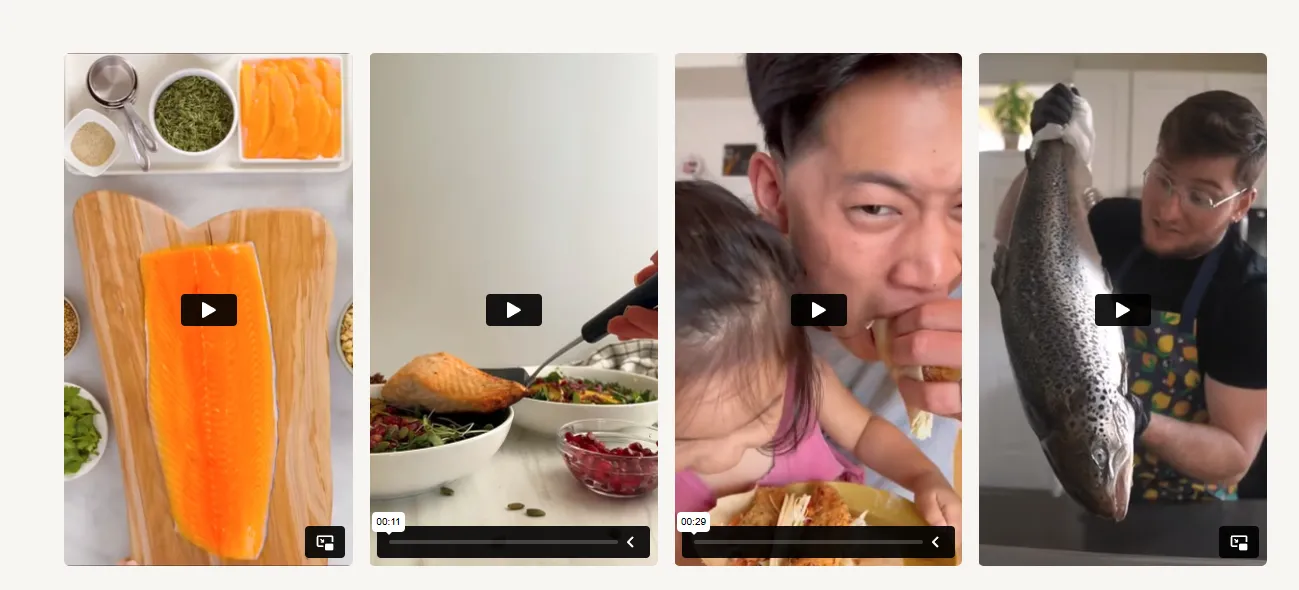
For Bluehouse Salmon, we generated 500+ unique assets, added more than 3,000 followers each month, and reached 1900% follower growth across a year.
The challenge was making organic salmon attractive, so our influencers integrated it into their lives, showcasing different recipes:
With us, Greenpark increased spend by 300%, cut CPI by 70%, and lifted daily installs sixfold.
Those outcomes come from systems (not single posts). And if you work through a similar structure, you get reach, context, and credibility without sacrificing control of your brand purpose or direction.
Here's an example of what we did for them:
Creative cycles move too fast for slow approvals or long debates. So this framework helps you learn quickly and use those signals to direct the next sprint. The process is simple: test the work early, scale only what performs, and treat social as your earliest indicator of what people respond to.
Leaders usually track performance across formats, hooks, pacing, and story arcs so they can see which pieces support their business strategy and which pieces drift.
Hint: We use this approach across categories because it reduces wasted cycles and gives your team clear evidence for the next version.
And as channels multiply, this model anchors your marketing frameworks so every update gets sharper.
Pro tip: If you need help with the creative side when creating a brand strategy, feel free to check out our guide on the top 15 creative agencies for global branding.
This framework helps you track only the signals that guide stronger creative choices. So instead of long dashboards, you focus on the few inputs that shift decisions in 2026. This includes attention patterns, audience response, cost trends, and message clarity.
Signal-based measurement works because it gives you direction without slowing your cycle. Leaders usually build a light strategy map that ties each signal to an action.
We believe that you can adjust the hook, update pacing, refine placement, or reshape the offer. And by keeping the stack simple, you avoid noise while staying close to the moments that influence performance.
This framework helps global teams localize without losing their core. The model works by defining a clear “brand spine” (the non-negotiable parts that shape meaning) and pairing it with local variations that adapt your message for regional constraints.
So you keep tone steady, protect cultural accuracy, and prevent each market from rewriting your story. Many leaders map this out through brand governance or similar tools that help teams understand what can flex and what must stay fixed.
And having this clarity speeds up execution because partners know how far they can adapt language, form, and creative style. Fieldtrip’s global work with NielsenIQ shows how this holds up under scale.
Our team activated more than 100 creators each month across 17 countries and later reduced CPA by 37% across 19 countries through localized testing and region-specific creative. We’ve seen this approach cut delays because every creator works from shared guidance, while still shaping content to fit local behaviors and cues.
When you apply this model, you protect global consistency while giving local teams what they need to move faster. Here's a quick look at our work for NielsenIQ:
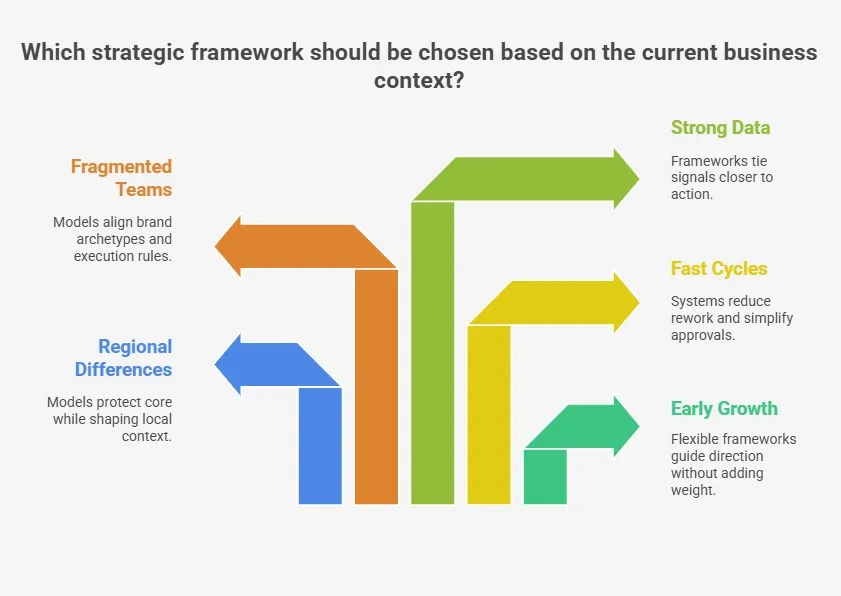
The right model depends on the conditions you’re working under. Most people get confused and go with the one that sounds the most strategic on paper. But we can guarantee that this is the wrong choice. So start by looking at the factors that shape your decisions each week.
Here are the filters that help you choose with more clarity:
And for leaders who want a fast tool, here’s a simple decision tree:
Next, let’s talk about the common mistakes leaders still make in 2026.
It’s easy to lose alignment when your team is shipping at speed, especially when every market and partner adds their own interpretation. So here are the mistakes that create the most friction when pressure rises:
With this out of the way, let's talk about how to choose the model that fits your setup.
Different models work better under different conditions, so it helps to compare them side by side before you commit. Here's a simple matrix of the factors that shape the choice and how each one affects your direction through market dynamics and alignment:

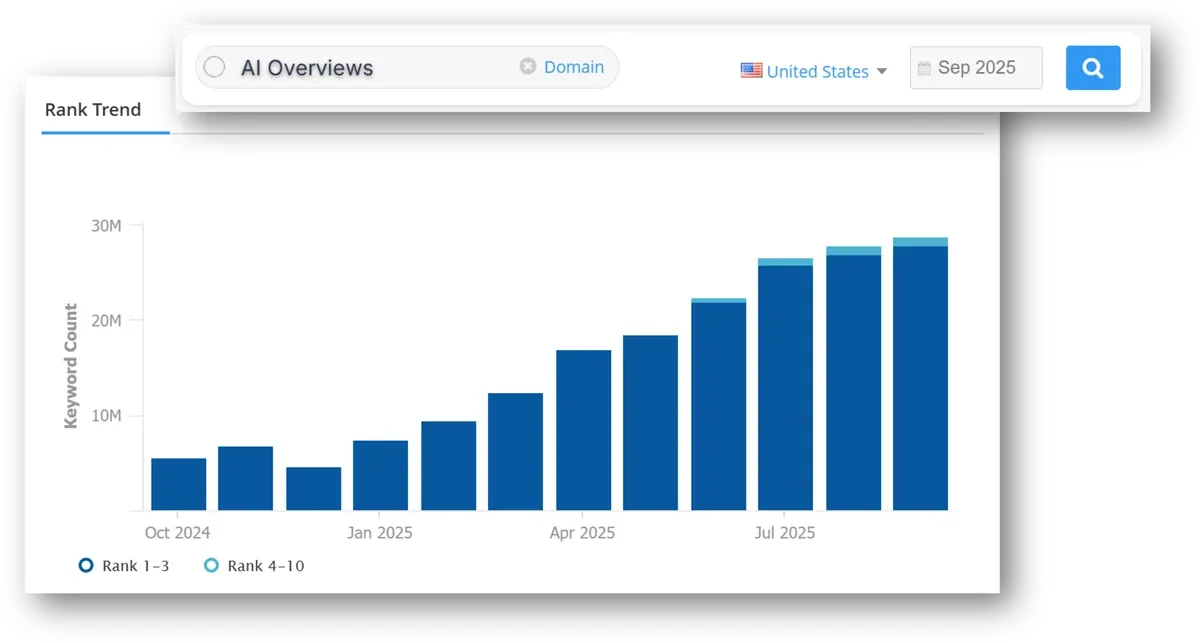
AI now shapes how fast you research, refine direction, and sense-check ideas, but it also changes how people find and judge your work. So your frameworks need to support both speed and accuracy. AI helps you scan patterns, compare signals, and build early versions of creatives that predict which angles will land.
Also, Adobe for Business found that 36% of users now replace search with AI assistants, with 25% using AI for shopping. Because search behavior is shifting, you need models that protect your core even as discovery changes.
Here's an outlook of how AI improved the shopping experience across generations:

The risk is sameness, where every output looks similar, so your brand name and cues lose strength. That’s why human input still matters. You provide the context, the boundaries, and the brand archetypes that AI alone can’t judge.
And that combination helps you read behavior more clearly by grounding decisions in real user psychology.
Fieldtrip builds brand strategy inside one connected system where strategy, creative, media, and measurement work side by side.
So instead of passing work between separate teams, everything moves through a shared process that keeps decisions fast and grounded in real signals. This helps you get clearer direction, faster readouts, and a creative that performs under pressure across channels, regions, and partners.
Our work spans CPG, tech, beauty, fashion, B2B, gaming, wellness, and other industries. This gives us a wide view of how systems hold up in different conditions.
And the impact shows up in results.
For Genomelink, we built a continuous UGC engine that reduced CAC by 73%, increased registration completion by 124%, and lowered cost per registration by 27%. That happened because creative, data, and testing loops stayed tightly aligned. Here's a sneak peek of our work with them:
If you need a structure that scales across markets, Fieldtrip helps you choose the right architecture and grow it with content, creators, and data working as one.
These models only work if you translate them into weekly habits your team can follow. So here are the steps that help you move from theory to action without slowing momentum:
The teams that stand out next year will be the ones using clear frameworks, tight learning loops, and creative systems that hold up under pressure. So this is the moment to choose or refine the model that fits your setup before you scale your next campaign.
And if you want support building a structure that works across channels, regions, and partners, Fieldtrip can help you put the right system in place. Contact us today to learn more.