






















Expanding internationally is one of the biggest growth levers for ambitious companies. However, with it comes the huge challenge of marketing, particularly digital marketing. Although globalization is real, local nuances require careful deliberation and strategy.
47% of businesses lack a proper digital marketing strategy.
And without one, any expansions are like shooting arrows in the dark. You waste resources and fail to make the needed impact.
This is where experts like digital marketing agencies can help. But not all agencies have the capacity or experience to strategize and execute international campaigns.
To execute an international marketing strategy, you need an agency that has the right mix of global presence, multi-channel expertise, and a powerful tech stack.
You can leverage our detailed guide to vet potential partners, so you start off strong with a partnership that benefits you.
P.S. Discover the Top International Marketing Agencies to drive your expansion projects.
When you’re preparing to scale your business into new international territories, partnering with a specialist digital marketing agency is one of the most strategic moves you can make.
From what we’ve seen in practice, expansion challenges rarely come from ambition; they come from execution at scale.
A dedicated agency brings deep competencies like search engine optimization (SEO) and paid social, along with localization and multi‑channel execution that most in‑house teams struggle to match at scale.
Let’s get into it:

A global agency lives and breathes international marketing. They are combining market research with deep cultural and linguistic insights. With global acumen also comes local understanding, like market-specific insights about which platforms and channels work best.
We’ve observed that what performs well in one region usually underperforms, or fails entirely, in another.
That’s why market-specific knowledge matters, from knowing which platforms dominate (like Baidu in China) to understanding how audiences respond to creative, messaging, and offers.
Remember, there are nearly 200 countries in the world. And each country or region has its nuances when it comes to ads, organic reach, and content marketing. Also, localization isn’t just about translation. Marketing material has to feel local and absorb the culture and expectations.
Global branding missteps happen when this nuance is ignored. From what we’ve seen, the brands that succeed internationally are the ones that treat localization as a strategic input.
We’ve said it before, and we’ll say it again: strategy and execution are two very different things. Although most agencies are good at execution, they don’t invest nearly enough time in strategy. And when it comes to expansion, having a well-thought-out strategy is the key to success.
Agencies, or rather good agencies, also offer growth strategy services, so execution is fully aligned with business goals from the get-go.
Content Marketing Institute’s survey found 16% of B2B brands struggle with content strategy and plan.
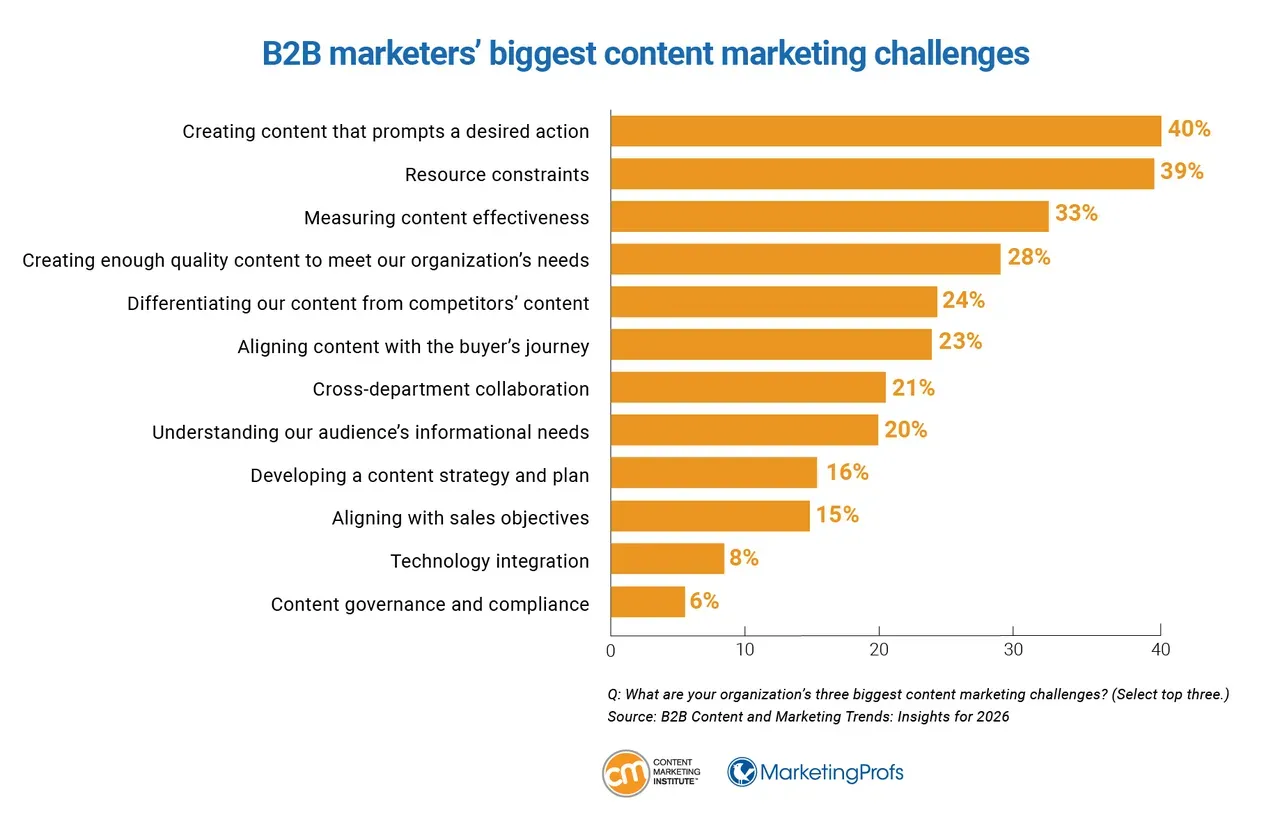
That’s more than likely because of a lack of knowledge and data–both of which a reliable agency can offer.
In digital marketing, there are just so many channels today: content marketing, PPC campaigns, email marketing, social media marketing, affiliate marketing, influencer marketing, and connected TV (CTV) advertising. No internal marketing and advertising team has the chops to ace most of these channels.
Specialty agencies bring in channel-specific expertise that helps you increase return on investment (ROI). whether you’re taking an organic or paid (or both) approach in a new market.
For instance, Fieldtrip’s creator marketing division (inBeat) specializes in enlisting influencers from around the world and leveraging the power of creators to spread awareness alongside increasing conversions.
Advertising standards and rules vary by region. Honest mistakes in ad creatives can be perceived as false advertising and bring legal action.
Similarly, certain industries are heavily regulated, and any marketing campaigns must align with the rules for that industry, for example, healthcare, legal, or finance. An agency with an understanding of regulations can ensure everything is by the book.
Then there are privacy regulations like GDPR that are super relevant to digital marketing. Any data you collect to fine-tune those email or social campaigns must comply with the regulations. Again, the right agency can handle these necessary compliance checks.
Further Reading: What Makes a Creative Agency the Right Partner for Large Enterprises?
With dozens of agencies claiming international expertise, you need a structured evaluation process that goes beyond flashy presentations and vague case studies.
This step-by-step guide is built to help SaaS and digital-first companies identify performance-driven, regionally aware partners who can deliver measurable results across digital channels.

Before you vet agencies, clarify what success looks like for your global push.
For that, we suggest defining specific, measurable goals tied to performance metrics such as website traffic from new target markets, improvements in search engine rankings, or reductions in Customer Acquisition Cost (CAC) in those regions.
For example, you might set an objective to increase organic search traffic in Europe by 50 % within 12 months or to improve brand awareness and qualified leads in APAC markets by 30 % year‑over‑year.
This works two ways. First, you have a clear goal for expansion that guides everything. Second, you have a benchmark to measure the agency's efforts.
And in our experience, clear and specific goals also help us marketers because we know what the prize is.
Pro tip: Good objectives follow SMART criteria (specific, measurable, actionable, relevant, and time‑bound) so you can track progress across markets with confidence and align all stakeholders around the same KPIs.
Once you’ve outlined these targets, you’ll be able to gauge how well an agency’s proposed digital marketing strategy can drive performance. Finally, ensure your objectives include revenue and engagement milestones tied to international growth, such as net new users or trial conversions from key regions.
When vetting potential partners for international growth, the depth of an agency’s global market experience is one of the most telling indicators of future performance.
A strong track record shows they have experience in multilingual digital marketing, localization strategies, and cultural nuances across regions rather than relying on generic, one‑size‑fits‑all approaches.
And if you’re aiming for truly global expansion, you need an agency with a physical and/or online presence in major markets. Ideally, they should have proven experience in those markets.
That should become clear with any relevant case studies, preferably ones with metrics, from different brands in various countries.
At Fieldtrip, we’ve made a point to clearly document our work across industries on our website. We believe transparency like this makes it easier for teams to assess whether an agency can actually deliver in the regions they’re targeting.
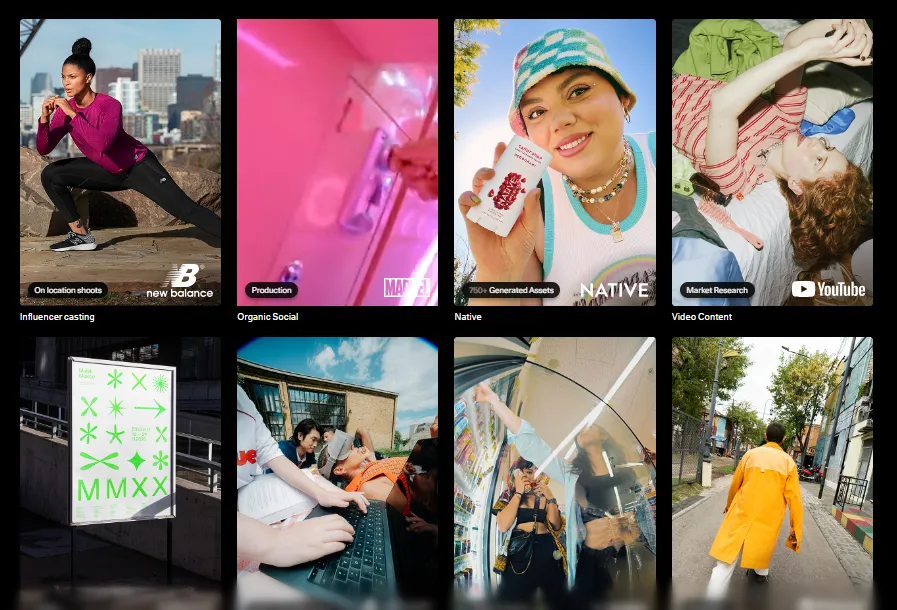
We have dedicated global teams for different channels that bring local expertise with a wider worldview. We’ve executed multilingual campaigns (NielsenIQ and Hurom) and worked with brands to enter key markets like North America and Europe.
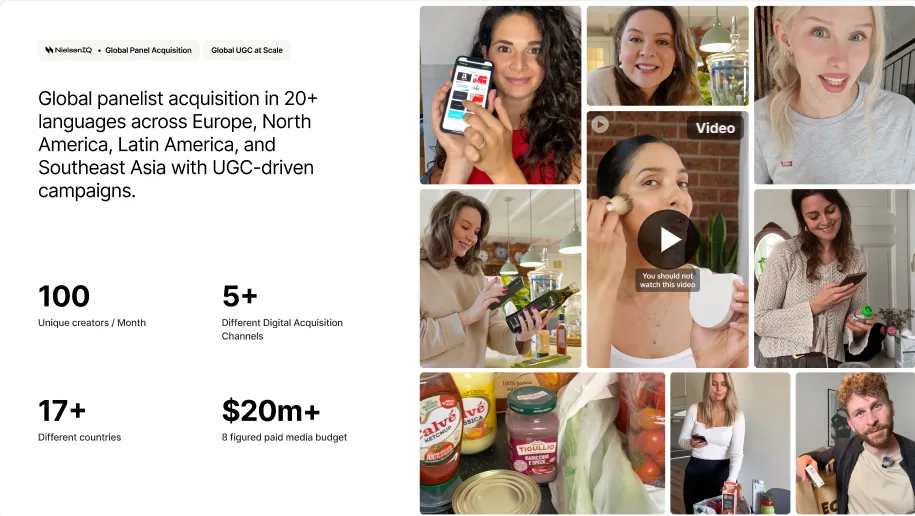
So, when reviewing an agency’s portfolio:
Research shows that 75 % of customers prefer to buy products with information in their native language.
But what many agencies get wrong is that simply translating content doesn’t move the needle. The marketing efforts have to be relevant to the targeted market and align with key elements like culture and demographics.
We’ve learned that even digital behavior varies widely by region. Search habits, social platform usage, and content formats differ from market to market. Some platforms are more popular in certain countries. For instance, in South Korea, Instagram reigns supreme, but there are also local platforms like KakaoTalk, which is primarily a messaging app.
You want to work with an agency that does localization right. What does that look like?
Again, experience in a specific market is a good indicator, but you should ask specific questions about the campaigns you want to run and the people you want to target. An agency worth partnering with will explain how they assess and optimize customer experience for each audience.
When evaluating an agency for global expansion, it’s essential to drill down into its specific expertise. Great agencies don’t rely on a one‑size‑fits‑all digital marketing strategy. Instead, they tailor channel mix and execution based on regional nuances, audience behavior, and performance data.
If there are specific channels that you aim to target, for example, paid social or search ads, you’d want an agency that excels in those areas of marketing.
Focus on specific channels and media will always trump a generalist approach of ‘we do it all.’
Of course, there are agencies (like ours) that specialize in multiple areas. However, they should be structured to deliver on the channel-specific goals.
Plus, signing up with the same client for multiple services is just more convenient. More than half of agency clients sign up for three or more services, according to Agency Analytics.
In other words, if the same team doing SEO is also doing paid ads, your marketing spend may not be in the best hands.
Also, to vet an agency’s capabilities, ask how they select and optimize channels by market. For example, in East Asia, region‑specific social apps dominate search and engagement, whereas in Europe and the US, audiences might be more reachable through Google Ads, Meta platforms, and integrated content marketing campaigns.
Before you commit to an agency, take the time to understand how they measure success, track performance metrics, and optimize campaigns across regions. The right partner should go far beyond vanity metrics like likes or impressions.
Growth and revenue-linked metrics include:
If the agency can show those metrics for their previous work, you’re in capable hands. Ideally, you want to define your own measurement framework (tied to your expansion goals) and the KPIs to track. That should be baked into the contract you sign, and the agency should be willing to deliver those KPIs through sophisticated reporting and analytics.
Also, inquire how this data will be presented.
These are the most important questions to ask.
At Fieldtrip, we use Google Analytics and platform native analytics to measure campaign performance and report it back to clients regularly. Clients get access to growth metrics alongside industry benchmarks and/or historical references.
Potential digital marketing partners must understand how to navigate complex data privacy regimes like the General Data Protection Regulation (GDPR) in the EU or the California Consumer Privacy Act (CCPA)/California Privacy Rights Act (CPRA). These regulations govern how personal data can be collected, stored, and used in email campaigns, PPC campaigns, SEO, and audience analytics.
Under GDPR, for example, companies can be fined up to €20 million or 4% of their global annual turnover for serious violations.
Any mature digital marketing agency will show that it isn’t just aware of the regulatory space but has documented compliance workflows and tools in place. They should also explain how they reconcile privacy policies, vendor contracts, and data governance practices across jurisdictions.
How an agency organizes its people, across content marketing, social media management, analytics, and creative execution, directly impacts its ability to deliver consistent results at scale.
A well‑aligned operating model ensures clear roles, efficient workflows, and accountability across functions. On the other hand, a poorly structured team will result in miscommunication, duplicated effort, and slower execution.
Agencies with clearly defined specialists tend to coordinate more effectively. A McKinsey & Company study on team dynamics shows that defined team structures improve collaboration and scalability.
But beyond structure alone, it’s also worth thinking about what kind of working relationship you want with your agency.
As T. Maxwell, Forbes Councils Member, puts it:
“Once you have shortened your list to only the legitimate contenders, ask yourself what you really want from this relationship. Everybody wants something a little different from their agency relationship. Marketing is supposed to be fun for business owners who are doing all the mundane operational tasks needed to run their business. So, choose an agency that aligns with your personality and availability and is also fun to work with.”
Remember that agencies that combine clear structure with strong collaboration are easiest to work with and the most effective long-term.
When evaluating potential partners, we recommend asking them to explain their operating model in detail:
Clear reporting lines and team frameworks make it easier to understand who’s accountable for what. For example, agencies that scale effectively across different markets have a mix of global leadership and on‑the‑ground local experts.
In your evaluation, request org charts, role definitions, and examples of how the agency’s structure has enabled seamless performance tracking and cross‑functional execution.
How we do it? Fieldtrip is a grouping of multiple specialty agencies that function independently but also collaborate on strategy, data, and creative assets. This structure allows us to move campaigns forward faster while keeping costs efficient for our clients.
For example, for Hurom, our performance marketing team handles paid social while the SEO teams drive organic store traffic, and both share strategic goals and reuse assets to save time and money.

One of the most telling signs of a world‑class agency, particularly when supporting international growth, is a well‑integrated technology stack that unifies data and automates workflows.
In this specific consideration, relevance and quality beat quantity. You ideally want an agency that uses the best-in-class tools (perhaps those that can integrate well with yours for reporting and communication needs).
When evaluating a partner’s tech capabilities, ask how their technology stack integrates key systems like project management platforms, marketing automation tools, analytics, and creative production so that your performance metrics are always up to date and actionable.
A well‑architected stack might include:
Crucially, these tools should not operate in isolation. The ability to sync data across platforms means your agency can more accurately measure metrics. Integrated tech also enhances operational efficiency and reduces manual handoffs that slow growth.
If you want an agency partnership for expansion that doesn’t set you two steps back, watch out for the following red flags:

When it comes to international growth, the right mix of strategy, creative execution, and performance measurement can make all the difference. That’s where Fieldtrip shines.
We’re not a generic advertising agency. We’re a full‑service digital marketing partner that integrates strategy, creative, media, and analytics into one connected ecosystem so every campaign is grounded in measurable outcomes.
And we make that happen through nimble specialist teams that bring channel and market-specific insights with open collaboration and communication. That way, branding remains consistent even when localized for expansion into new markets.
We’ve done it in the past (and can do it all over again).
We helped Mogu Mogu, an Asian beverage brand, break into the North American market with strategic creator acquisition. Targeting an audience that listens to creator recommendations, we made the drink sound fun and delicious. But it wasn’t just that, the campaign created social engagement that drove brand recognition and, of course, sales.

It also helps that we have a truly global team with experts in nearly every region. That means we can deliver local expertise and boots on the ground for production needs. And our tech stack is our biggest strength, with some of the best tools in creative production, paid media optimization, and analytics.
If you want performance-oriented digital marketing across search, social, and CTV for expansion, get in touch.
Digital marketing is the backbone of successful global expansion because it helps companies reach, engage, and convert audiences across multiple channels and cultures. Through strategies like search engine optimization (SEO), content marketing, social media marketing, email campaigns, and PPC campaigns, you can drive website traffic and brand awareness in new target markets while optimizing your conversion rates.
Hiring a local agency has distinct advantages when you need deep cultural insights and localization strategies that resonate within a specific region. At the same time, working with an international agency with a local presence or deep market understanding can be just as effective.
Common agency financial models include retainers (fixed monthly fees for ongoing services), project‑based fees (one‑off deliverables), performance‑based pricing (aligned with results like lead generation or conversion rate optimization), and sometimes hybrid or value‑based pricing that ties cost to impact. It all comes down to how the agency itself operates, what your goals are, and how long you plan on working with them.
Fieldtrip supports global expansion efforts across a range of regions with both centralized strategy and local execution expertise. Our work spans North America, Europe, and Asia Pacific.
Yes, Fieldtrip has worked with international brands, particularly in creator marketing. Our client roster includes Puma, New Balance, Nestle, Nielsen, Nike, 7-Eleven, and many more brands.