






















Enterprise growth has become harder as acquisition costs rise, attention splinters, and creative cycles shrink. Influencer marketing still works, yet scale is where momentum slows because adding more creators rarely fixes structural issues.
And more spending doesn’t guarantee a stronger impact either, especially if your teams lack the systems needed to keep pace. To scale with confidence, you need clear ownership, smart workflows, and an operational mindset that supports cross-functional collaboration.
So, in this article, we'll walk you through how large organizations turn creator marketing into a repeatable engine. You’ll compare models and identify what to fix next.
First, let’s look at why scale matters.
Scaling influencer marketing correctly matters because you need a system that can support rising demand without losing control of quality, governance, or campaign performance. As budgets grow and expectations rise, the pressure to produce consistent output across markets increases.
That shift becomes even clearer when you look at market expansion. Mordor Intelligence estimates that the global influencer marketing market is $31.07 billion in 2025 and will reach $121.81 billion by 2030.
That growth also signals something important: your competitors are already increasing their investment and sophistication in influencer marketing. Scaling isn’t just about pouring more budget into creators, too.
You need to build the operational foundation to compete in a market where everyone else is leveling up. If you want those investments to translate into real results, you need to protect your workflow from approval delays, usage rights gaps, or uneven content output.
Here’s a short clip if you want a quick look at what that shift means in practice:
Scaling helps you create a structure that delivers repeatable output without overwhelming your teams. Here are the gains you unlock when the system is built properly:
With this out of the way, let’s look at what makes enterprise influencer programs different from smaller setups.
Enterprise influencer marketing is different because you work through structured systems that coordinate teams, markets, and creators at scale. Smaller brands may focus on rapid reach or simple activation, but enterprise teams rely on voices with domain depth. This includes analysts, executives, and subject-matter experts who can shape market understanding.
A 2023 Ogilvy report on B2B influence supports this shift. It notes that large organizations typically work with experts rather than lifestyle creators. That choice changes how you approach influencer discovery, approvals, and long-term planning.
Side note: We did the same for Miro, activating 25+ creators who are niche experts in their field. Together, they generated over 20 million impressions for our client, with content like this:
From there, complexity expands across regions. Enterprise programs must account for localization needs, cultural nuance, and multilingual content to avoid mismatched messaging.
We know that’s hard because we activated over 100 creators/ month across 17 countries for NielsenIQ’s panel acquisition app:
This is why role clarity and process ownership matter so much. Without them, Creative, Legal, and PR can interpret the same brief in different ways. This creates slowdowns before a single asset reaches any social platforms.
Long-term partnerships support consistency across that system. These programs help you gain:
Up next is how you build an internal structure that can support enterprise-level scale with precision.
Building an enterprise foundation starts with structure. You need a system that keeps teams aligned, protects quality, and supports rapid output across markets. These are the pillars that hold that system together.
A center of excellence gives you one place where rules, workflows, and expectations stay consistent. It owns the elements that shape operational control:
With one central source of truth, teams avoid conflicting standards and move faster because the decision points stay clear. This structure protects your pipeline as programs expand into new regions, new product lines, and new creator tiers. It also reduces drift by giving every team access to workflows and documentation that match your scale.
The next decision is how you run the work internally.
The choice depends on how many markets you support, how varied your product lines are, and how tightly leadership needs to manage creative and distribution. Both can work when ownership and documentation are clear.
Cross-team alignment shapes how quickly your programs scale. Creative, PR, Social, Legal, and Data each touch different moments in the workflow, so delays form when they work without shared rules.
At Fieldtrip, we avoid this problem by using small, autonomous teams connected by one shared strategy. This helps creative, media, and measurement move together instead of waiting for handoffs.
Pro tip: Curious to learn how this works in practice? We explore this connection further in our piece on media and creative handshakes that improve ROAS.
The benefit becomes even more important as programs grow because you’ll need even tighter coordination. When your teams operate under the same process, you reduce friction and strengthen delivery timelines.
Before expanding reach or adding creator volume, look at what already works. A structured audit of past assets helps you identify which formats, creators, and talking points delivered meaningful results.
Relevance scoring is a useful filter here. You evaluate how closely each asset aligns with your target audience demographics, preferred content style, and priority channels.
Strong performance signals tell you where your next iteration should begin. This saves budget, reduces rework, and helps you build on proven insight.
Clear goals guide the volume, pacing, and structure of your program. SMART goals give your teams a shared direction and protect your budget from drifting across markets. Below is a simple KPI table that reflects what enterprise teams track:
This structure helps you compare performance across regions and channels without relying solely on engagement rates.
Enterprise programs usually struggle because no single team owns relationship management, usage rights, or execution. Those gaps lead to duplicate outreach, uneven approvals, and unclear expectations.
Strong governance solves this.
A report from McKinsey & Company shows that coordinated people, processes, and platforms drive stronger marketing output than fragmented setups. This means your system works better when responsibilities are clear, documentation is shared, and leaders have authority to enforce standards that support scale.
With this out of the way, next we’ll look at how you scale an influencer program.
Scaling an influencer program without losing quality depends on structure. You need a system that expands output while keeping creative standards, usage rights, and approvals under control. These are the steps that help you scale with confidence.
Technology shapes how well your teams handle high creator volume. Here are the parts to focus on:
This shift to technology is accelerating.
A market report on briefing and workflow tools valued this category at $1.42 billion in 2024, with expectations to reach $5.16 billion by 2033. That growth reflects the pressure to operate with cleaner systems rather than more people.
Here are the platforms we recommend:
A global influencer database gives you one view of your influencer network across markets. For example:
When these signals sit together, you avoid mismatches and cut onboarding time. Apart from that, AI tools improve this workflow further with AI-powered intelligence that shows risk, patterns, and alignment with brand guidelines.
The result is a system where each creator is selected using evidence.
Workflow consistency protects quality at scale. These are the components that need clear rules and documentation:
This is where universal documentation becomes important. Shared templates, shared trackers, and partner resource systems help your internal teams and external creators follow the same steps.
As a result, you avoid fragmented decision-making and build a more stable path from planning to content amplification.
High-output engines help you supply content across multichannel marketing without overloading teams. Fieldtrip builds creator-powered pipelines that support ongoing paid social, UGC drops, and performance creative.
Our work with brands such as Hurom, Nestlé, and Marvel has shown strong gains in content creation volume, speed, and consistency. This is partly because assets move from ideation to content management under one structure.
Pro tip: We break down the operational side of global creator workflows in our enterprise influencer content production guide. Read it to find out how other large brands scale output across markets.
To build your own engine:
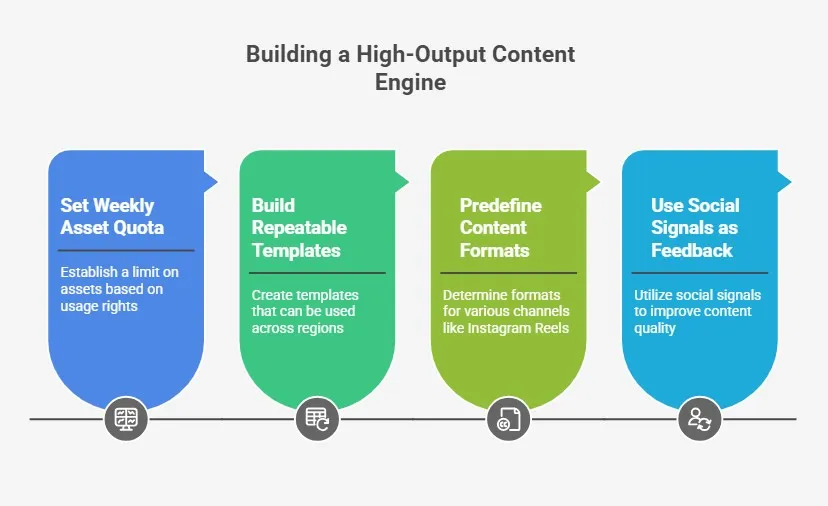
Multi-market playbooks help you avoid rework. You can include:
These documents give each region a clear guardrail. They also keep messaging steady across regions, even when teams work in different time zones or with different agency partners.
Pro tip: For a deeper look at maintaining consistency across regions, our guide on localizing creative without losing brand codes is a helpful reference.
Scaling through long-term programs helps you move from one-off creators to strategic brand ambassadors. The progression usually looks like this:
Long-term relationships give you predictable content volume, stronger audience engagement, and better consistency across markets.
And this approach is supported by research.
An academic meta-review from 2024 found that programs focused on meaningful engagement and constant output deliver stronger long-term brand growth than quick-hit activations.
As you build these structures, you prepare your teams for larger-scale execution.
Pro tip: To help you evaluate partners built for long-term creator systems, we also published a guide on selecting the right enterprise influencer agency.
Now, moving on, let’s look at the strategies that help you advance your influencer system even further.
Scaling gets harder once your program reaches a certain size. At this stage, you need methods that help you expand output, raise quality, and maintain control across channels. These are the strategies that support that next jump.
Whitelisting and dark posting help you control distribution while keeping messaging aligned with your content strategy.
In fact, a 2023 academic paper studying these practices showed that dark-post ads run through creator handles can shape perception and trust. This signals that this model works at scale.
As your system grows, these tools let you test audiences, adjust conversion rates, and refine creative faster than you could with organic posts alone. Clear rules for usage rights make this even more effective.
Always-on programs help you stabilize output. They keep your content pipeline active, even when seasonal campaigns are not running.
For example, Fieldtrip’s work with brands like Dashing Diva and NielsenIQ shows how this can operate in practice. Dashing Diva’s gifting strategy supported a steady flow of creator-led assets. Meanwhile, Hurom’s UGC drops helped maintain consistent user-generated content volume from verified creators.
And we always get solid results:

These programs reduce production gaps. They also help you identify which formats resonate with your audience so you can scale the ones that deliver the most value. With an automated pipeline, each cycle becomes easier to manage.
A blended model gives you reach and trust at the same time. Macro creators help you widen your audience size, while micro influencers add precision.
They typically outperform top-tier creators on authentic engagement, especially in niche categories. This structure helps you create a layered program:
You can check out this short video to learn why micro-influencers can deliver a great ROI for enterprise marketing:
Scaling requires full-funnel content that can support both marketing and sales. This includes:
When these assets work together, you create a more stable path from awareness to action. This setup also gives your teams more opportunities to reuse messaging across digital marketing campaigns without rebuilding everything from zero.
UGC fills your pipeline with flexible formats you can use across channels. For instance, Fieldtrip’s work with Hopper, Dr. Squatch, Miniso, and Aura shows how UGC can support volume without sacrificing clarity.
In these examples, creators followed structured briefs that aligned with brand rules, which helped teams produce content quickly, like so:

UGC scales well because it gives you room to test variations and deploy content across ad platforms and organic channels at the same time. With enough iterations, you identify which concepts produce stronger engagement and move those into paid distribution.
AI now sits inside the main workflow by helping you score creators, forecast outcomes, and refine each asset before it moves forward. Predictive performance modeling shows which creators are likely to deliver stronger value.
Meanwhile, localization suggestions point out adjustments needed for each market. From there, automated creative testing speeds up variation checks, and fake-follower detection protects your team from unreliable partners.
A recent academic experiment showed that AI-generated metadata improved watch-time on a major short-video platform, which suggests AI can raise reach and consumption for UGC at scale. This gives teams stronger insight into what will work before assets even launch.
Pro tip: Our guide to creative testing and measurement for large brands expands on how structured experiments can shape better content decisions.
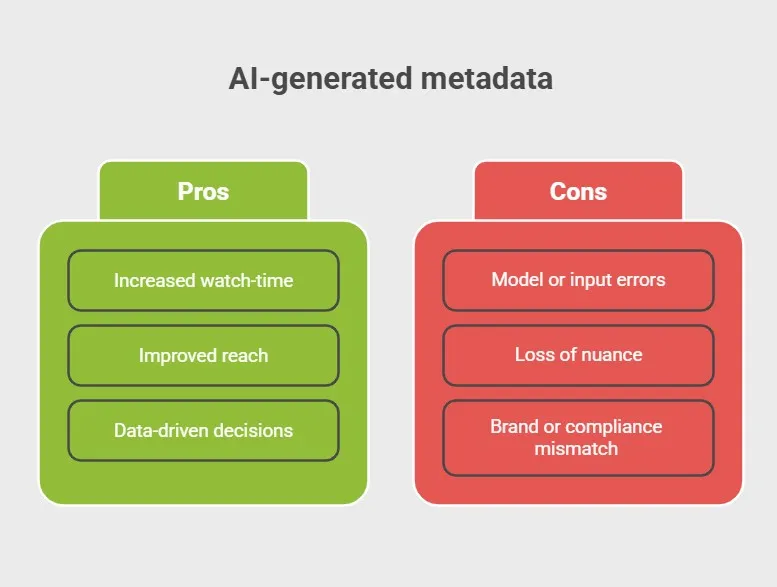
When paired with social media analytics, AI adds another layer of intelligence to your entire system. So, with these methods covered, let’s move on to the common mistakes that stop programs from scaling the right way.
Scaling breaks down when structural gaps slow your workflow or weaken creative output. These issues usually surface once teams increase volume, expand into new regions, or add more creators than their systems can support.
Here are the patterns that tend to cause the most friction:
Now, lastly, let's look at the trends that will shape how enterprise teams scale influencer programs moving forward.
Enterprise programs are shifting toward systems that work faster, adapt to regional differences, and use smarter signals to guide decisions. These shifts give you more control over quality while expanding your reach across channels and markets.
Here are the trends that will influence how you scale in the coming years:
Scaling works best when creative, media, and measurement operate as one system. That structure lets you produce more content, test ideas faster, and adapt to each market without slowing down.
Fieldtrip supports this by using small, autonomous teams that share one strategy and avoid the delays that come from siloed handoffs. This setup keeps strategy, creative, media planning, and performance tracking aligned from the start.
From there, Fieldtrip builds high-output creator pipelines that cover UGC production, sourcing, whitelisting, multi-market content, and structured testing. Our measurement layer adds depth with custom tracking systems, funnel diagnostics, and behavior insights that help you improve each cycle.
This combination lets you run ongoing creator programs and handle high-volume bursts at the same time. So, if you want a system that scales with clarity and speed, Fieldtrip can help you build it.
Contact Fieldtrip for a tailored influencer scaling plan today!