






















Choosing a launch country is an expensive decision to reverse.
In CSC’s September 2026 research, 74% of 200 senior cross-border professionals identified market entry or international expansion as a leading legal and compliance burden. Once you have established a legal entity, hired a local team, translated your campaigns, and committed to media spending, changing direction means absorbing costs and starting again.
Market entry research should help you decide whether a country deserves that investment. But when research begins with a preferred market already chosen, it can become an exercise in confirming assumptions.
A stronger starting point is to define what would make you reject a country, then test whether the evidence supports moving ahead.
This article explains what market entry research must establish before you choose a launch country, how much evidence you need for a pilot versus a full launch, and how to justify the research budget. It also examines when you need to move beyond research and test demand through an in-market pilot.
Market entry research answers one question: should this brand commit capital to this country now? Everything that follows comes from treating it that way.
A steering group that holds demand data for two candidate markets and nothing on how buyers in either one choose has already found its first gap.
Market entry research evaluates a specific country-entry decision. General market research covers broader questions about customers, competitors, and brands. The difference lies in the decision the research must support.
Review existing studies for evidence relevant to the candidate country. Category research may identify customer needs worth investigating, while brand tracking may provide a baseline in markets where you already operate.
Check geography, audience, timing, and methodology before reusing findings. Home-market awareness figures cannot establish local demand, and global studies may overlook differences in procurement, distribution, or regulation.

The four evidence types below are the agenda for the study. Each one rules something in or out, and a decision missing any of them is resting on assumption.
Demand sizing estimates how much customers spend in your category and which segments your business could realistically serve. It should separate the total market from the demand accessible through your proposed pricing, distribution, and launch budget.
Start with published industry figures, then break demand down by buyer type, location, and relevant product or service category. Estimate which segments you could serve during the first two years and what reaching them would cost.
Buyer interviews and surveys help test the assumptions behind that estimate, including purchase frequency, price expectations, and willingness to switch suppliers. They cannot establish the market share you will achieve. That requires evidence from actual selling.
The decision is whether accessible demand could support the costs of entry. A large national market may offer limited opportunity if customers face strong switching barriers. A smaller market may contain a profitable segment you can reach efficiently.
Buyer research establishes who purchases, who influences the decision, and what customers need before they will consider a new supplier. Home-market personas provide hypotheses to test, but their assumptions may not hold abroad.
In B2B markets, investigate who defines requirements, controls the budget, approves suppliers, and manages procurement. A distributor may control customer access, while technical teams and finance departments apply different approval criteria.
In consumer markets, examine shopping habits, preferred channels, trusted information sources, and purchase triggers.
Ask:
This evidence informs your target audience, sales process, channel choices, and messaging. It can also reveal that the product needs adapting before promotion begins.
Entry-barrier research examines what could prevent or delay a launch, increase its cost, or restrict how you operate. Cover regulatory requirements, competitive conditions, distribution access, and practical operating constraints.
Depending on the category, investigate licensing, product standards, import duties, data requirements, employment obligations, and restrictions on foreign ownership. Identify which requirements apply to your proposed entry model and obtain specialist advice where needed.
Commercial barriers deserve equal attention. Existing suppliers may hold exclusive distributor agreements, customers may face costly switching processes, or retailers may require terms that weaken your margins.
Turn each material barrier into a cost, timeline, dependency, or reason to reject the market. This makes the findings useful for comparing countries and choosing between direct entry, a local partner, or a limited pilot.
Brand-fit research tests how target customers interpret your name, positioning, product claims, and creative. It should establish whether the brand feels relevant, credible, and distinct from the alternatives.
Test comprehension before asking about preference.
Separate unfamiliarity from rejection. Customers may need clearer explanations or stronger proof rather than a different brand identity. Test proposed adaptations with the intended audience before committing to packaging, campaigns, or other costly assets.
The findings should guide how much of the existing brand to retain, what to adapt, and which claims need local evidence.
Start with public information to establish market conditions and identify questions that need primary research. Useful sources include:
Trade data is particularly relevant to goods businesses, but imports do not equal total customer demand. Check reporting periods, product classifications, and coverage, then supplement these sources with category-specific information.
Use desk research to sharpen the questions for interviews, surveys, and pilot testing. It cannot establish how customers will respond to your particular offer.
Map your existing evidence against the four research areas. For each one, record what you know, what remains uncertain, and whether the gap could change your launch decision. Prioritize unanswered questions that could rule out the market, change the entry model, or materially alter the budget. Those questions form the research brief.
Enough evidence means each of the four evidence types meets a threshold agreed before fieldwork, and the bar rises with how hard the commitment is to reverse: a distributor pilot needs less proof than a local entity.
The go/no-go sheet should exist before the research partner is briefed. The reason is partly political and partly methodological. Politically, criteria written after the data arrives bend toward the answer the sponsor wants.
Methodologically, the criteria shape the study. The research question most directly determines whether a study produces actionable findings, because a well-formulated question specifies what must be discovered, what comparisons must be enabled and what level of evidence the pending decision requires.
A question such as whether Germany is attractive produces a deck. A question about whether you can reach a defined segment at a defined cost within 18 months without damaging home-market perception produces a decision.
The same logic applies to location within a country, which is often treated as a detail for later. In a country as large as the US, the wrong state can cost time and money before the first sale. Location is a criterion to test, with its own threshold, before approval.
How much evidence is enough depends on how reversible the commitment is, which makes the market entry mode part of the research question. A pilot through a distributor or a limited digital launch can be unwound; a local entity, a manufacturing agreement or a national media commitment cannot.
The table pairs each evidence type with an illustrative standard for each stake. Treat the standards as a starting framework; the numbers belong to your own economics. Set them with finance and the people who will own the launch outcome, record them before fieldwork starts, and treat them as commitments once the data comes in.
| Evidence type | Minimum for a pilot | Minimum for full entry | Stop signal |
|---|---|---|---|
| Addressable demand | Desk-based sizing with one primary check on the target segment | Segmented primary quantification with a reachable-demand estimate the finance team has stress-tested | Reachable demand below the fixed cost of entry at any plausible share |
| Buyer behavior | Qualitative interviews with local decision-makers confirming who decides and how | Quantified decision drivers by segment, validated against pilot behavior | Decision-makers or channels you have no credible route to |
| Barriers | Regulatory and competitive map with dated timelines | Legal confirmation of the regulatory path, competitor response scenarios, localization cost estimate | A regulatory block without a dated resolution, or incumbents able to price you out |
| Brand fit | Qualitative read of how local buyers and the home audience react to the move | Quantified perception test in both audiences with an agreed acceptable change | Measurable damage to home-market perception that the entry cannot repay |
Standards in the table are illustrative; the structure follows the study-design logic cited above and the four evidence types defined in the previous section.
Some findings should end the conversation even when the demand number is attractive:
The practical output is a single page: four evidence types, a threshold for the stake you are considering, a stop signal for each, and a named owner who will be asked afterward whether the threshold was met.
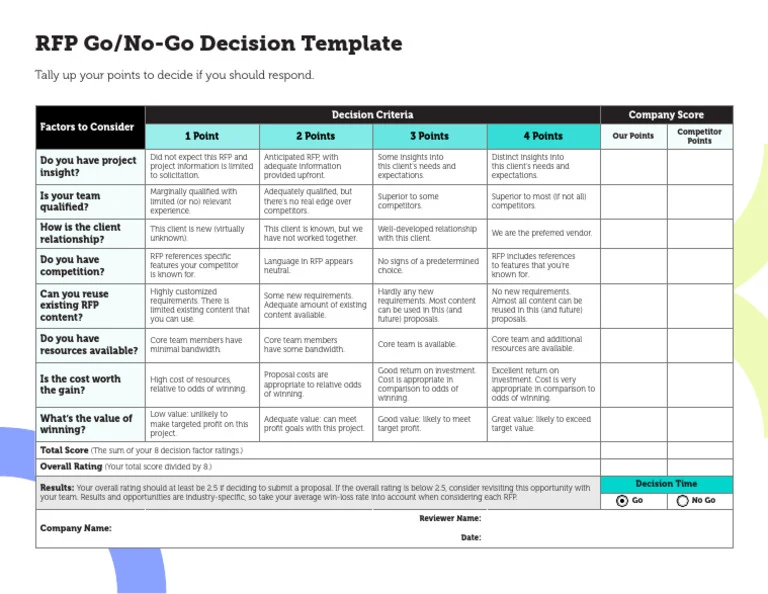
Market entry research is worth commissioning when its fully loaded cost is smaller than the loss it can help you avoid: the cost of a wrong entry multiplied by how much the study can lower the odds of one.
The research line in an expansion budget is usually understated, which makes the later comparison dishonest in the study's favor. The figure should include researcher time, participant recruitment and incentives, tool subscriptions and stakeholder time spent reviewing findings, with overhead and the opportunity cost of that time loaded on top.
For an international study, add translation, local moderation and travel. A fully loaded number is larger, but it survives a finance review, and it is the only version that makes the next comparison fair.
The mistake most teams make when defending the research budget is to compare it with spending nothing. The comparison belongs against the cost of being wrong. That reframing changes the conversation from a cost line to a risk decision, which is the language a steering committee already uses for the entry itself.
A budget-approval framing that holds up is expected loss:
For illustration: suppose a wrong entry would cost three million dollars and the team puts a 30 percent chance on being wrong. Expected loss is nine hundred thousand dollars. A study costing two hundred thousand that could credibly cut that probability in half would be worth commissioning on those inputs; the same study for a decision reversible at a cost of one hundred thousand would not.
In practice every input has to come from your own economics: the loss figure from finance and the launch owner, the probability from an honest reading of the evidence gathered so far, and the research cost from a real quote. All three carry wide uncertainty, and saying so in the paper is part of what makes the case credible.
The deliverable for the steering committee is two columns: the fully loaded research cost on one side, the modeled cost of a wrong entry on the other, with the assumptions behind each written underneath.
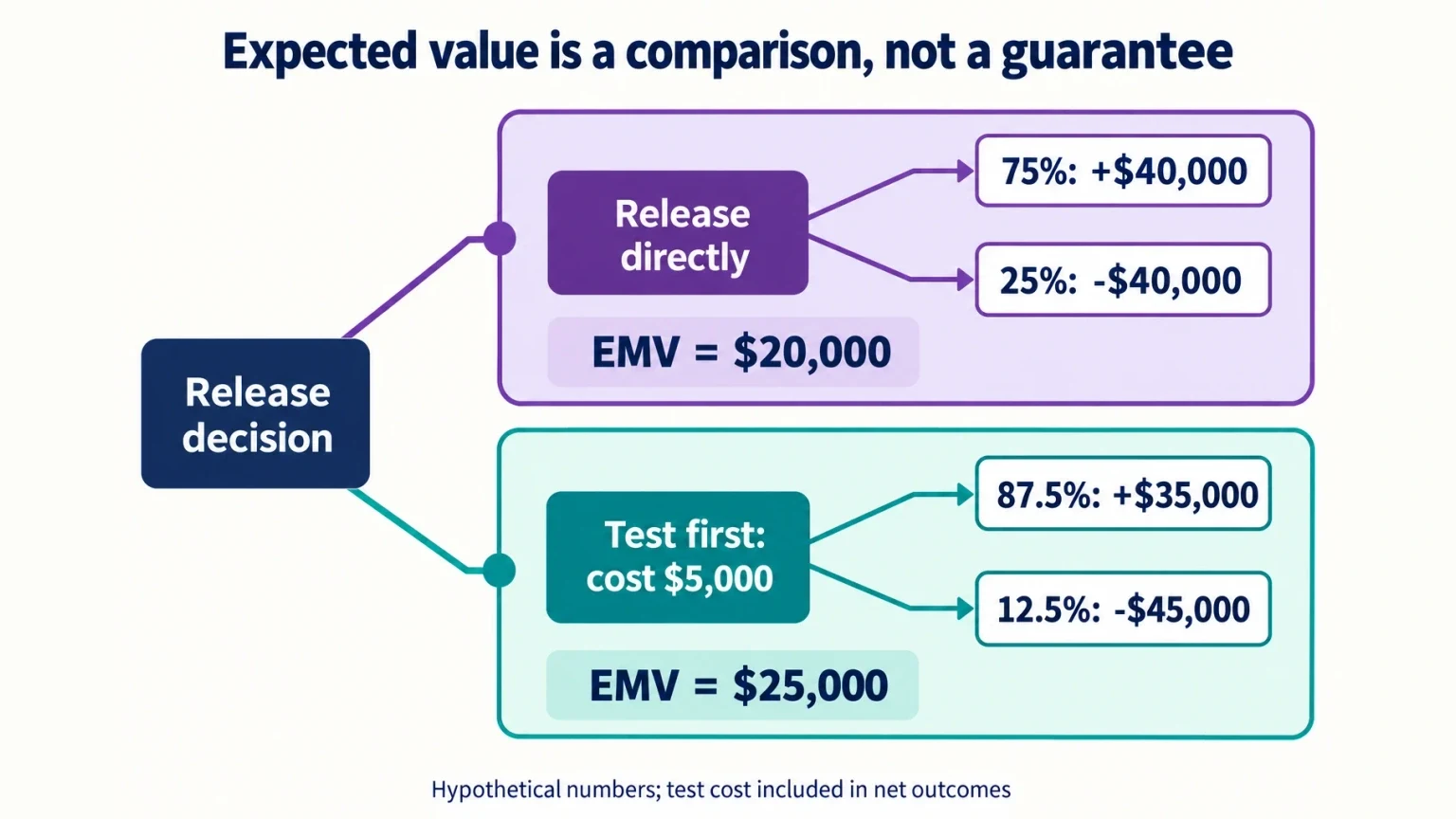
Sequence the plan so qualitative work with local buyers finishes before anyone writes the quantitative questionnaire. The order matters more than the budget split, because a survey built on home-market definitions measures the wrong segments with great precision.
The method mix shifts with context. A B2B entry with a small number of large buyers may rest mostly on Step 2, with quantification limited to a census of named accounts. A consumer entry leans harder on Step 3 because the buying population is large and heterogeneous.
A regulated category pushes barrier work earlier, since a regulatory block makes the rest of the study redundant. The sequence holds in each case; the weight on each step does not.

Turn research findings into specific launch decisions covering your target segment, positioning, channels, budget, and timing. Assign an owner to each decision and define how you will test its assumptions during the launch.
Demand sizing should guide which customer segment you target first and how much you commit to reaching it. Build the initial sales forecast around accessible demand, expected margins, and the capacity of your chosen channels.
Buyer research informs your sales approach, media choices, and messaging. If distributors influence supplier selection, the plan needs partner recruitment and sales support. If customers need demonstrations before buying, account for those touchpoints in the budget and sales cycle.
Brand-fit findings guide positioning and creative localization. Specify which benefits, claims, language, and visual elements need adapting. Give the creative team a clear brief explaining the audience, purchase barriers, required proof, and intended action.
Entry-barrier research adds launch conditions and dependencies. Record required approvals, distribution agreements, and operating requirements alongside their expected costs and timelines. Resolve requirements that could prevent sales before committing to launch spending.
Pre-launch research helps you choose a direction. A pilot tests how customers, partners, and competitors respond when the offer reaches the market.
Pair each important assumption with a measurable result and an accountable owner:
| Research assumption | Launch decision | Accountable owner | What to measure |
|---|---|---|---|
| A customer segment offers viable demand | Prioritize that segment in the pilot | Commercial lead | Conversion, acquisition cost, and contribution margin |
| Buyers rely on distributors | Test a distributor-led sales approach | Sales lead | Qualified opportunities, sales cycle, and partner performance |
| Customers need stronger evidence before purchasing | Add relevant demonstrations, credentials, or case studies | Marketing lead | Qualified inquiries and conversion |
| The proposed positioning communicates the intended benefit | Use it in localized campaigns | Brand lead | Message comprehension and campaign conversion |
| Regulatory approval can be secured within the planned window | Make approval a launch condition | Regulatory lead | Approval progress, delays, and outstanding requirements |
Set the review date, spending limit, and decision thresholds before the pilot begins. Allow enough time to observe the relevant buying cycle, then compare results with the assumptions behind the original go/no-go decision.
Expand when the evidence supports further investment. Adjust the offer, channel, or message when results reveal a specific weakness. Pause or stop when the economics or operating conditions fail your agreed criteria. Use further research to investigate gaps that launch data alone cannot explain.
Fieldtrip is a group of specialist agencies connecting strategy, creative, media and measurement. Small teams own the execution, and shared strategy keeps their work pointing at the same decision.
That structure suits expansion work because the go/no-go sheet is a cross-discipline document: demand and barriers belong to strategy, brand fit to creative, buyer behavior to media planning, and the whole thing to measurement once the launch is live.
An engagement can start with one defined problem, such as an independent review of whether a candidate market's evidence meets the thresholds, and fit alongside the internal team and agencies already in place. Scope should grow only if that review proves useful.
A useful next step is to decide which of the four evidence types your organization can gather itself and which needs outside help.
If you want a second view on whether a candidate market's evidence is ready for a capital decision, Fieldtrip's measurement team works alongside internal teams to define what the data supports and what the launch should test next.
Stop when each evidence type on the go/no-go sheet is marked met or missed by its named owner, and the misses either trigger a stop signal or can be closed by a scoped piece of further work with a date. If a further study would not change anyone's vote, the research is finished and the decision is overdue.
Treat it as a stop signal for leading with the existing brand. The entry itself can still go ahead. Beyond the brand options covered above, you can pilot in a way the home audience will not see while you measure the reaction. Whichever you choose, add home-market perception to the launch dashboard.
Secondary data can justify a reversible pilot when the demand ceiling is clearly large relative to the pilot's cost and the barriers are known. It cannot tell you how local buyers decide or how your brand will be received, so even a pilot benefits from a small round of local interviews before the questionnaire or the launch plan is written.
Write each research finding as a hypothesis with a metric that would disprove it: segment conversion for the demand assumption, channel performance by buyer type for the behavior assumption, time-to-approval for the regulatory assumption, and tracking in both markets for brand fit. Review them against the original go/no-go sheet at a fixed point after launch, with the same owners answering.