






















Multi-channel marketing is the new norm for most brands today. But with that comes paid media spend waste that can easily be avoided with the right tactics.
Take programmatic advertising as an example. According to a recent study by the Association of National Advertisers (ANA), programmatic wasted ad spend increased by 34% in just two years.
That’s tens of billions of dollars across multiple companies like yours.
The reality is that you shouldn’t treat paid marketing channels in isolation. Businesses that optimize paid media spend effectively can dramatically improve ROAS, reduce wasted clicks, and create a seamless customer journey across channels.
So, how do you conduct effective paid media optimization?
In our experience, you need data-driven engagement and aligning your audience targeting, creative execution, and analytics.
That way, each dollar spent drives measurable conversion, aka revenue.
In this guide, we’ll go over how multiple paid media channels can and should be optimized to deliver better customer experience, lower costs, and increase ROAS.
Want to see your paid media spend exceed industry benchmarks in terms of ROI? Work with Fieldtrip, the agency brands like Hurom, Dockers, and Nordstrom go to.
For performance-driven marketers managing paid media across paid search, social media marketing, Google Ads, LinkedIn, TikTok, email marketing, or other marketing channels, optimization is critical.
Without a data‑informed strategy that ties impressions, clicks, conversion rates, and reach back to real business outcomes, your marketing budget can leak value at every turn.
One of the biggest reasons optimization matters is the sheer cost inefficiency of poorly managed campaigns.
“More than 78% of marketers struggle to make their paid ads strategy profitable,” Neil Patel
According to one estimate, advertisers are wasting as much as 41% of their ad spend. And that’s happening in the backdrop of rising advertising costs, as platforms jack prices.
For instance, retail media cost per click (CPC) rose 11% in 2024. Similarly, Meta’s price per ad increased 10% that year.
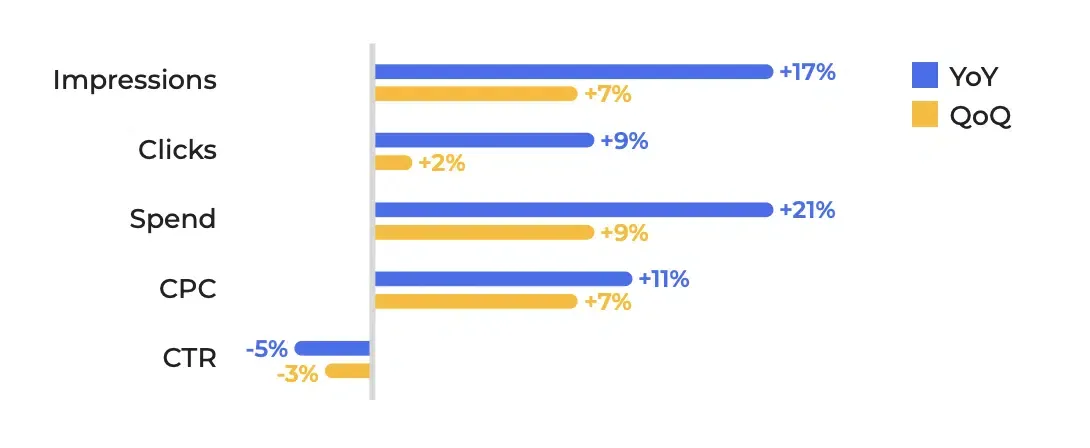
It’s incredibly important not just to optimize ads for specific channels but also to shift budgets away from underperforming channels. And that’s only possible when you’re actually actively spending time and effort understanding performance.
This means dollars could be sitting in a high‑impression but low‑conversion campaign while channels with more qualified traffic (like Google Search or well‑targeted social media) sit underfunded.
Another compelling reason to optimize is the measurable impact of proper attribution modelling on budget decisions. Companies that adopt multi‑touch attribution can improve ROI and reduce wasted ad spend by better understanding how each touchpoint (from a TikTok video view to an email click to a Google search) contributes to a sale.
Finally, the pace of change in digital advertising makes static budgets obsolete.
Take it from us: your competitors are adjusting bids, reallocating budgets, and refining audience segments in near real time.
Plus, optimizations are much easier when platforms themselves offer AI-enabled features to optimize bidding and creatives.
Long story short: if you’re not actively optimizing your campaigns across different channels, you’re going to lose money.
Optimizing your paid media strategy across a fragmented multi-channel ecosystem demands more than reactive tweaks. You need a structured, proactive approach.
This 6-step plan will walk you through the core elements of marketing spend optimization, from setting SMART objectives and precision audience targeting to incrementality and cross-channel attribution models for smarter resource allocation.
Before you pour dollars into paid media, the most important step you can take is defining what success actually looks like.
We see brands define rather vague goals like ‘get more clicks’ or ‘boost awareness.’ Does that translate into actual growth, revenue, and, dare we say, profits?
Not quite.
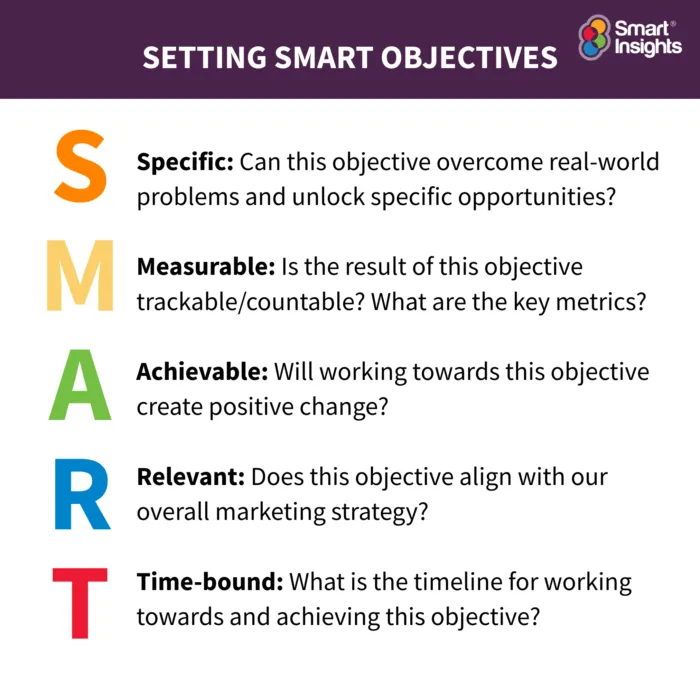
You need clear, SMART objectives (Specific, Measurable, Achievable, Relevant, Time‑bound) that connect your media budget directly to business outcomes so you can gauge real impact.
Start by defining goals that go beyond broad metrics. Instead of “increase reach,” aim for something like “increase qualified site traffic from Google Ads by 20% in Q2,” or “grow email list sign‑ups from paid social by 15% within 90 days.”
Goals like these are tied to measurable metrics (such as CTR, conversions, and lead volume), and they force you to focus your audience targeting and keyword plans around business priorities.
SMART frameworks have been widely adopted for precisely this reason. They help you articulate what success looks like and how you’ll measure it so you can refine your campaign management with purpose.
Benchmarks also matter when setting realistic targets. For example, 2025 Google Ads data shows an average conversion rate of 7.52% for search campaigns. You could use that as a baseline for your own campaigns (giving you an actual measurable goal with real impact).
How you allocate your paid media budget is incredibly important. Many brands and their marketers make the mistake of either going over or under with channel-specific budgets. You need to find the sweet spot for each channel and platform that results in real outcomes without going over your overall budget.
There are several different options to explore.
Two common approaches, Zero‑Based Budgeting (ZBB) and Historical (Incremental) Allocation, offer very different paths for prioritizing spend.
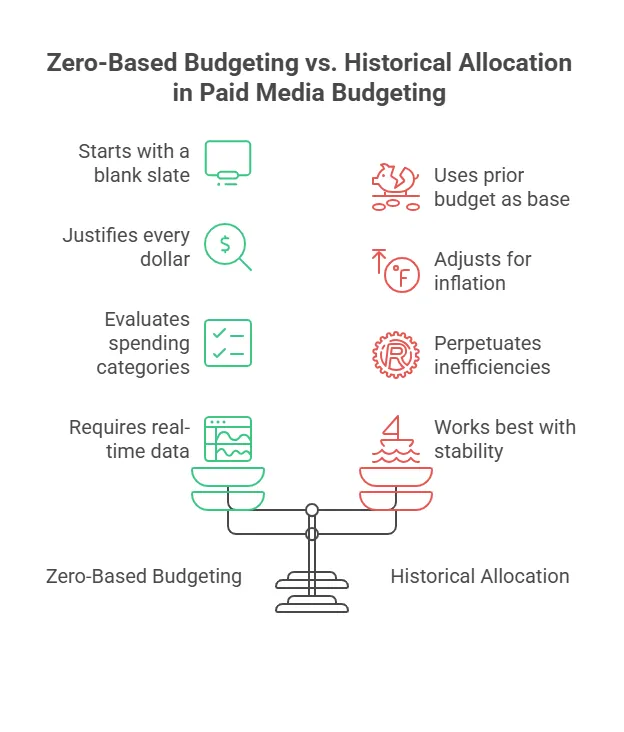
Zero‑Based Budgeting (ZBB) starts every planning cycle with a blank slate. It requires you to justify every dollar of your media budget based on its expected contribution to measurable outcomes like conversion rates or customer lifetime value.
With ZBB, you don’t make the mistake of blindly implementing the traditional ‘last year + 10%’ approach that many marketers follow, which wastes spend.
Unlike traditional approaches that simply adjust last year’s numbers up or down, ZBB forces you to evaluate each spending category. You end up spending on channels that actually deserve investment in the current context.
By contrast, historical allocation simply uses the prior period’s budget as the base and makes small adjustments for inflation, growth goals, or seasonal changes. This model is easy to implement and predictable. However, it can perpetuate inefficiencies because it anchors spending decisions in the past rather than current market dynamics or real performance data.
For example, if a legacy budget disproportionately favors paid display without accounting for the superior click‑through rates and conversion performance of search ads in a given quarter, you continue funneling money into a channel that may be underperforming relative to others.
Pro Tip: When to use ZBB or historical allocation?
To optimize paid media spend across multiple channels, we always go beyond surface‑level metrics like click‑through rates and attributed conversions. That’s where incrementality comes in: it measures what actually changed because of your investment, rather than what would have happened anyway.
“How many conversions or sales occurred only because of this campaign?”
These are the kind of questions you ask when you take the incrementality route. And this requires the good old A/B testing.
Incrementality testing involves randomized, controlled experiments where one group of users sees your campaign (treatment) and another similar group does not (control). The difference in outcomes is the incremental lift: the real value you spend unlocked.
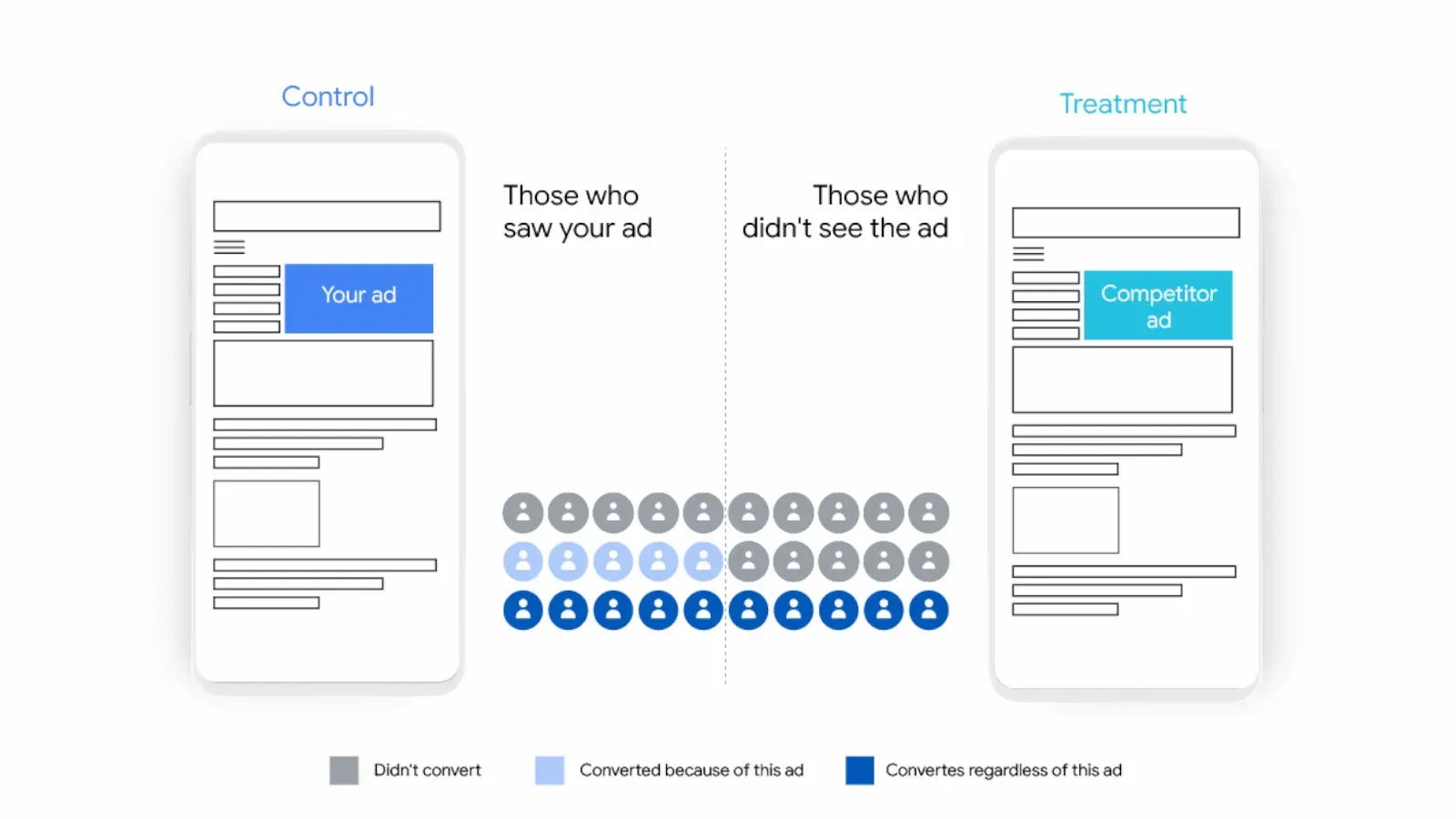
This matters because traditional attribution models (last‑click, first‑click, or even multi‑touch attribution) sometimes overstate the effectiveness of platforms by crediting every conversion after an ad touchpoint.
Incrementality testing cuts through that noise by isolating causal impact, giving you confidence that spend in one channel drives net‑new business.
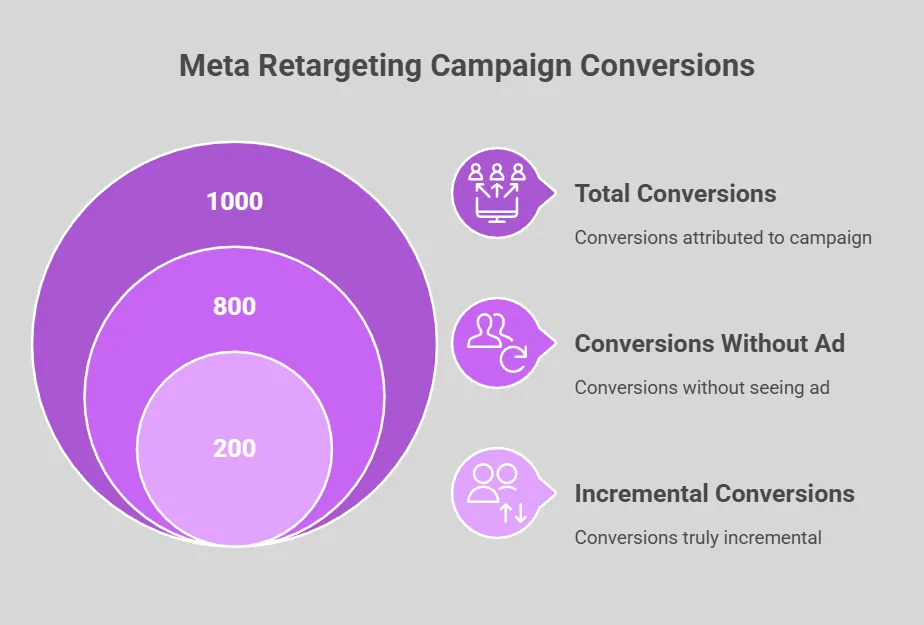
For example, imagine you run a retargeting campaign on Meta and see 1,000 conversions attributed to the campaign in your data analytics tools.
An incrementality test might reveal that 800 of those users would have converted without seeing your ad. That means only 200 conversions are truly incremental, and your incremental return on ad spend (iROAS) should be calculated accordingly.
When budgeting for media, you also need to consider seasonal and market-based adjustments. Your spending should move with:
In our experience, this is all the more relevant for industries that see ebbs and flows in their base.
For instance, retailers see a spike in demand during the holiday season.
According to the National Retail Federation, holiday sales can account for 19% of total sales for retailers and even more for some brands.
This is a time when ads can produce higher conversions and better ROAS because there’s a stronger intent to buy.
You can imagine what’s at stake and why adjusting marketing budgets according to seasonal or market demands is so crucial.
That’s why we always help our clients with holiday-oriented creatives:
.webp)
An effective audience strategy is one of the most powerful levers you have to improve paid media efficiency and drive meaningful results.
You need smart audience targeting, precision segmentation, and tactics such as first‑party data activation and retargeting to ensure your media budget goes toward users who bring in the most dough.
We’ll explain all that below.
At the heart of a high‑performance audience strategy is first‑party data: the customer information you collect directly from interactions on your site, email list, app, loyalty program, or CRM.
This data is consented, accurate, and highly predictive of user intent. It’s far more reliable than any third‑party signals that, by the way, are getting increasingly restricted by privacy rules.
In fact, marketers who leverage first‑party data can see up to 2.9X revenue uplift and 1.5X cost savings.
We use tools like Google Analytics 4, CRM systems such as HubSpot or Salesforce, and Customer Data Platforms (CDPs) like Segment or mParticle. These help you collect, unify, and enrich this data to create highly segmented audiences for both acquisition and retention campaigns.
Once collected, we can activate this first‑party data directly on platforms like Meta Ads Manager or Google Ads to build custom audiences.
A common inefficiency in cross‑channel paid media stems from overlapping audiences. If the same users are targeted with ads across Google Search, Facebook, TikTok, and other channels without coordination, you risk frequency creep, wasted impressions, and inconsistent messaging.
Again, proper segmentation helps eliminate this overlap.
For example, defining non‑overlapping segments, such as “new prospects,” “engaged visitors,” and “past purchasers,” lets you tailor campaigns so that users in each segment receive the right message at the right time.
Retargeting, which is serving ads to users who have already interacted with your brand, amplifies this efficiency even further.
That’s why 77% of marketers turn to retargeting for platforms like Facebook and Instagram. And 20% have dedicated budgets for this.
When you exclude converted users from broad campaigns and prioritize reengagement ads for mid‑funnel audiences, you reduce waste and focus on users most likely to convert.
Pro tip: For B2B brands with long sales cycles, retargeting helps potential leads walk through the funnel with the right ads and creatives. That is optimizing media, as the ads hit the audience at the right stage of the funnel.
To get the most out of your segmentation:
When you’re running paid media campaigns across different platforms like search, social media, and Connected TV, your creative strategy can make or break performance.
This is one aspect that marketers end up ignoring. And that results in creatives simply not working or, even worse, ad fatigue.
Creative optimization helps you avoid that because you’re maximizing relevance and resonance for each audience segment. At the same time, you’re ensuring your marketing budget delivers measurable conversions.
Here’s how we advise you to proceed (and yes, we follow the same plan at Fieldtrip):
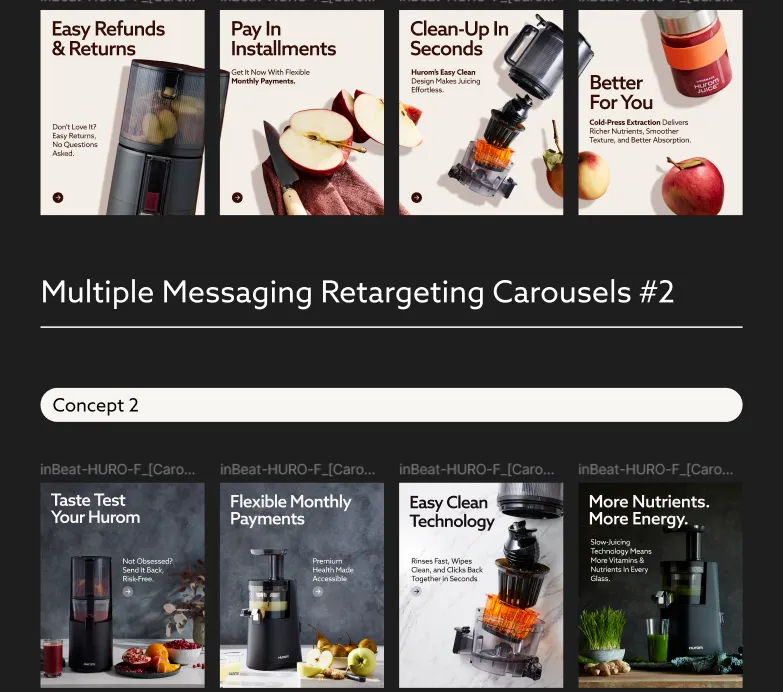
One of the foundational principles of creative optimization is diversity in creative assets. Running multiple versions of ads with variations in visuals, messaging, calls‑to‑action (CTAs), and formats helps you understand what drives engagement from audience segments.
Pro tip: It can also be great for localizing campaigns.
For our clients, we create multiple concepts like so:
Again, A/B testing is your best friend here. It increases your understanding of which elements perform best under real conditions. And it’s super easy nowadays to test different creatives within a platform.
For example, a retailer testing two versions of a search ad headline might discover one variant delivers a 15% higher conversion rate among a core segment. More advanced multivariate tests, which evaluate multiple variables simultaneously, can uncover deeper insights into how creative combinations work.
As experts at creative marketing, we always test creatives according to audience insights, whether it’s search or social. We also employ automated optimization tools to keep creative fatigue at bay (more on that next).
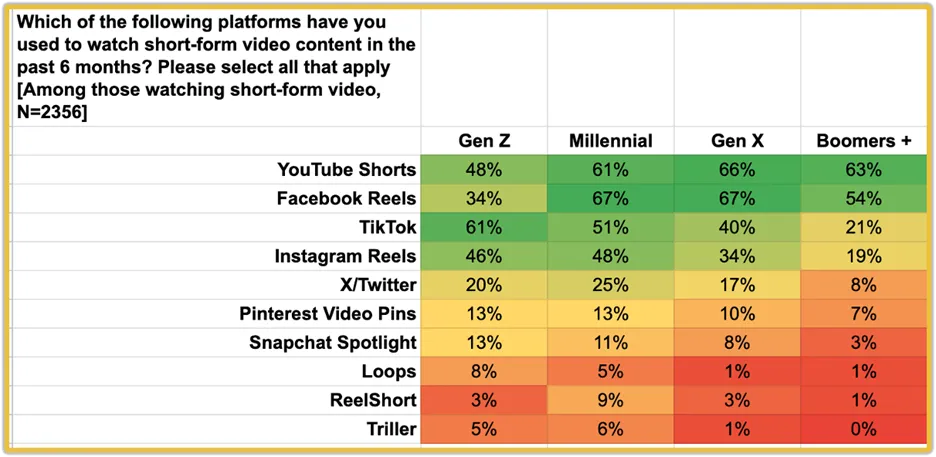
Each marketing channel has unique expectations and best practices for creatives:
Pro tip: Grab these 10 engaging hooks that increase watch time and engagement.
Dynamic Creative Optimization (DCO) brings creative personalization to the next level by assembling the most effective ad variation in real time based on data signals like browsing behavior, demographics, location, and past interactions.
Instead of manually launching a few static creative variants, DCO automates the delivery of the right creative to the right viewer at the right time, using machine learning.
And DCO works.
It has been shown to deliver dramatic performance improvements. Some campaigns report up to 257 % higher click‑through rates and 40 % higher conversion rates compared to static creative approaches.
We use platforms like Google DV360, Meta Advantage+ Creative, Amazon DSP, and specialized creative management platforms such as Criteo or Celtra.
Regardless of your choice, we advise you to pick tools that support DCO by ingesting first‑party data and audience signals to automatically build personalized ads.
When you’re running paid media, raw impressions and clicks only tell part of the story. To truly optimize spend and improve conversion rates, you need:
Without this, budget decisions are guesswork, inefficiencies hide in silos, and you risk pouring money into channels that don’t meaningfully contribute to customer lifetime value.
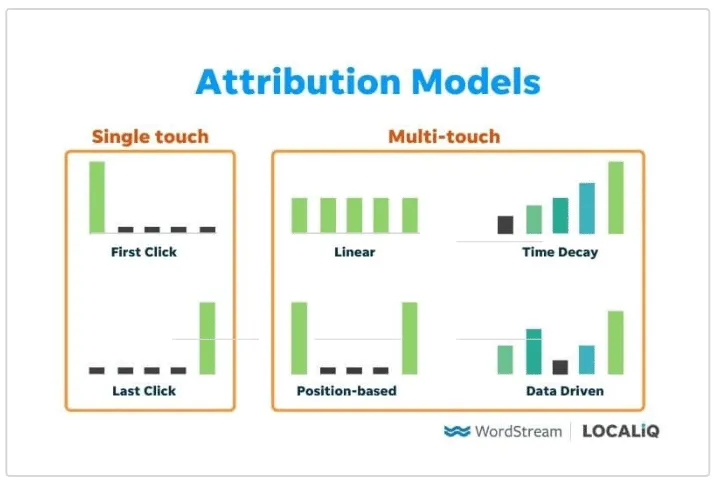
Multi‑touch attribution models (such as linear, time‑decay, or custom rule‑based distributions) give you a more complete picture by spreading credit across interactions. That could be an initial social exposure, a paid search engagement, or a retargeted display ad.
Besides, you don’t want to be left behind by your competitors.
71% of marketers consider improving the customer journey across multiple touchpoints as ‘very important.’ Attribution and analytics are key to that.
Pro tip: Invest in a dedicated attribution platform to consolidate data from different channels and touchpoints, so you get a more accurate picture. Alternatively, you can work with a measurement specialist like Fieldtrip for media planning and analysis.
Lastly, and rather fortunately, paid media optimization can even be automated. That reduces a significant amount of work on your part.
Now, AI and AI-enabled automations can help realize paid media optimization in several ways.
Gen AI tools are great for producing and testing creatives at scale. According to Bain & Company, marketers are seeing stellar results with Gen AI for content creation, with 27% of marketers saying AI’s value exceeded their expectations.
Then there are AI-based ad tools built within platforms like Google, Meta, and TikTok. These technologies automatically optimize creatives, targeting, and bids to fit revenue-linked goals. The most commonly used AI ad technologies in paid media include:
AI can also elevate campaign performance through predictive targeting and hyper‑personalization. Machine learning models forecast which audience segments are most likely to convert at specific points in the customer journey. That helps you fine‑tune audience targeting and allocate spend accordingly, whether on search engines, YouTube, or social platforms.
On the analytics side, AI tools can analyze large data sets, including historical performance, audience signals, and seasonal patterns, to recommend or execute budget reallocations in real time.
We noticed the following frequent missteps that companies tend to make. We always advise our clients to avoid them to maximize ROAS, reduce waste, and strengthen their digital marketing strategy across platforms:
Clearly, paid media optimization is no easy feat. It requires the concentration of brilliant minds and technology to ensure every dollar works in your interest and isn’t wasted on propping up metrics that don’t matter.
That can be a challenge for internal marketing teams who may already have too much on their plate. An agency partner with expertise in paid media, creative, and analytics is the ideal choice for this purpose.
At Fieldtrip, we’ve successfully run paid media campaigns for search, social, and programmatic ads and delivered high ROAS and low CPA. (Just see our work)
From day one, we strategize to optimize ad spend, choosing channels that deliver the greatest impact and employing data and AI to accelerate efforts. Our paid media budgets go into tens of millions, which shows why so many brands trust us.
Get in touch today and see how we can help.
Rising ad spend may be linked to increased competition in search engines and social media platforms, inflated cost-per-click (CPC), or inefficient campaign orchestration. It can also result from poor audience targeting or a lack of control over budget pacing.
Start by refining your keyword strategy, tightening audience segmentation, and improving ad copy. Use creative testing to identify high-performing creatives and implement Smart Bidding to adjust bids automatically based on conversion likelihood. Regularly audit search terms, landing pages, and negative keywords to cut waste and increase relevance. Platforms like Google Ads and Bing Ads offer automated insights and recommendations.
Paid media involves advertising placements (e.g., Google Ads, Facebook, LinkedIn) you pay for to boost campaign reach, while owned media includes channels you control, like your website or email list. Paid media is scalable and fast, but requires careful resource allocation and ongoing marketing optimization. Owned media is more sustainable but slower to scale.
Managing cross-channel advertising introduces challenges like data fragmentation, inconsistent attribution models, creative misalignment, and siloed reporting. It also complicates audience overlap, budgeting, and performance metrics. Centralized tools like Improvado, Google Marketing Platforms, or data clean rooms can streamline cross-channel insights.
Fieldtrip uses a data-driven, full-funnel approach to marketing spend optimization. We turn to AI-powered predictive analytics, cross-channel management, and unified attribution modelling to allocate budgets toward the most impactful media platforms. Our methodology includes real-time adjustments, incrementality testing, and audience refinement using sophisticated tools.