
























Search is not limited to traditional search engine result page (SERP) rankings. In fact, many searches aren’t even happening on search engines. Why? Because Generative Artificial Intelligence, or Gen AI, has entered the chat.
Buyers now ask questions to ChatGPT, Perplexity, Google Gemini, Claude, and Copilot. And even on Google, search results are changing. AI Overviews now appear above many organic listings, giving users direct answers, product recommendations, comparisons, and source-backed summaries before they click through to a website.
The scale is already massive: Google says AI Overviews now reach over 2.5 billion monthly active users, while AI Mode has passed 1 billion monthly active users.
This shift has created the need for generative engine optimization (GEO). For brands, the goal is no longer just ranking on page one. It is being cited, referenced, and recommended across AI search experiences.
Because GEO is still an emerging discipline, choosing the right partner matters.
This list features some of the top agencies helping brands build visibility through generative engine optimization, with established SEO expertise and emerging GEO capabilities.
As AI search reshapes how buyers discover, compare, and choose brands, these agencies can help you improve visibility across LLMs, AI Overviews, and answer engines.
Fieldtrip, through its sub-agency Bluethings, offers a comprehensive range of SEO and GEO services that help you ultimately increase traffic. Built on a strong SEO foundation, their GEO services include content optimization for LLMs, with style, verbiage, and structure that make it easy for an AI model to understand.
Bluethings has expertise in search optimization for both search engines and AI models across different verticals. They’ve worked with brands from service providers to SaaS to consumer products, the latter being extremely challenging in the e-commerce and DTC environments.
The team regularly monitors performance and keeps an eye out for algorithm/model updates, so the content remains valuable no matter how Google and chatbots are evaluating it.
Case study in focus: For a juicing machine brand, Bluethings increased organic visibility by 88%. They saw 160% increase in non-branded traffic. And they’re regularly cited in answers to juicing questions.

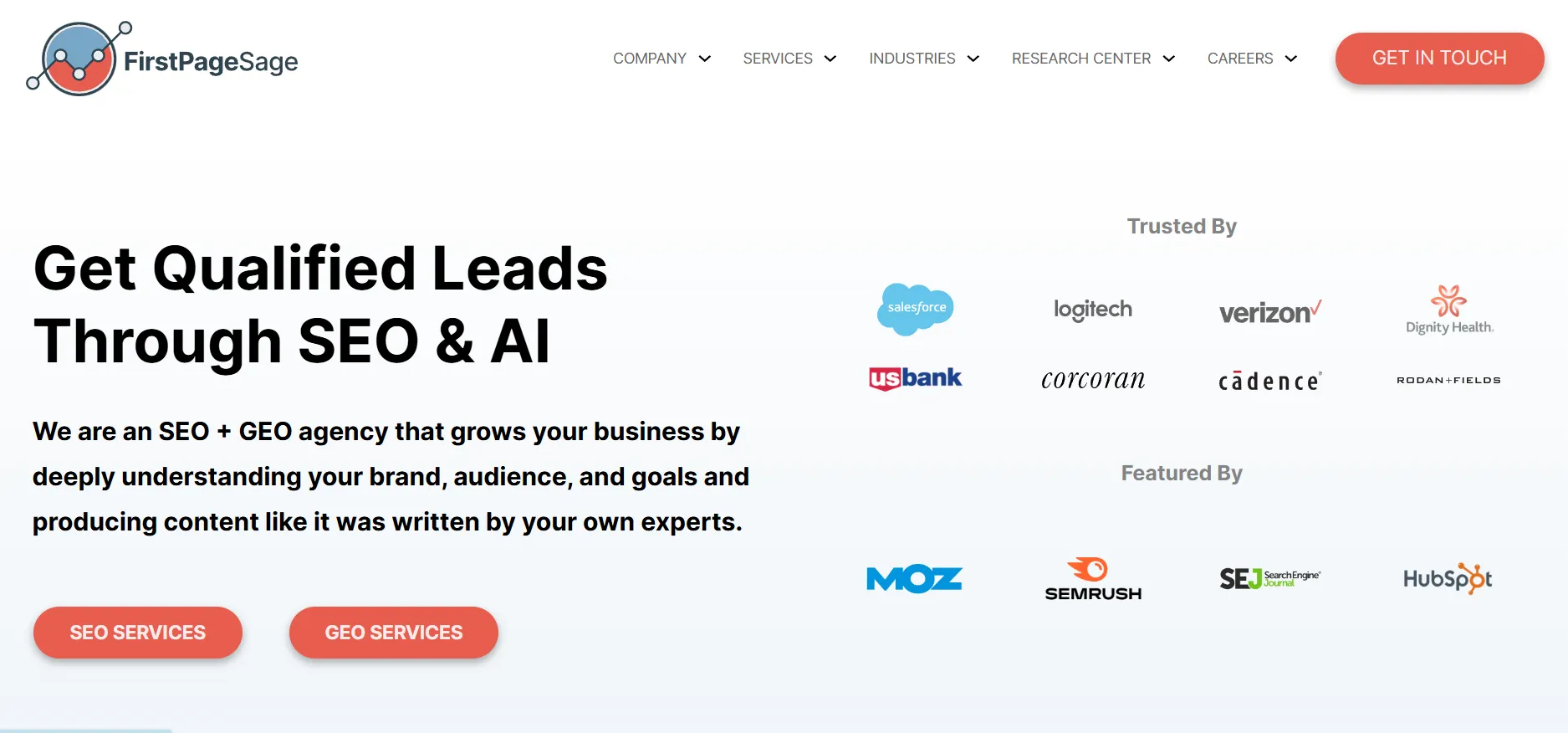
First Page Sage has built a solid reputation in SEO, and they were among the earliest adopters of GEO. The agency has worked with enterprise-grade clients and helped them build brand and domain authority. The list includes names such as Logitech, Salesforce, Alcoa, and U.S. Bancorp.
The agency treats GEO as an extension of SEO, which is useful if you don’t want a disconnected AI search strategy. We like how they combine content strategy, thought leadership, and authority-building so that a brand’s website, product pages, and educational content are easier for AI models and generative engines to interpret and recommend.
They specialize in SaaS, FinTech, healthcare, manufacturing, consumer products, and design, with a strong focus on B2B companies.
Case study in focus: They helped an enterprise design software provider achieve a 934% increase in keyword rankings while reducing cost per acquisition. This was done through thought leadership content.
Siege Media exclusively focuses on GEO services. They approach AI LLM optimization from a content-first, authority-building perspective. And they’re growth-focused, which means the end goal is to drive more traffic and conversions to your business. Their proprietary BlueprintIQ engine provides content strategy and ideas at scale.
While the focus is on GEO, the suite of services they offer complements it well. For instance, they also offer digital PR, content localization, content creation, and graphic design. If your business doesn’t have a dedicated content or design team, Siege Media can fill that gap. The agency has mostly worked with companies in the SaaS, Fintech, ecommerce, and health industries (such as TransUnion, Kraken, Zillow, and Healthline).
Case study in focus: Siege Media helped a workplace SaaS provider increase ChatGPT traffic from 0 to 25K. They used high-quality bottom-funnel content, such as comparisons with other software, to get the brand featured in LLM responses.
Search Engine People is a digital marketing agency focused on organic search, SEO, link building, and answer engine optimization. The agency has helped 3,000+ businesses succeed online and applies the data-driven approach to both traditional SEO and GEO campaigns.
Because Search Engine People has a strong foundation in SEO, it is well-positioned to support brands that want to improve visibility across AI search platforms. Its GEO approach focuses on helping your brand appear in mainstream LLMs and answer engines so you can increase your chances of being cited, referenced, and recommended in AI-generated responses.
The agency does not appear to focus on one specific industry, which makes it a flexible option for brands across different verticals.
Case study in focus: An enterprise tech company was experiencing declining performance due to an algorithm shift. The agency helped reverse the situation and increased year-on-year traffic by 161%.
WebFX is a well-known player in the SEO space and uses proprietary technology to deliver performance-focused results. While SEO has been their USP (supported by their OmniSEO approach, which targets visibility across all digital platforms), they’re also doing great work in the AI search/GEO space. Services include deep AI visibility audits, visibility tracking, and improving LLM recognition of your content.
One advantage of WebFX is its scale and tooling. The agency connects GEO with its larger SEO, content, analytics, and digital marketing systems. Its GEO content creates signals that matter for AI search visibility by fixing visibility blockers, creating expert content, building third-party trust signals, and refining content to align with how large language models interpret information.
Plus, the agency has a diverse portfolio of clients that ranges from mid-sized to large companies across different industries.
Results in focus: WebFX doesn’t publicly list detailed case studies, but the agency says it has a 93% client satisfaction rate and has delivered over 24 million leads for its various clients.
iPullRank is a strategy-led SEO agency that combines content, technical SEO, digital PR, user experience, and AI search strategy to help you improve organic visibility. They have an impressive portfolio of clients with mostly enterprise names like Target, CoinDesk, American Express, and Adidas.
The highlight of their offerings is ‘Relevance Engineering,’ which is a mix of content, user experience, digital PR, and AI visibility. Through this system, they help your brand become more visible and relevant. For GEO, they have a custom 8-step program to train internal teams to use Gen AI for content. But they also offer direct GEO via ‘AI Search Strategy,’ a six-month program.
Instead of a done-for-you service, iPullRank empowers in-house marketing teams with its systems.
Case study in focus: They helped a global financial services company achieve a 52% increase in traffic, a 121% increase in sign-ups, and a 17x higher conversion rate.
NP Digital positions AI search optimization as part of its earned media offering, which is a useful angle because GEO depends heavily on earned media more than on-site content. The agency helps you surface in conversational and generative AI tools by aligning content, authority signals, and technical structure with how LLMs ingest and prioritize information.
For enterprise and growth-stage brands, NP Digital may be a strong fit when GEO needs to connect with broader SEO, content marketing, digital PR, and performance marketing systems. And since NP Digital is a full-funnel marketing agency, you could also use them for other services, like creative or paid media, to ensure vendor cohesion. They work with both enterprise, mid-sized, and small businesses.
Case study in focus: An educational institute saw an 18% increase in total organic search inquiries and even grabbed the number one spot for non-branded searches after working with NP Digital.
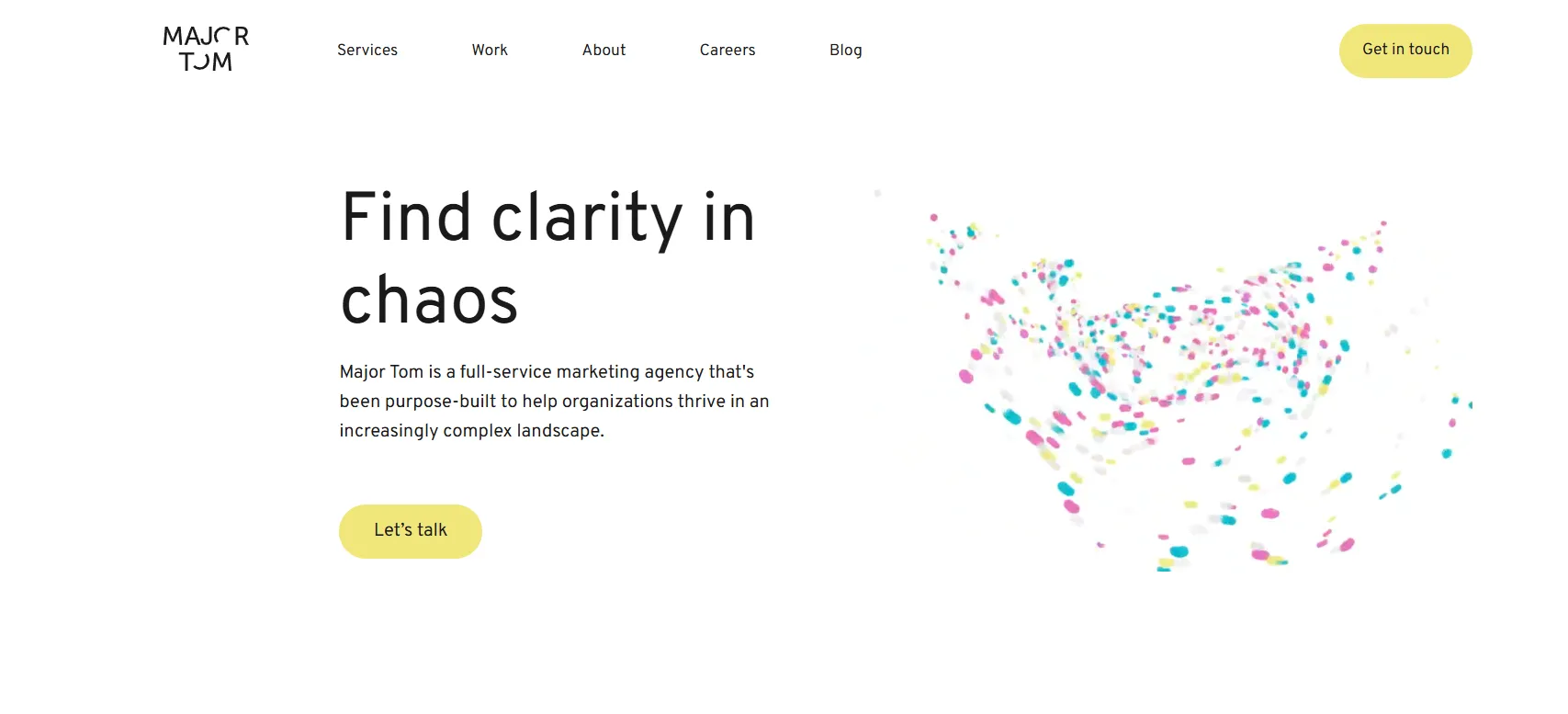
Major Tom is a full-service marketing agency with expertise in SEO, AEO, and GEO. The agency combines technical SEO with content strategy, which makes it useful for brands that need both search visibility and AI search readiness. And its work covers website structure, content production, technical optimization, and visibility across search engines and LLMs.
Major Tom has offices across North America, including major cities in Canada and the United States, and works with both B2B and B2C clients across multiple industries. Plus, the agency has been in business for more than 25 years and brings long-standing SEO experience to newer disciplines like AEO and GEO.
Case study in focus: With Major Tom’s support, a global B2B technology company (ad platform) experienced 200% increase in organic traffic and 78% increase in website conversions through high-quality gated content.
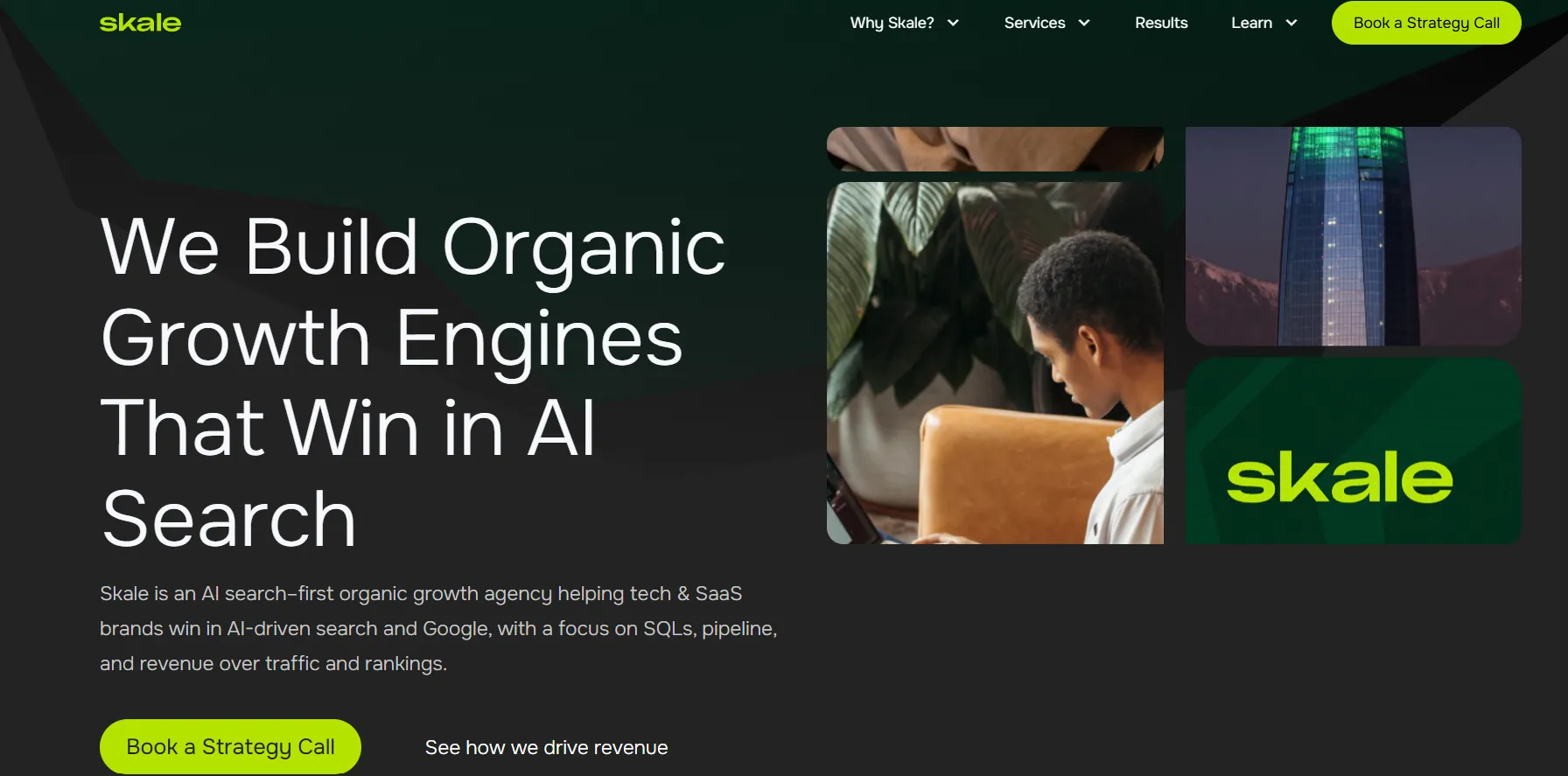
Skale is an AI search-first organic growth agency for tech and SaaS brands, with services that combine SEO, GEO, content production, CRO, outreach, link building, and website migrations. Because of their narrow focus, the team brings unparalleled expertise in B2B SaaS content optimization for both normal and AI search.
Unlike other verticals that can treat SEO/GEO as an awareness engine, SaaS and DeFi brands need organic discovery to sustain their revenue streams. And that’s exactly what you get with Skale. The agency says it treats SEO as a revenue engine. They are responsible for strategy, content production, link building, and tracking.
Case study in focus: A private equity startup saw double the number of demos and got 150% more traffic via AI chatbots after Skale intervened. And the whole thing took about eight months.
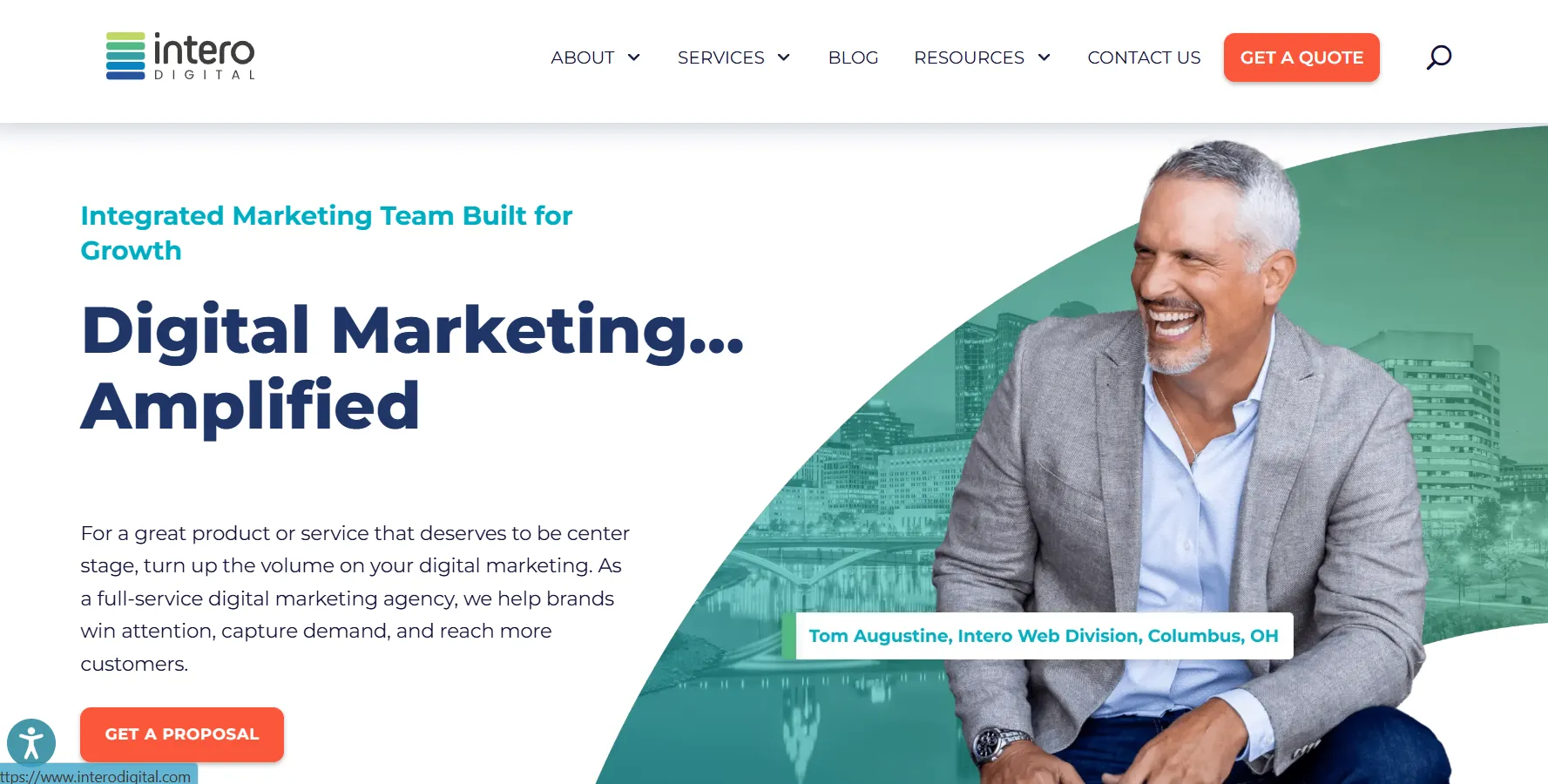
Intero Digital offers InteroGRO™, its proprietary GEO process for improving brand visibility and influence across AI search. They frame GEO as optimization for retrieval and recommendation, with work across generative AI research, entity-based content strategy, content structuring for AI retrieval, structured data and schema, and technical SEO.
This agency is also a full-service marketing solution. If you want a more integrated digital marketing partner, Intero Digital may be a good fit because its GEO offering connects AI search optimization with SEO, PR, content, and paid media.
While Intero Digital is not a GEO-only agency, its technical SEO background and integrated marketing capabilities make it a strong contender in the SEO/GEO space. The agency works with clients across a wide range of industries and business complexities.
Case study in focus: A premium kitchen gear brand experienced 5,665% in generative search visibility. They did through AI-focused product page optimizations, entity profile strengthening, and content alignment with search phrases.
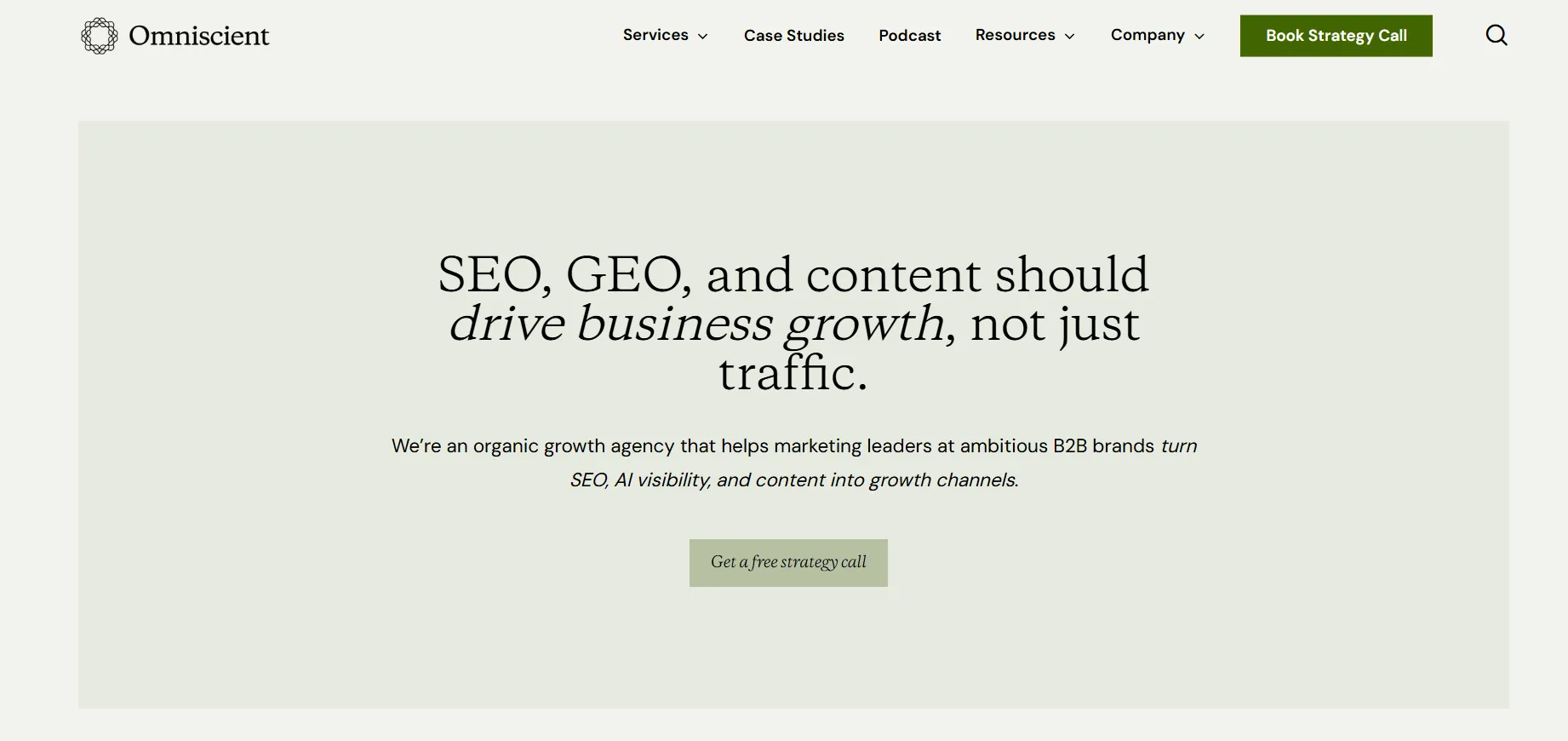
Omniscient Digital is an SEO and GEO specialist agency that has worked with well-known companies such as SAP, TikTok, Adobe, and DoorDash. It largely focuses on B2B brands, though. It turns SEO, GEO, and content into growth channels, with services covering strategy, programmatic SEO, technical SEO, conversion rate optimization, and content production.
Their process involves four stages: research & strategy, program implementation, performance monitoring, and iterate & optimize. Of course, this means they partner for the long haul. Everything is measured and reported, so you have eyes on the performance.
Case study in focus: A language translation platform saw 130x site-wide conversions. With product-led content, their pipeline generated $3.7 million in revenue for them.
Search + Gather is a performance-focused digital marketing agency with a dedicated search / AI Engine optimization service. The agency also connects GEO with traditional search engine optimization through technical optimization, keyword strategy, and content development. This makes them useful for brands that want AI search visibility without abandoning the SEO foundation (as it should be).
We also like that Search + Gather connects search strategy with paid media and brand marketing, which can be valuable for companies already investing in Google Ads, paid social, and full-funnel acquisition.
Because AEO and GEO sit within a broader performance marketing offering, the agency may be a better fit for brands that want integrated growth support rather than a GEO-only partner.
Case study in focus: Most case studies highlight paid search, which shows they’re good for combining Google Ads with AI search optimizations.
How GEO Is Changing Discoverability and Visibility
GEO is shaping how and where your brand is discovered.
In traditional SEO, the goal was to rank a page in search results and earn traffic through clicks. In AI search, the goal is broader: your brand, website, content, data, reviews, and third-party mentions need to be understood and cited by platforms like ChatGPT, Perplexity, Google (Gemini), Claude, and Copilot, when users ask them relevant questions.
And people are asking these chatbots a lot of questions. A recent study by Graphite.io found that AI tools now generate 45 billion sessions per month, equal to about 56% of traditional search engine volume. Plus, the fact is that most of these AI searches are happening on mobile devices.
On search engines, AI overviews are directly competing with SERP results. The Pew Research Center found that users who saw an AI summary clicked a traditional search result in only 8% of visits, compared with 15% when no AI summary appeared.
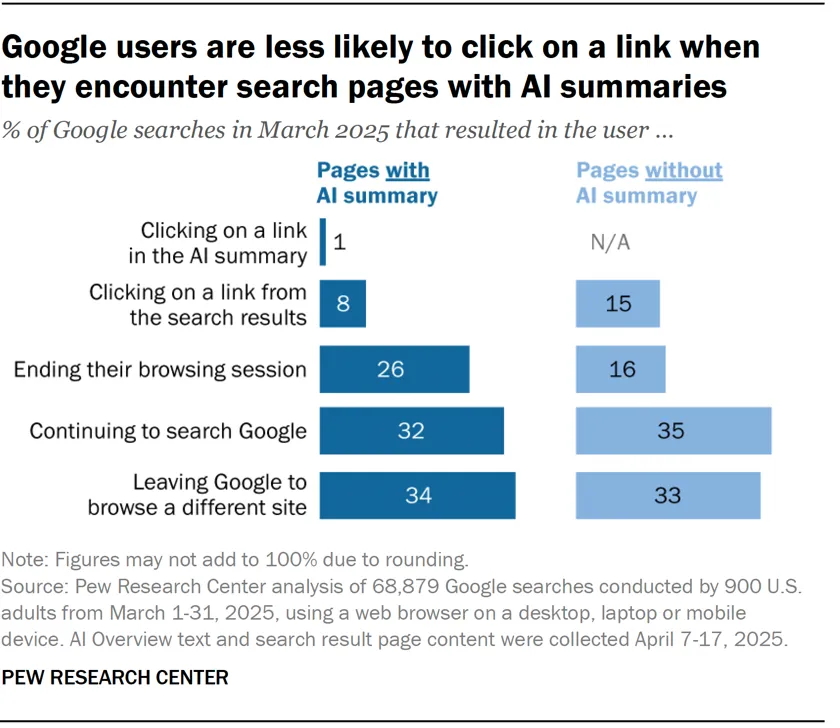
In other words, AI Overviews and AI chatbot answers can reduce traditional click-through behavior. This makes it more important for brands to be mentioned, summarized, or cited inside the answer itself.
And no, SEO isn’t dead. In fact, traditional SEO is the foundation of GEO. If your website has weak technical SEO, unclear metadata, poor schema, thin content, weak entity presence, limited backlinks, and no authority signals, it’s less likely to perform well in either search engines or AI systems.
GEO builds on SEO strategies such as keyword research, content optimization, structured data, internal linking, and content strategy. But it adapts those techniques for large language models and AI-driven search behavior.
If you need help selecting a GEO agency, there are a few fundamental factors to consider. These criteria can help narrow down your options and identify the agencies that best align with your goals, industry, and budget.
Once you have a shortlist, use the questions below to better understand each agency’s approach, capabilities, and experience with AI search optimization.
We’ve also included a list of red flags to watch for, especially if you decide to evaluate agencies beyond those featured in this guide.
Start by looking at the agency’s core SEO foundation.
A strong GEO agency should be able to audit your website, page structure, metadata, schema, internal links, content gaps, backlinks, SERP rankings, and technical SEO issues before making any AI search optimization recommendations. Many may even provide a rudimentary audit for free when you get in touch.
Next, evaluate how the agency measures AI visibility.
They should be able to track brand mentions, AI citations, referral traffic from AI platforms, query-intent coverage, entity presence, competitor visibility, and inclusion in AI-generated answers across tools such as ChatGPT Web Search, Perplexity, and Google Gemini.
A good agency should also explain how GEO fits into your wider digital marketing strategy, including content optimization, lead generation, and social media marketing.
Finally, consider whether the agency is the right fit for your business model, industry, website complexity, and budget.
Some GEO agencies may be better for enterprise brands with complex websites, multiple product lines, and large content systems. Others may be better for SaaS, ecommerce, B2B services, healthcare, finance, or local markets. Go with industry-specific expertise and budget alignment rather than just reputation.
Before hiring a GEO agency, ask direct questions about process, proof, and measurement:
Do not treat every agency using the term “GEO” as an expert. Watch for these red flags:
Gen AI platforms and AI overviews/answers on search engines are an integral part of online search now. In addition to providing simple information, chatbots also recommend brands, products, and services. All of those are opportunities at the top of the funnel.
The good news is that GEO builds on the SEO foundation many brands already have. With the right strategy, your existing content, authority signals, technical structure, and brand presence can be optimized for both traditional search and AI-powered answers.
Fieldtrip’s Bluethings can make that a reality for your business. You get strategic GEO services tied to actual business goals, whether that’s lead capture for B2B, conversion for DTC, or brand authority for enterprise.
They connect purpose with search intent through strategic content, authoritative backlinks, technical structure, and AI-ready optimization, so your brand is easier for both search engines and generative answer engines to understand, cite, and recommend.
GEO agency services include AI search audits, entity optimization, answer-ready content, citation building, structured data, and brand visibility tracking across AI platforms. A GEO agency improves how generative engines understand, cite, and recommend a brand.
Hiring a GEO agency typically costs $2,000 to $15,000 per month. Pricing depends on website size, content volume, market competition, and reporting depth. Enterprise GEO campaigns can exceed $15,000 per month.
The main difference between GEO and AEO (answer engine optimization) is that GEO optimizes visibility in generative AI answers, while AEO optimizes content for direct answer formats in search engines. GEO targets AI citations, summaries, and recommendations. AEO targets snippets, voice search, and answer boxes.
You need both SEO and GEO when you want visibility in traditional search results and AI-generated answers. SEO helps pages rank in Google. GEO helps brands appear in AI summaries, chatbot answers, and generative search responses. And they both work together to improve overall visibility and credibility.
There’s no set timeline for seeing results from GEO efforts, but, like SEO, it takes a few months to show a measurable impact. You’ll need to build brand authority and improve content quality. Established brands that already have had some success with SEO can see early visibility changes within 30 to 90 days.
%2520(1).png)