





















Have you ever kept pushing for performance, but the signals you rely on keep thinning as third-party data fades? As a result, more of your ad spend goes into channels that struggle to tie exposure to real sales.
But retailers already sit on the strongest signal you can get: what people actually buy and when they do it.
Well, that shift has quietly changed how retail media networks operate once budgets go live.
So, this guide breaks down:
Let’s dive in.
A retail media network is a retailer-owned system that sells access to its shoppers across its own properties, with sales tied back to transactions. Retail media refers to the ad formats themselves, while networks control the data, pricing, and rules behind those formats.
You buy ad placements on the retailer’s site, app, and stores, where products compete on the digital shelf at points of choice. And the foundation is first-party shopper data, captured from logins, purchases, and loyalty behavior rather than inferred profiles.
From our experience, the real issue is momentum. As third-party signals fade, budgets follow proof.
According to eMarketer, U.S. advertisers are forecast to raise advertising spend on retail media from about $58.79B in 2025 to $69.33B in 2026, with most growth flowing to Amazon Advertising and Walmart Connect. As a result, control, data access, and creative limits differ by network once campaigns scale.
You can also check out this video for more explanation on retail media networks:
Next, let's separate retail from commerce media.
Retail media is sold and governed by retailers, while commerce media uses commerce data across wider digital channels. We know this can sound too pedantic, but trust us: that distinction matters once budgets move beyond tests.
To ground the difference, we created this simple comparison that reflects how spend, data, and limits show up in practice.
| Aspect | Retail Media | Commerce Media |
|---|---|---|
| Ownership | Retailers control pricing, rules, and ad inventory | Multiple partners operate across ad platforms |
| Data source | Retailer-owned purchase and behavior data | Commerce data activated offsite |
| Where ads run | Retailer properties | Broader digital channels |
| Why terms mix | Both reference sales-linked data | Both claim closed-loop outcomes |
| Why it matters | Clear accountability, tighter limits | Scale, but more data silos and weaker identity resolution |
In our experience, choosing the wrong bucket leads to mismatched expectations around control, measurement, and creative freedom.
So, let's go over why this matters next.
Retail media networks matter now because they give you a clearer link between spend and sales at a time when other signals keep weakening. That shift becomes visible once budgets move past pilots and into real planning. To make that concrete, here are the reasons this channel keeps pulling focus.
For brands, the value shows up at the moment of choice:
For retailers, the incentives are just as direct:
Moving on, let's see how the system runs.
Retail media networks advertising works because each part of the system owns a clear role once spend moves past testing. To keep that straight, here’s how the ecosystem comes together in practice:
All of this leads us to our main point.
Once spend moves beyond pilots, platform choice starts to shape outcomes. So, here are the retail media networks that hold weight today, based on control, data access, and how pressure shows up at scale. Each one behaves differently once budgets grow and expectations tighten across the retail media industry.
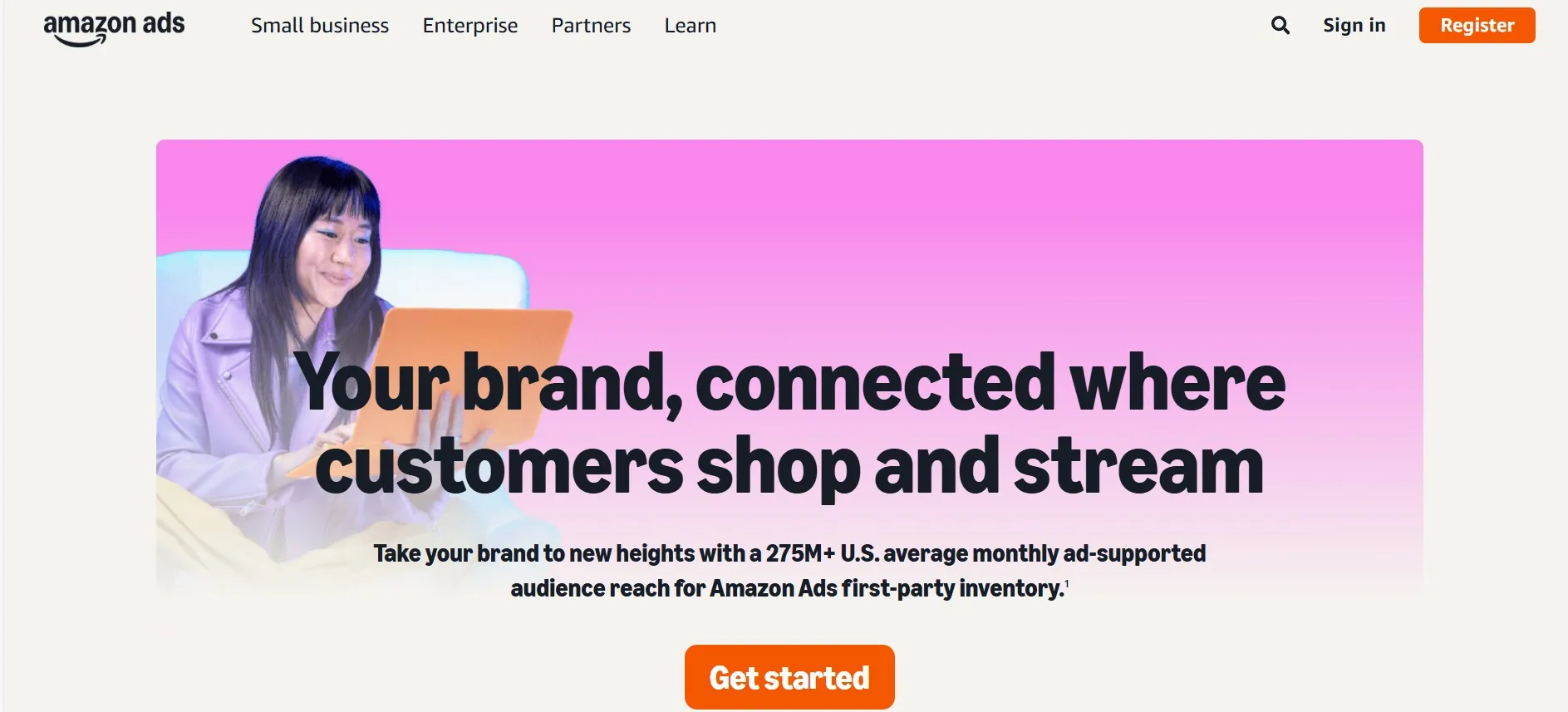
Amazon Ads is the largest retail media network, built directly into Amazon’s marketplace, where targeting, delivery, and measurement stay inside a single system. That matters because shoppers arrive with intent already formed, which shortens the gap between exposure and sale.
And the data advantage is that search behavior and purchases connect inside one system, so performance feedback arrives quickly once spend scales. However, we know that that speed comes with pressure, since competition concentrates on the same high-value moments.
Core placements:
Best fit for: Brands already selling on Amazon that need fast readouts and defensible attribution tied to real orders. We use this setup for rapid testing near the category page, where choices happen.
Key limitations: Costs rise quickly in crowded categories. As a result, creative differentiation and bid discipline matter more than raw budget when protecting brand visibility.
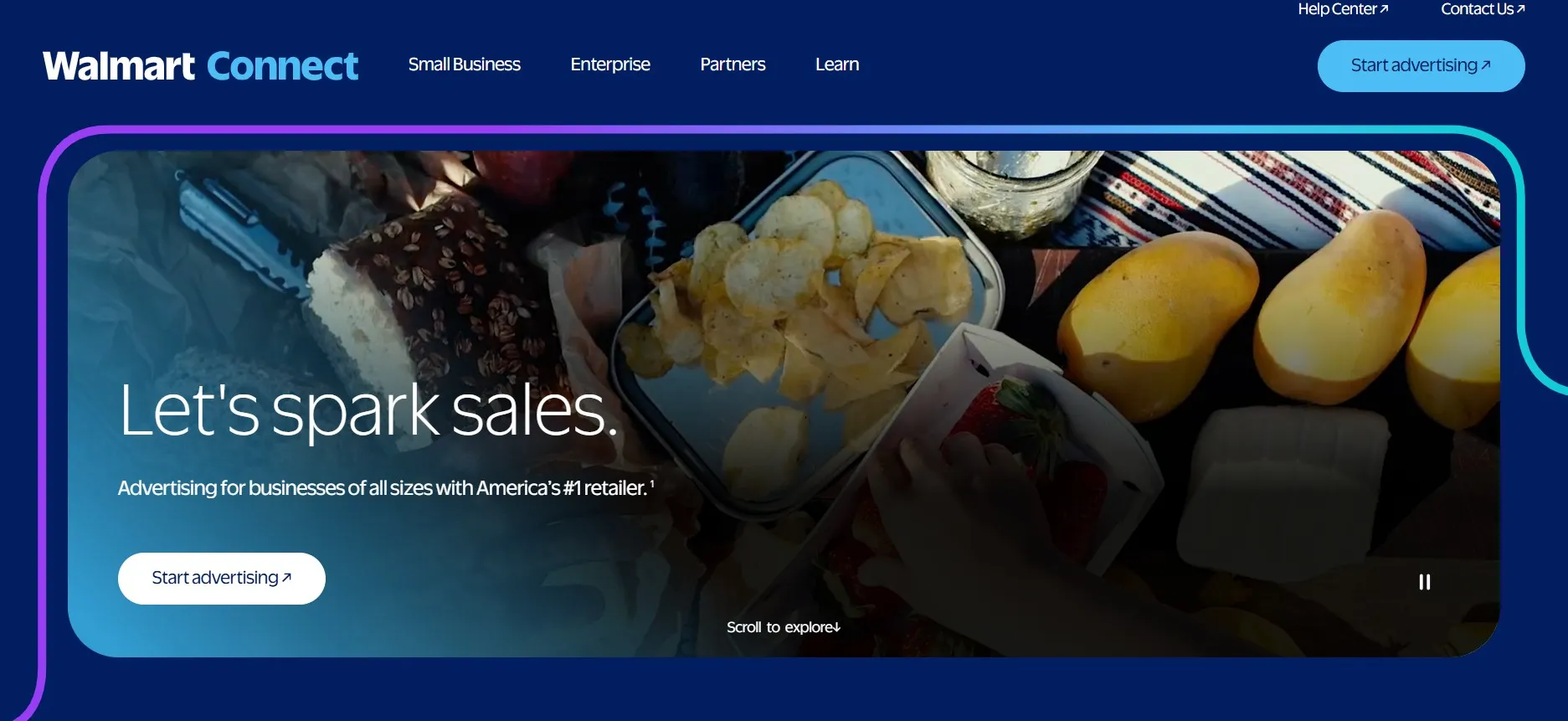
Walmart Connect is Walmart’s retail media network spanning online, in-store, and offsite inventory, which is built to link media exposure with everyday shopping behavior. We appreciate this because reach comes from routine trips rather than just high-intent searches.
As a result, performance reflects how media influences repeat purchase and basket growth across channels. And the data edge sits in omnichannel signals that tie digital touchpoints to store visits. This shapes how results show up once spend increases inside this digital advertising platform.
Core placements:
Best fit for: Mass-market brands with national distribution that need consistent coverage and a stable customer experience across physical and digital retail. We’ve used this setup for global brands planning sustained investment rather than short bursts.
Key limitations: Self-serve tools are narrower than Amazon in some areas. So, activation speed and testing depth depend more on retailer processes and partner access than on rapid iteration alone.
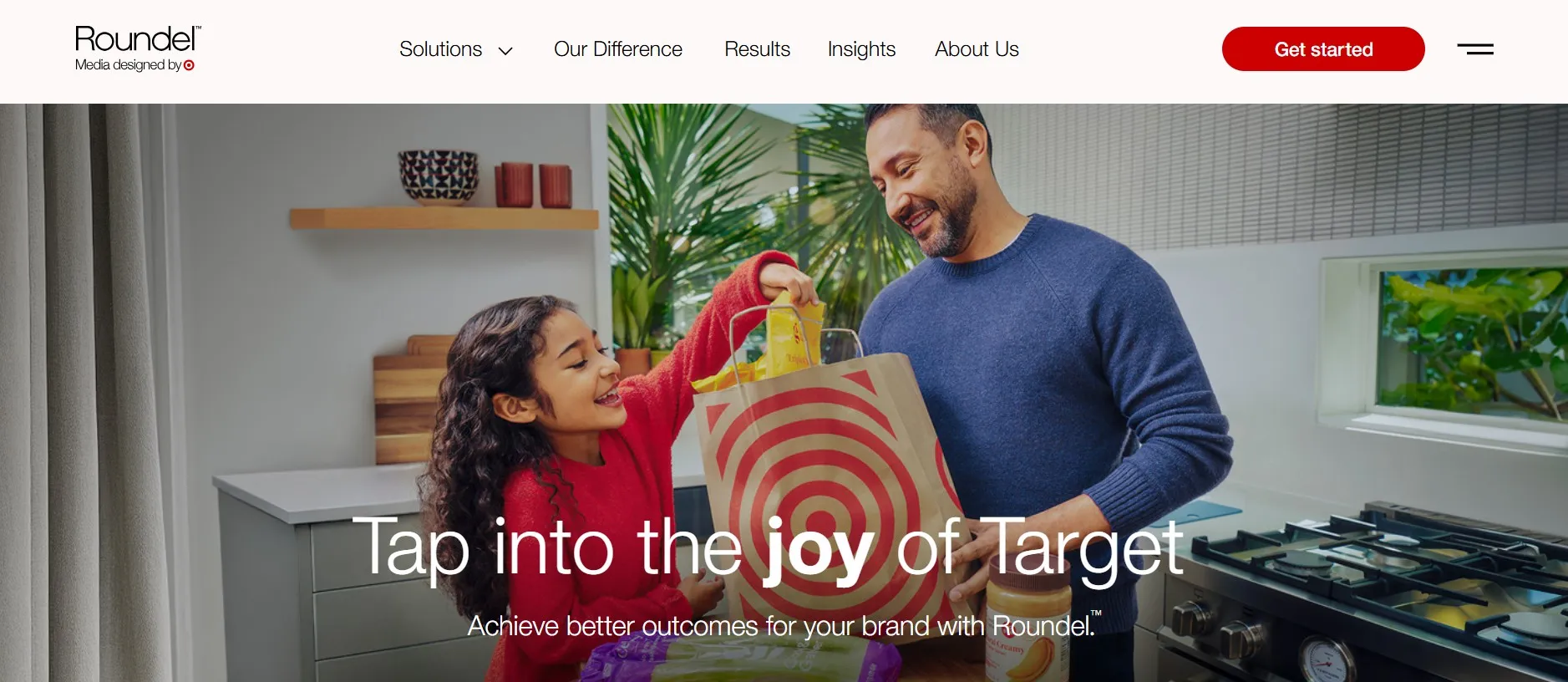
Target Roundel is Target’s retail media arm, built for brand-safe placements inside controlled retail environments. As such, performance does not come at the expense of context. Instead, media runs alongside curated shopping moments, which changes how creative works once spend scales.
The data advantage comes from Target’s loyalty program, where purchase history and lifestyle signals shape segments that behave more predictably than broad intent pools. That means creative choices typically influence outcomes as much as bids.
Core placements:
Best fit for: Brands that need stronger control over message, format, and setting. We think this retail media network works well when content-driven experiences matter as much as short-term lift within a digital advertising channel.
Key limitations: Scale is smaller than Amazon or Walmart. So, growth caps appear sooner, and planning needs clearer expectations around reach versus depth.
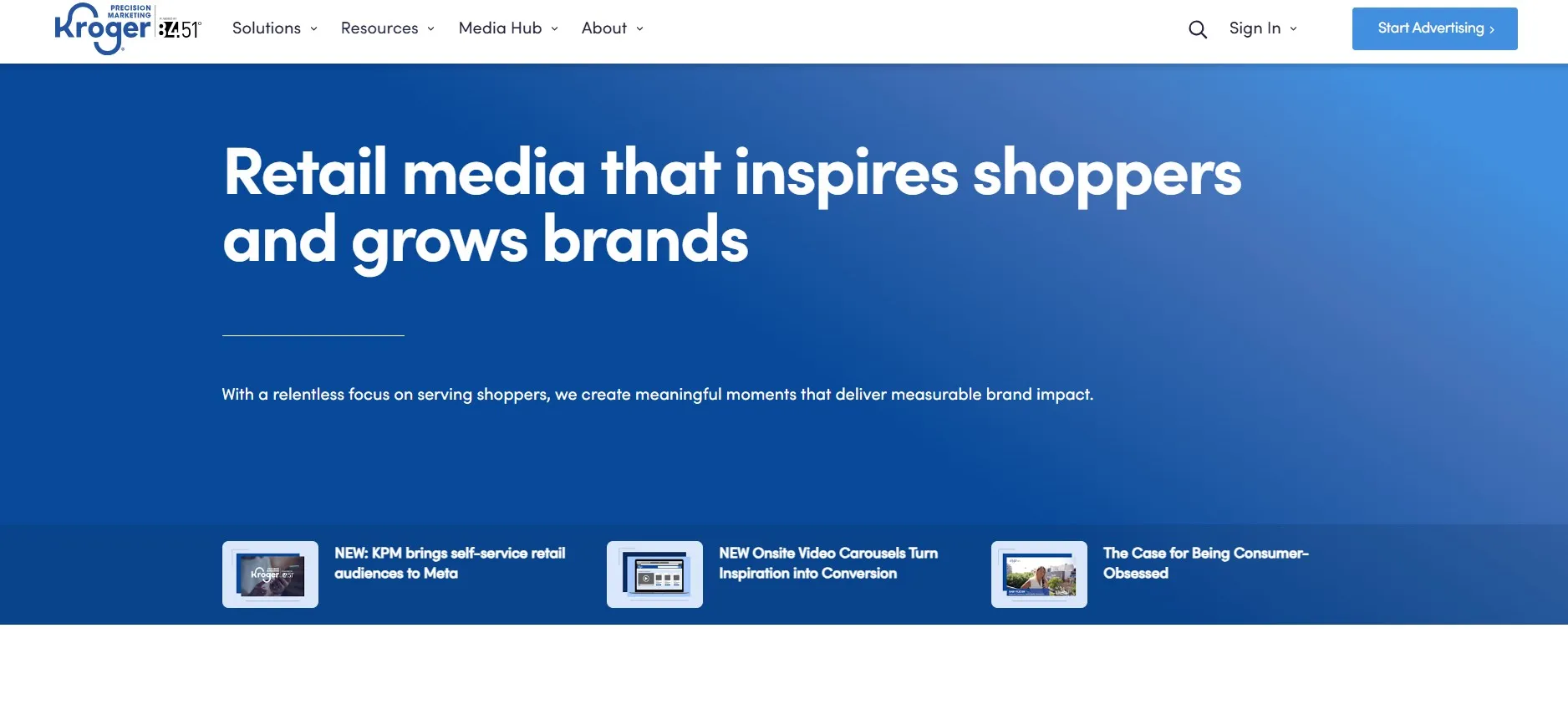
Kroger Precision Marketing is a grocery-first network built on loyalty card data that ties media exposure to real household buying patterns. Most grocery decisions repeat weekly, so performance shows up over trips rather than single clicks.
And the data edge is that SKU-level history across baskets lets media reflect how people actually shop, which changes how creative works once budgets scale. As a result, testing favors clarity and relevance over broad reach, especially when promotions rotate fast.
We like this setup because it supports personalized ads grounded in repeat behavior rather than one-off intent.
Core placements:
Best fit for: CPG and food brands that need proof tied to repeat purchase and household penetration within a defined target audience. We recommend this retail media network for brands benchmarking against other market leaders in grocery.
Key limitations: Relevance drops outside grocery. So, expansion into non-food categories delivers thinner signal, even with programmatic advertising extensions.
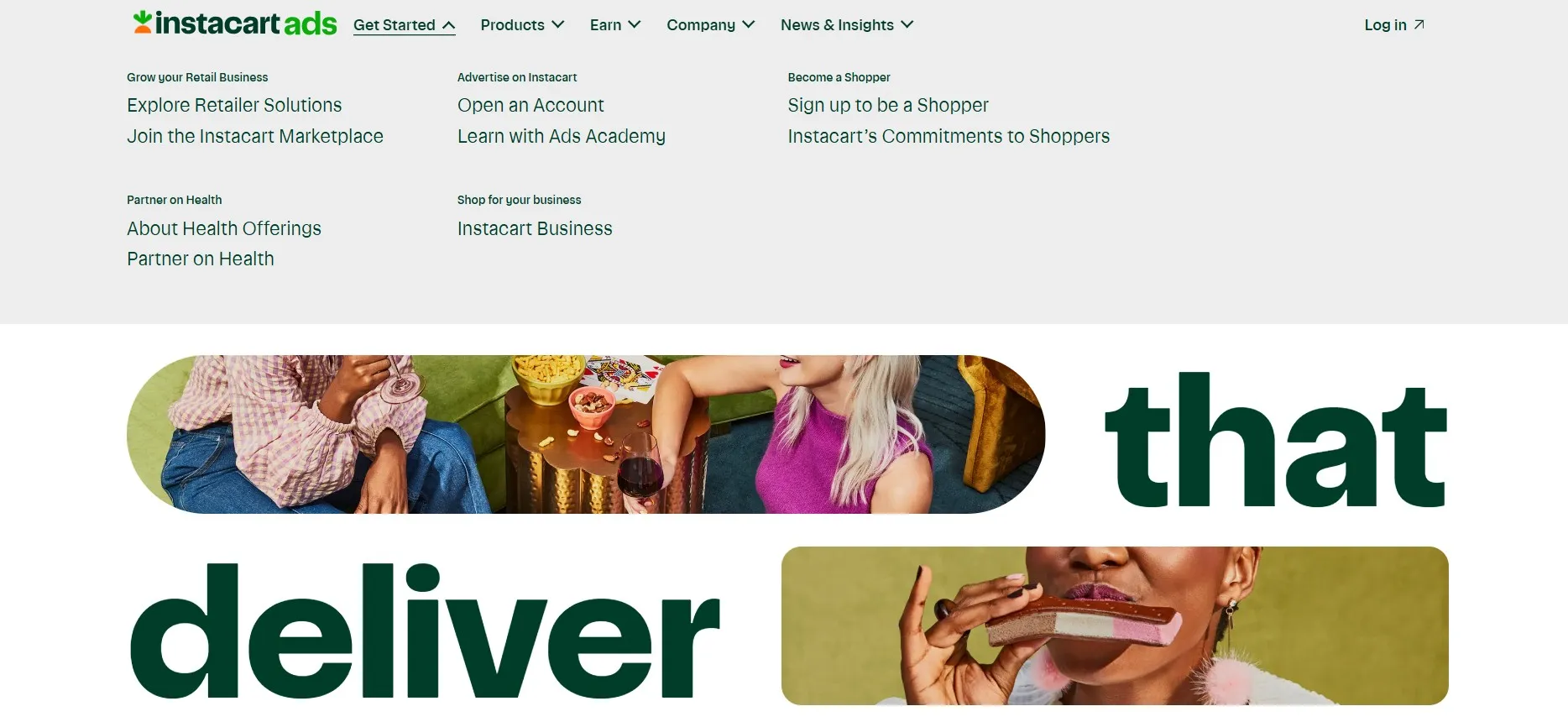
Instacart Ads sits inside a grocery delivery platform where choices happen while carts are being built. You’ll appreciate this because the media influences decisions before the order is locked rather than after browsing ends. In practice, performance reflects timing. This means that small prompts can shift brand choice, size, or substitution during the same session.
The data edge comes from real-time signals, including basket changes and out-of-stock swaps, which shows how shoppers react when plans adjust mid-shop. As a result, creative that answers practical questions tends to outperform broad messaging once spend increases.
Core placements:
Best fit for: Brands that win on quick decisions, availability, and price sensitivity. This works well when your goal is to influence what lands in the cart today.
Key limitations: Branding formats are narrow for our team’s preference. So, storytelling depth stays limited, and scale depends on category traffic and delivery usage rather than wider retail reach.
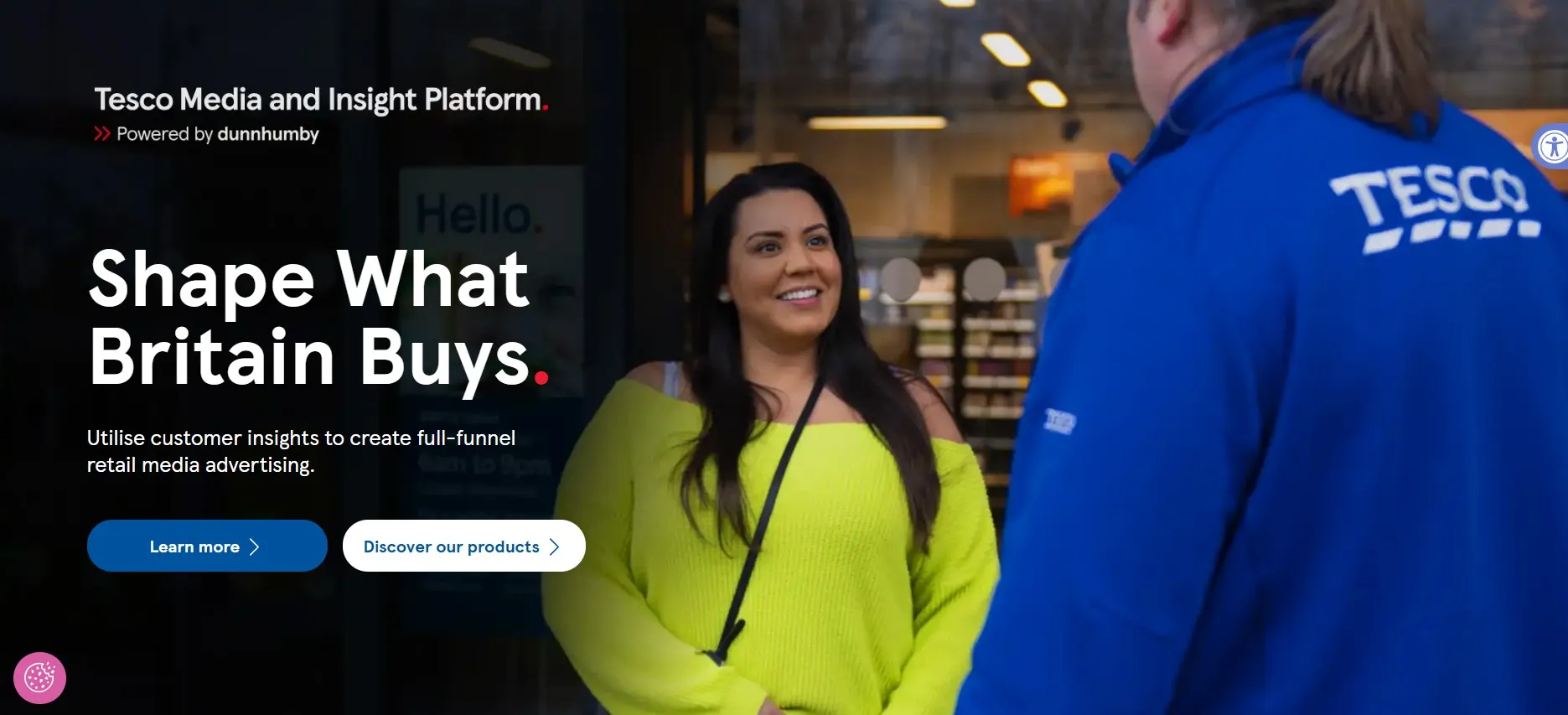
Tesco Media & Insight Platform is built around grocery and household shopping at national scale. You need this because reach comes from routine spend rather than one-off purchases. As such, performance reflects habits formed over time, which changes how you read lift once budgets grow.
Their data advantage (which we love) is Clubcard, where repeat trips and basket history shape segments that stay stable across campaigns. That kind of stability helps planning, but it also raises expectations around creative relevance and pacing.
Core placements:
Best fit for: Brands focused on UK shoppers that need dependable reach across food and household categories. We recommend Tesco Media when long-term presence matters more than fast spikes.
Key limitations: Geographic focus narrows expansion. So, your global plans need extra parallel networks, which add coordination work and may limit shared learning across markets.
Carrefour Links operates across multiple regions and is built to connect store traffic with digital exposure. Basically, it reflects how shoppers move between physical aisles and online touchpoints, often within the same week.
Besides, from our experience, results depend on how well campaigns adapt to local buying patterns (so we don’t encourage you to rely on a single regional playbook).
We also like its cross-market shopper insight, which helps compare behavior across countries while still grounding outcomes in real purchases.
Core placements:
Best fit for: Brands operating across Europe and LATAM that need regional consistency with room for local adjustment. We recommend this retail media network because it supports coordinated planning without forcing identical execution everywhere.
Key limitations: Platform maturity differs by country. So, tooling, reporting depth, and activation speed can vary, which adds friction when scaling campaigns across markets.
CVS Media Exchange is tied to pharmacy and health retail, built around trips that serve specific needs (so not best for casual browsing). That matters because shopping behavior reflects intent linked to care routines and refill cycles. As a direct consequence, performance tends to show up in repeat behavior, not impulse lift.
Why do we recommend it?
We like its data advantage.
That’s loyalty activity combined with prescription-adjacent signals, which helps media align with moments that already carry urgency. What changes at scale is sensitivity. This means that creative and timing need to match trust expectations inside a regulated environment.
Core placements:
Best fit for: Health, wellness, and personal care brands that rely on credibility and consistency. This retail media network supports sustained presence tied to routine needs.
Key limitations: Category focus stays narrow. So, expansion options remain limited, even when performance inside core health categories stays strong.
Walgreens Advertising Group has a strong focus on store-level reach. Basically, their media connects digital exposure to physical visits, which changes how performance shows up once spend increases. Rather than optimizing for abstract clicks, outcomes link to foot traffic and repeat trips.
We also appreciate the data it provides, like frequent shopper behavior and local store patterns. That way, activation reflects neighborhood demand instead of national averages. Over time, that local signal shapes where media works and where it stalls.
Core placements:
Best fit for: Brands focused on local activation, seasonal needs, or store-specific promotions. This retail media network works well for markets where proximity and convenience drive choice.
Key limitations: Digital scale remains smaller than mass retailers. So, growth caps appear earlier, and expansion depends on stacking locations rather than broad reach.
Orange Apron Media is The Home Depot’s retail media network built around home improvement, DIY, and professional contractor behavior. We like it because it acknowledges how, in many cases, shopping starts with planning rather than impulse. Certain projects can span days or weeks, which stretches the decision window and raises order value.
We also appreciate the kind of data it provides: signals that tie back to project intent, repeat purchases, and clear splits between pro and consumer activity. After all, performance depends on how well media supports research, comparison, and restocking, not just first clicks.
Core placements:
Best fit for: Home improvement, tools, building materials, and appliance brands. This retail media network also works well when contractors or serious DIY shoppers drive revenue.
Key limitations: Category scope stays narrow. So, brands outside home-related spend see limited relevance and weaker signal depth.
Once budgets move past pilots, small misreads start to compound. So, here are the mistakes that most frequently flatten learning and stall performance:
Retail media only pays off when strategy, creative, media, and measurement move together. That’s where Fieldtrip steps in. Instead of treating networks as buying tools, work starts by mapping how each platform’s limits affect testing, pacing, and creative choice once spend increases.
At Fieldtrip, we focus on performance creative systems built to rotate formats and messages without resetting learning. UGC pipelines support faster iteration near the shelf, where context changes how messages land.
And a closed-loop testing mindset keeps results tied to sales movement rather than surface signals. That structure has helped teams reduce CAC, lift ROAS, and expand across markets without losing control of insight quality.
For example, in our work with Genomelink, we set up structured creative testing tied directly to conversion and repeat behavior. We didn’t focus on isolated campaign metrics (we never do).
That approach helped the team lower CAC by 73% while scaling spend across markets, because each new test built on prior learnings instead of resetting performance assumptions.
Here's an example of our work together:
Retail media is no longer an experiment layered on top of other channels. It changes how decisions get made because sales data sits inside the media system itself.
But data alone does not create progress.
Without clear hypotheses, disciplined testing, and creative built for context, performance stalls and reporting loses meaning.
What actually moves results is how learning carries forward as spend grows and how tradeoffs stay visible to the teams approving budget. That clarity turns retail media from pressure into confidence.
If you need support to align strategy, creative, media, and measurement across networks, reach out to Fieldtrip to talk through your next steps.